Question
Barrier potential of a P-N junction diode does not depend on
|
(a) Temperature |
(b) Forward bias |
(c) Doping density |
(d) Diode design |
Barrier potential of a P-N junction diode does not depend on
|
(a) Temperature |
(b) Forward bias |
(c) Doping density |
(d) Diode design |
(d) Diode design
Generate a complete, print-ready paper with questions like this in minutes — across 16+ boards, with answer keys.
In which of the following ionic bond is present
|
(a) NaCl |
(b) Ar |
(c) Si |
(d) Ge |
Two very thin metallic wires placed along X and Y-axis carry equal currents as shown here. AB and CD are lines at 45° with the axes with origin of axes at O. The magnetic field will be zero on the line
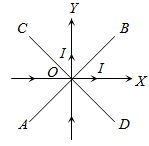
|
(a) AB |
(b) CD |
|
(c) Segment OB only of line AB |
(d) Segment OC only of line CD |
In the spectrum of hydrogen atom, the ratio of the longest wavelength in Lyman series to the longest wavelength in the Balmer series is
| (a) 5/27 | (b) 1/93 |
(c) 4/9 |
(d) 3/2 |
The triode constant is out of the following
|
(a) Plate resistance |
(b) Amplification factor |
(c) Mutual conductance |
(d) All the above |
In L-R circuit, for the case of increasing current, the magnitude of current can be calculated by using the formula
|
(a) |
(b) |
(c) |
(d) |



