Question
Bartholinus discovered:

Answer

  1. Polarisation by double refraction
Explanation:
In 1669, another Danish scientist, Erasmus Bartholinus discovered the polarization of light by double refraction in Iceland spar (calcite).

Need a full question paper?

Generate a complete, print-ready paper with questions like this in minutes — across 16+ boards, with answer keys.
Start Generating Free

Similar questions

A coil and a bulb are connected in series with a dc source, a soft iron core is then inserted in the coil. Then(a) Intensity of the bulb remains the same(b) Intensity of the bulb decreases(c) Intensity of the bulb increases(d) The bulb ceases to glow
   
   
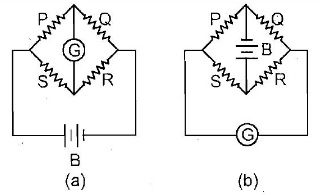
Figure (a) below shows a Wheatstone bridge in which P, Q, R, S are fixed resistances, G is a galvanometer and B is a battery. For this particular case the galvanometer shows zero deflection. Now, only the positions of B and G are interchanged,. as shown in figure (b). The new deflection of the galvanometer.
The law, governing the force between electric charges is known as.
In the case of constants a and b of  a transistor(a) a = b(b) b < 1   a > 1(c) ab = 1(d) b > 1  a < 1
       
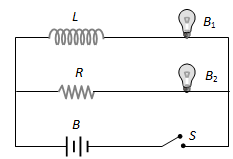
An inductor, $L$ a resistance $R$ and two identical bulbs $,\mathrm{B}_1$ and $\mathrm{B}_2$ are connected to a battery through a switch $S$ as shown in the figure. The resistance $R$ is the same as that of the coil that makes $L .$ Which of the following statements gives the correct description of the happenings when the switch $S$ is closed
For a nucleus to be stable, the correct relation between neutron number N and Proton number Z is(a) N > Z(b) N = Z(c) N < Z (d) N ≥ Z
       
The decay constant of a radioactive sample is $\lambda.$ The half-life and the average-life of the sample are respectively:
E.M.F. ofa cell is expressed in:
An electric field is applied to a semiconductor. Let the number of charge carriers be $n$ and the average drift speed be $v.$ If the temperature is increased,
A copper voltameter is connected in series with a heater coil of resistance 0.1 Ω. A steady current flows in the circuit for twenty minutes and mass of 0.99 g of copper is deposited at the cathode. If electrochemical equivalent of copper is 0.00033 gm/C, then heat generated in the coil is(a) 750 J  (b) 650 J(c) 350 J  (d) 250 J