MCQ
Bartholinus discovered:
- AInterference by splitting the wave front
- BPolarisation by reflection
- CPolarisation by refraction
- DPolarisation by double refraction
Explanation:
In 1669, another Danish scientist, Erasmus Bartholinus discovered the polarization of light by double refraction in Iceland spar (calcite).
Generate a complete, print-ready paper with questions like this in minutes — across 16+ boards, with answer keys.
If cathode rays are projected at right angles to a magnetic field, their trajectory is
|
(a) Ellipse |
(b) Circle |
(c) Parabola |
(d) None of these |
When subjected to a transverse electric field, cathode rays move
|
(a) Down the potential gradient |
(b) Up the potential gradient |
|
(c) Along a hyperbolic path |
(d) Along a circular path |
Focal length of a converging lens in air is R. If it is dipped in water of refractive index 1.33, then its focal length will be around (Refractive index of lens material is 1.5)
|
(a) R |
(b) 2R |
(c) 4R |
(d) R / 2 |
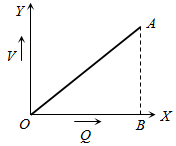
Change Q on a capacitor varies with voltage V as shown in the figure, where Q is taken along the X-axis and V along the Y-axis. The area of triangle OAB represents
|
(a) Capacitance |
(b) Capacitive reactance |
|
(c) Magnetic field between the plates |
(d) Energy stored in the capacitor |
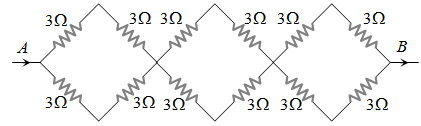
In the network of resistors shown in the adjoining figure, the equivalent resistance between A and B is
|
(a) 54 ohm |
(b) 18 ohm |
(c) 36 ohm |
(d) 9 ohm |
Peltier coefficient for the junction of a pair of metals is proportional to
|
(a) T absolute temperature of the junction |
|
(b) Square of absolute temperature of the junction |
|
(c) |
|
(d) |
In the above figure D and E respectively represent
|
(a) Absorption line of Balmer series and the ionization potential of hydrogen |
|
(b) Absorption line of Balmer series and the wavelength lesser than lowest of the Lyman series |
|
(c) Spectral line of Balmer series and the maximum wavelength of Lyman series |
|
(d) Spectral line of Lyman series and the absorption of greater wavelength of limiting value of Paschen series |

