Question
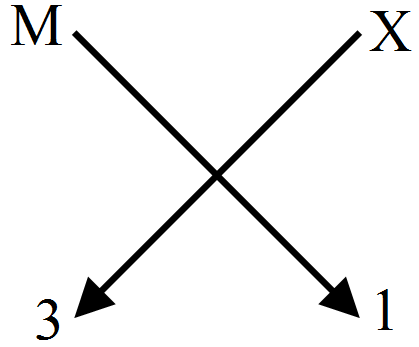
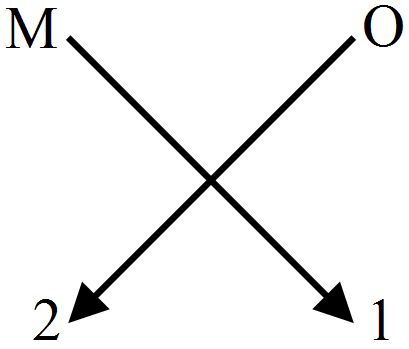
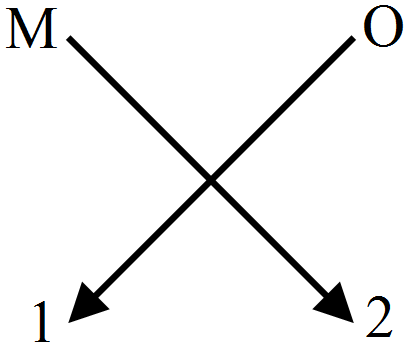
Based on the group valency of elements write the molecular formula of the following compounds giving justification for each:
  1. Oxide of first group elements.
  2. Halide of the elements of group thirteen.
  3. Compound formed when an element, A of group 2 combines with an element, B of group seventeen.
Need a full question paper?

Generate a complete, print-ready paper with questions like this in minutes — across 16+ boards, with answer keys.

Start Generating Free

Similar questions

Why are some of these called saturated and the other unsaturated compounds?
Nikita took $\mathrm{Zn}, \mathrm{Al}, \mathrm{Cu}, \mathrm{Fe}, \mathrm{Mg}$ and Na metal and put each metal in cold water and then hot water. She reacted the metal with steam
(i) Name the metal which reacts with cold water.
(ii) Which of the above metals react with steam?
(iii) Name the metal which reacts with hot water.
(iv) Arrange these metals in order of increasing reactivity.
Write a balanced chemical equation with state symbols for the following reactions.
  1. Solutions of barium chloride and sodium sulphate in water react to give insoluble barium sulphate and the solution of sodium chloride.
  2. Sodium hydroxide solution (in water) reacts with hydrochloric acid solution (in water) to produce sodium chloride solution and water.
Three organic compounds A, B and C have the following molecular formulae:
$\text{A} \ \ \text{C}_4\text{H}_8\text{O}_2$
$\text{B} \ \ \text{C}_4\text{H}_{10}\text{O}$
$\text{C} \ \ \text{C}_4\text{H}_8\text{O}$
  1. Which compound contains an alcohol group? Write its name and structural formula.
  2. Which compound contains a carboxyl group? Write its name and structural formula.
  3. Which molecular formula can represent an aldehyde as well as a ketone? Write the names and structural formulae of the aldehyde and ketone represented by this molecular formula.
A carboxylic acid (molecular formula C2H4O2) reacts with an alcohol in the presence of an acid catalyst to form a compound ‘X’. The alcohol on oxidation with alkaline KMnO4 followed by acidification gives the same carboxylic acid C2H4O2. Write the name and structure of,
  1. Carboxylic acid.
  2. Alcohol.
  3. The compound ‘X’.
The atomic number of an element is 19.
  1. Write the electronic configuration of this element and determine (i) the valency of this element, and (ii) whether this element is a metal or a non-metal.
  2. Write the formula of the oxide of this element.
  3. Is this element more reactive or less reactive than Na (atomic number 11)? Justify your answer giving example.
Write the formula of the product formed when the element A (atomic number 19) combines with the element B (atomic number 17). Draw its electronic dot structure. What is the nature of the bond formed?
Why ions move freely and conduct electricity in the molten form?
How is manganese extracted from manganese dioxide, MnO2? Explain with the help of an equation.
An element ' $M$ ' with electronic configuration (2,8,3) combines separately with $Cl , SO ^2$ anions. Write the chemical formulae of the compounds formed. Predict with the suitable reason the nature of the bond formed by element ' $M$ ' in general. How will the electrical conductivity of the compounds formed vary with respect to 'M'?