MCQ
Boric acid is an acid because its molecule 
  • A
    contains replaceable $H^+$ ion
  • B
    gives up a proton
  • accepts $OH^-$ from water releasing proton.
  • D
    combines with proton from water molecule.

Answer

Correct option: C.
accepts $OH^-$ from water releasing proton.
c
Boric acid is an acid because its molecule accepts $\mathrm{OH}^{-}$ from water releasing proton

$\mathrm{B}(\mathrm{OH})_{3}+\mathrm{H}_{2} \mathrm{O} \longrightarrow\left[\mathrm{B}(\mathrm{OH})_{4}\right]^{(-)}(\mathrm{aq})+\mathrm{H}^{(-)}(\mathrm{aq})$

Need a full question paper?

Generate a complete, print-ready paper with questions like this in minutes — across 16+ boards, with answer keys.
Start Generating Free

Similar questions

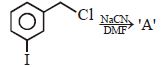
What is $A$ ?
The number of atoms in $8\, \mathrm{~g}$ of sodium is $\mathrm{x} \times 10^{23}.$ The value of $\mathrm{x}$ is ...... .(Nearest integer)

$\left[\right.$ Given $: \mathrm{N}_{\mathrm{A}}=6.02 \times 10^{23}\, \mathrm{~mol}^{-1}$, Atomic mass of $\mathrm{Na}=23.0\, \mathrm{u}]$

Match the compounds/ions in Column $I$ with their properties/reactions in Column $II$. Indicate your answer by darkening the appropriate bubbles of the $4 \times 4$ matrix given in the $ORS$.
Column $I$ Column $II$
$(A)$ $\mathrm{C}_6 \mathrm{H}_5 \mathrm{CHO}$ $(p)$ gives precipitate with $2, 4$-dinitrophenylhydrazine
$(B)$ $\mathrm{CH}_3 \mathrm{C} \equiv \mathrm{CH}$ $(q)$ gives precipitate with $\mathrm{AgNO}_3$
$(C)$ $\mathrm{CN}^{-}$ $(r)$ is a nucleophile
$(D)$ $\mathrm{I}^{-}$ $(s)$ is involved in cyanohydrin formation
What is the value of electron gain enthalpy of $Na^+$ if $IE_1$ of $Na \ 5.1\ eV$ ? .......... $\mathrm{eV}$
In which of the following pairs first one is having more resonance energy than the second one
The correct order for $O-O$ bond length in given substance is

$I.$ $H_2O_2$     $II.$ $O_2$      $III.$ $O_3$

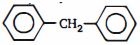
The molecular formula of diphenylmethane, is $C_{13}H_{12}$

How many structural isomers are possible when one of the hydrogen is replaced by a chlorine atom ?
Which of the following react with $KMn{O_4}$ but does not react with $AgN{O_3}$?
Which of the following does not have a coordinate bond
${C_{{\rm{(graphite)}}}} + {O_2}(g)\, \to \,C{O_2}(g)$ $\Delta H = - 94.05\,k\,cal\,mo{l^{ - 1}}$${C_{{\rm{(diamond)}}}} + {O_2}(g)\, \to \,C{O_2}(g);\,$$\Delta H = - 94.50\,k\,cal\,mo{l^{ - 1}}$ therefore