Question
Briefly describe the water cycle. Also explain its importance.

Answer

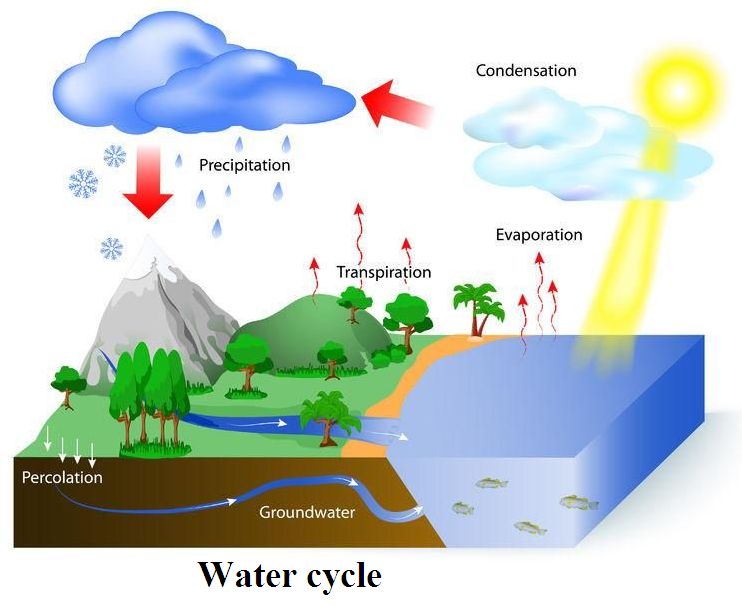
Water on heating turns into water vapour. Water vapour on cooling gives water again. The change of water from one form to other form over and over again makes the water cycle in nature.
The sun heats up and evaporates the water from oceans, .ponds, lakes and rivers. This water vapour being lighter is carried up by the air. This water vapour gets cooled at height and water droplets are formed. These water droplets form a cloud. When these water droplets in the cloud come close together, they form drops of water. These drops of water may fall on the earth as rain.
The rain is absorbed by the soil. A part of rain water collected in the rivers flows into the sea, where again the evaporation occurs. This completes the water cycle.
Thus, now we know how water gets circulated between the oceans and land through evaporation, transpiration, precipitation and its downhill flow by different routes. This process of circulation of water is known as water cycles. Water cycle helps in maintaining continuous supply of fresh water to all living things on land. No life on land would have been possible without water cycle.
Need a full question paper?

Generate a complete, print-ready paper with questions like this in minutes — across 16+ boards, with answer keys.

Start Generating Free

Similar questions

Activity.Place a chair in the school ground on a sunny day. What do you observe from the shadow of the chair?
  1. Does the shadow give an accurate picture of the shape of the chair? If the chair is turned around a little, how does the shape of the shadow change?
  2. Take a thin notebook and look at its shadow. Then, take a rectangular box and look at its shadow. Do the two shadows seem to have a similar shape?
  3. Take flowers or other objects of different colours and look at their shadows. A red rose and a yellow rose, for instance. Do the shadows look different in colour, when the colours of the objects are different?
  4. Take a long box and look at its shadow on the ground. When you move the box around, you may see that the size of the shadow changes. When is the shadow of the box the shortest, when the long side of the box is pointed towards the Sun or when the short side is pointing towards the Sun?
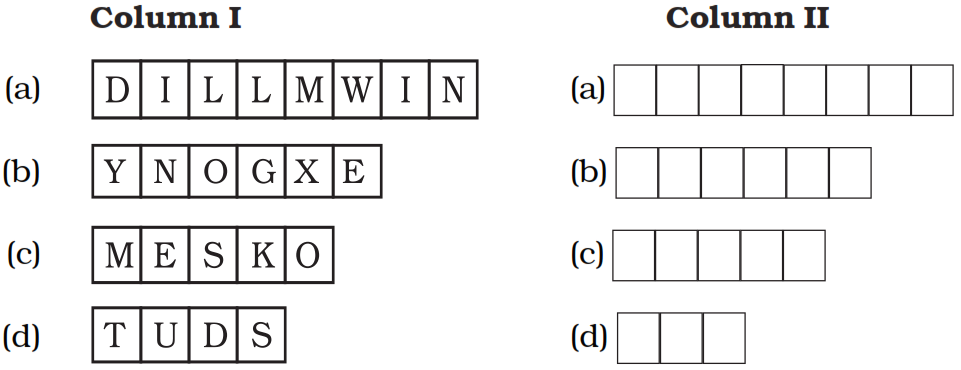
In the boxes of Column $I$ the letters of some words got jumbled. Arrange them in proper form in the boxes given in Column $II$
You are provided with a mixture of salt, sand, oil and water. Write the steps involved for the separation of salt, sand and oil from the mixture by giving an activity along with the diagram.
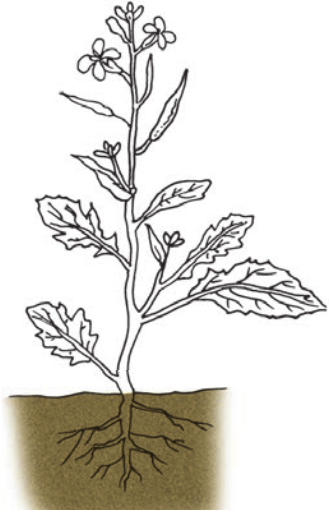
Read the function of parts of a plant given below:
  1. Fixes plant to the soil.
  2. Prepares starch.
  3. Takes part in reproduction.
  4. Supports branches and bears flowers.
In the diagram given in fig, write the names of the parts whose functions you have just read at the appropriate space.
Name the food needed:
  1. For strong bones and teeth.
  2. To prevent scurvy.
  3. To avoid constipation.
  4. For warmth.
  5. For growth.
What is the importance of the presence of carbon dioxide in the atmosphere? What will happen if its concentration in the air increases?
Uproot few different plants around you and study them. In Table given below note the various parts seen in the different plants.
S.No.
Name of the plant
Hoot
Stem
Leaf
Flower
Fruit
Seed


Explain the characteristics oflimng organisms
How can materials be grouped together? In what ways do we classify materials?
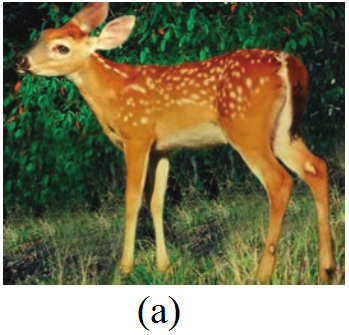
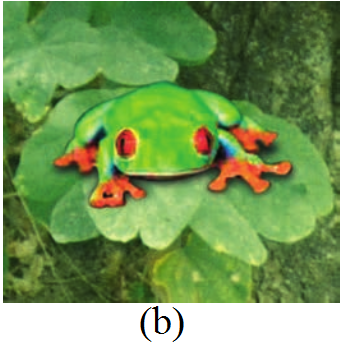
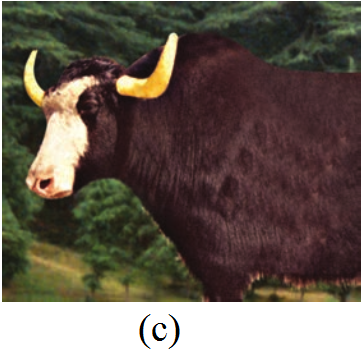
Using the following words, write the habitat of each animal given in: