Question
Bring out the relationship between MIS and AIS.

Answer

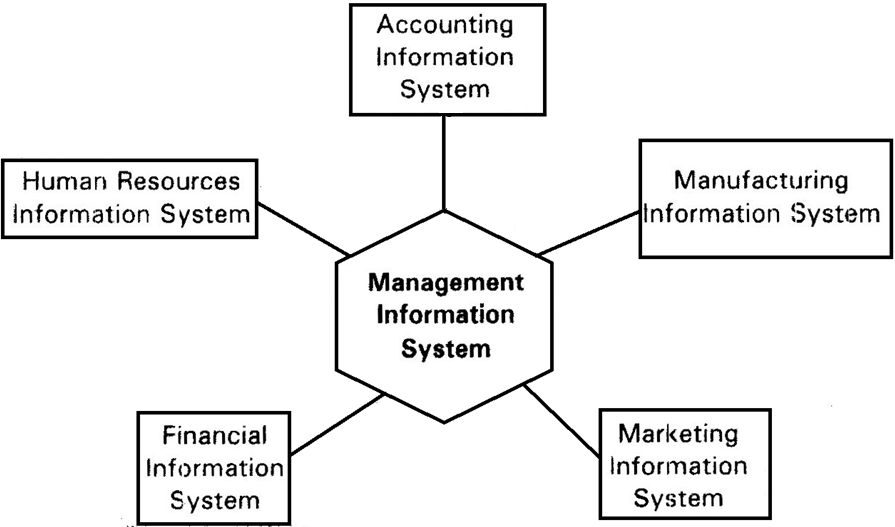
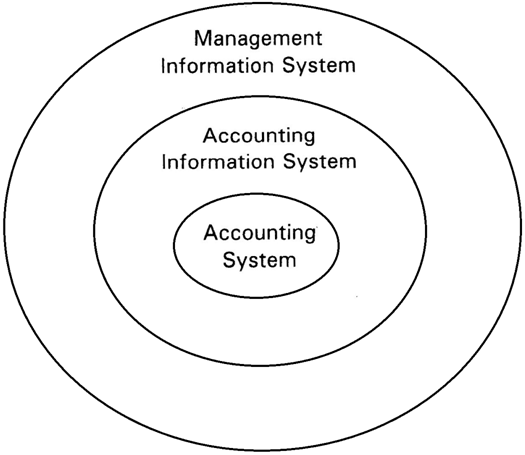
A management information system is an information system that generates, accurate, timely and organised information to help managers make decisions, control process, solve problems, supervise activities and track progress. Accounting information system identifies, collects, processes and communicates economic information of an organisation to a wide variety of users. Every accounting systern is a part of the Accounting Information System which in turn is a part of the broader system i.e. the management information system.
Relationship between accounting system, accounting information system and management information system.
Accounting Information System is one of the function information systerns and management information system has a link with all the function information systems of an organisation.

Initially MIS was considered to be a financial accounting system and was a tool to maintain the financial record keeping activities. But gradually it developed into a broader concept and accounting system has now become one of its sub components. An accounting information system on the other hand performs the accounting applications of an organisation. Accounting information systems contribute to problem solving by producing standard management reports that summarise the firm's financial conditions and by providing the data base that is used by other information systems.

Need a full question paper?

Generate a complete, print-ready paper with questions like this in minutes — across 16+ boards, with answer keys.

Start Generating Free

Similar questions

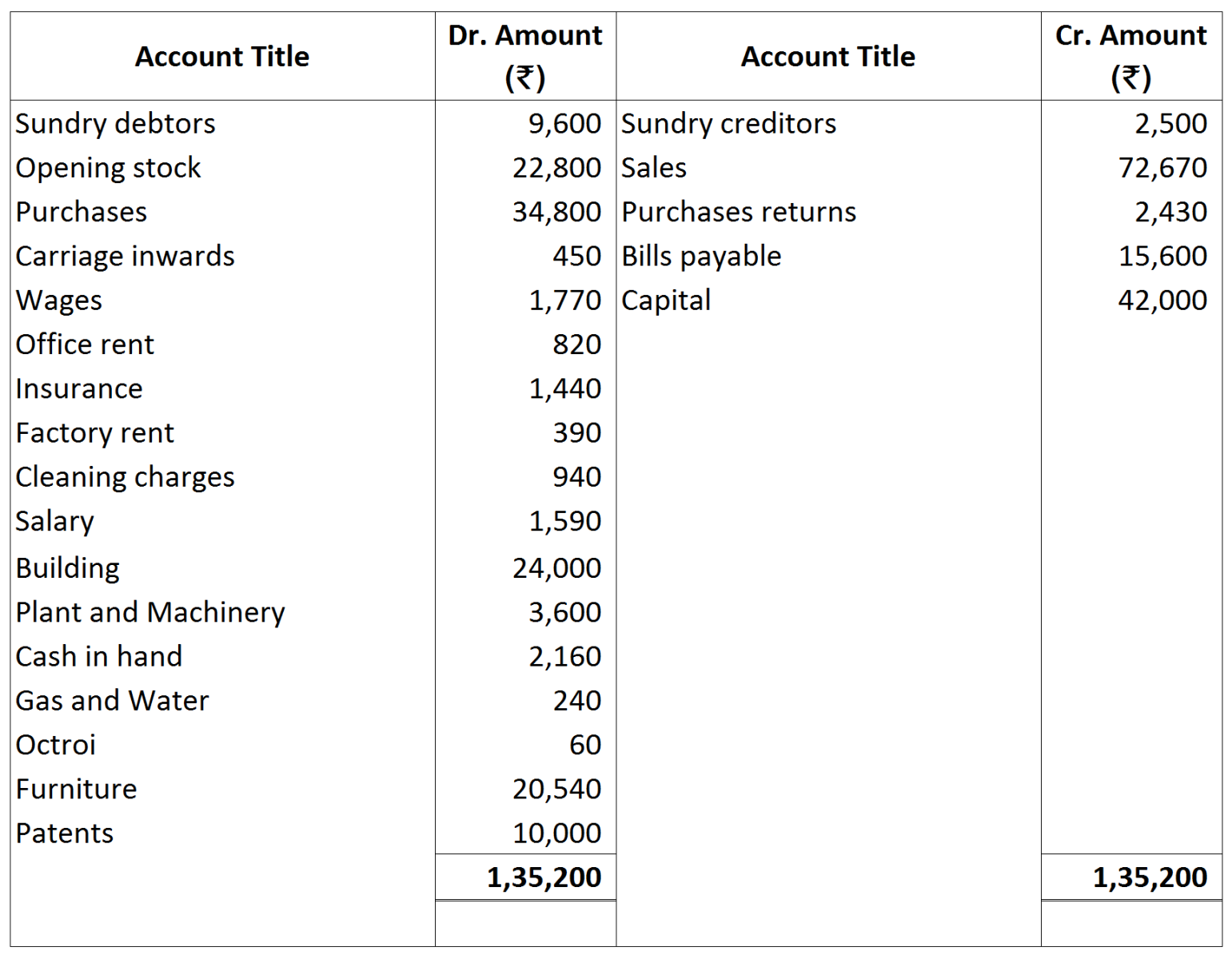
From the following balances of M/s Jyoti Exports, prepare trading and profit and loss account for the year ended March 31, 2017 and balance sheet as on this date.

Closing stock ₹ 10,000.
  1. To provision for doubtful debts is to be maintained at 5 per cent on sundry debtors.
  2. Wages amounting to ₹ 500 and salary amounting to ₹ 350 are outstanding.
  3. Factory rent prepaid ₹ 100.
  4. Depreciation charged on Plant and Machinery @ 5% and Building @ 10%.
  5. Outstanding insurance ₹100.
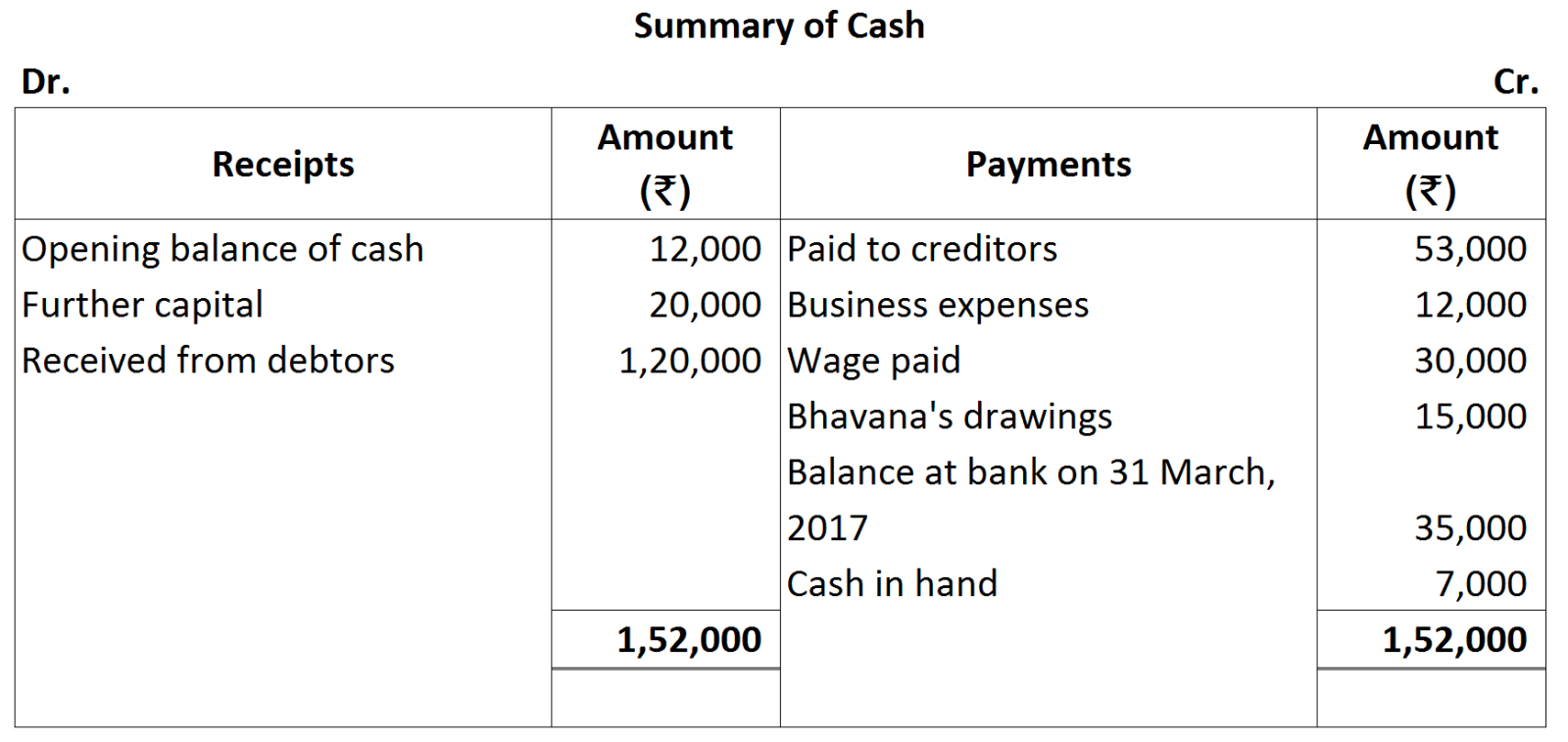
Mrs. Bhavana keeps his books by Single Entry System. You’re required to prepare final accounts of her business for the year ended March 31, 2017. Her records relating to cash receipts and cash payments for the above period showed the following particulars:

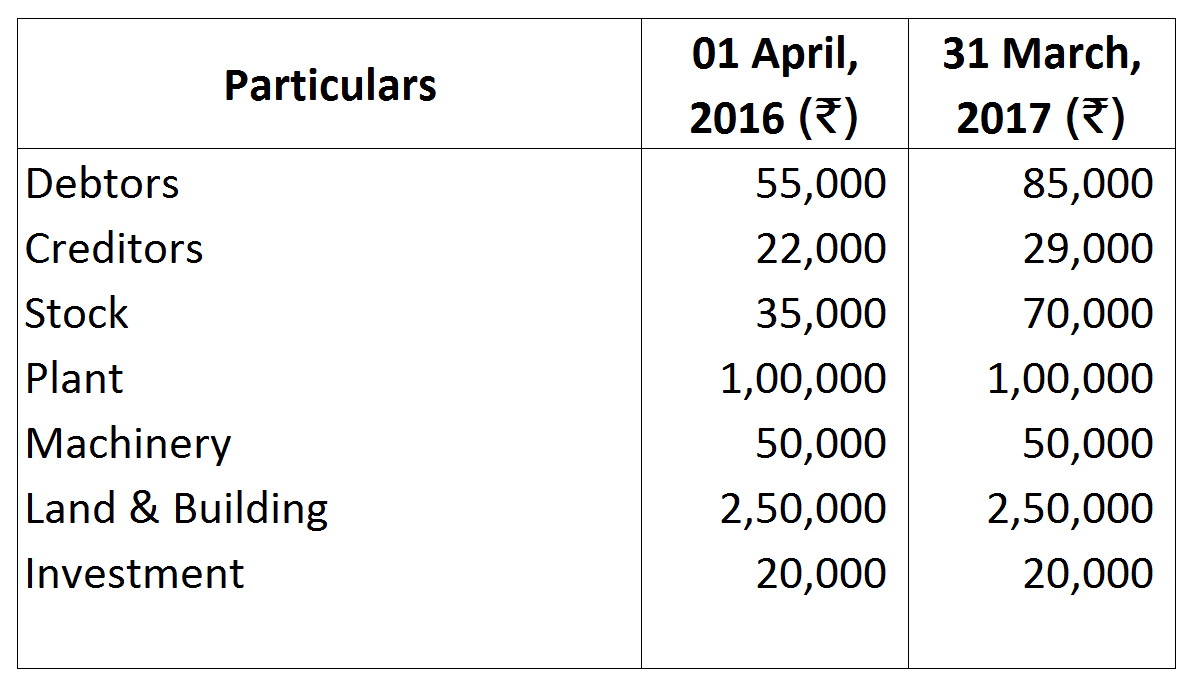
The following information is also available:

All her sales and purchases were on credit. Provide depreciation on plant and building by 10% and machinery by 5%, make a provision for bad debts by 5%.
From the following Trial Balance of Mr. Tarun Ghosh, prepare Trading and Profit and Loss A/c for the year ending 31st March, 2017 and a Balance Sheet as at that date:

Adjustments:
  1. Closing Stock amounted to ₹ 50,000.
  2. Goods costing ₹ 8,000 were sent to a customer on sale or return basis for ₹ 10,000 on 30th March, 2017 and had been recorded in the books as actual sales.
  3. Allow 8% interest on Capital and charge ₹ 3,000 as interest on drawings.
  4. Depreciate: Business premises by 5%, Furniture and Fixtures by 20% and Packing Machinery by 10%. Tools are to be revalued at ₹ 12,000.
  5. $2\frac{1}{2}\%$ for discounts is to be provided on Debtors.
  6. ₹ 1,500 is to be provided for Bad and Doubtful Debts.
A purchases goods worth ₹ 6,200 from B and gives him his acceptance for ₹ 6,000 in full satisfaction. B purchases goods worth ₹ 10,000 from C and endorses the bill to him, paying the balance by cheque. On maturity the bill is dishonoured, noting charges amounted to ₹ 100.
Give the Journal entries in the books of A, B and C.
A company purchased on 1st July, 2015 machinery costing ₹ 30,000. It further purchased machinery on 1st January, 2016 costing ₹ 20,000 and on 1st October, 2016 costing ₹ 10,000. On 1st April, 2017, one-third of the machinery installed on 1st July, 2015 became obsolete and was sold for ₹ 3,000. The company follows financial year as accounting year.
Show how the Machinery Account would appear in the books of company if depreciation is charged @ 10% p.a. on Written Down Value Method.
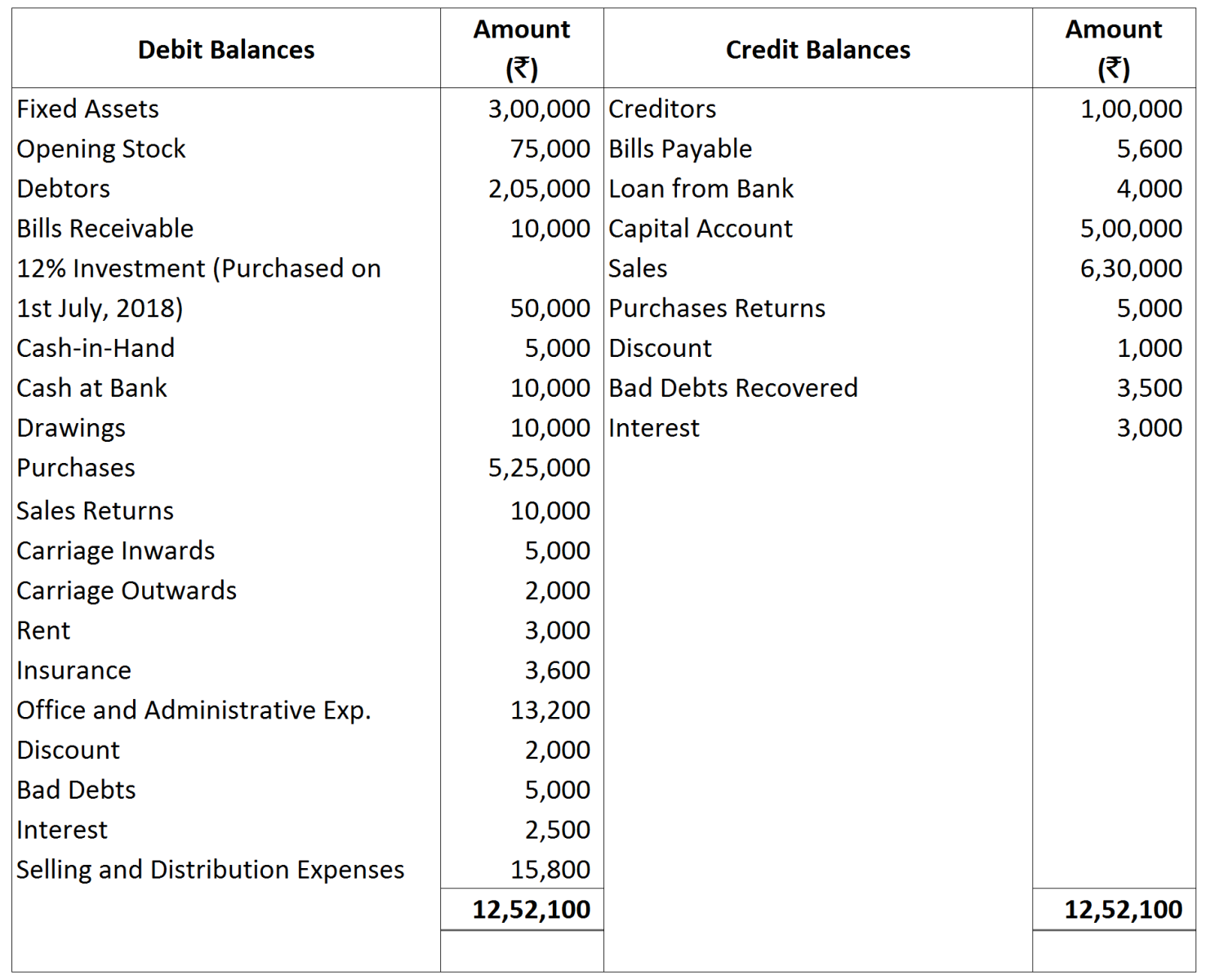
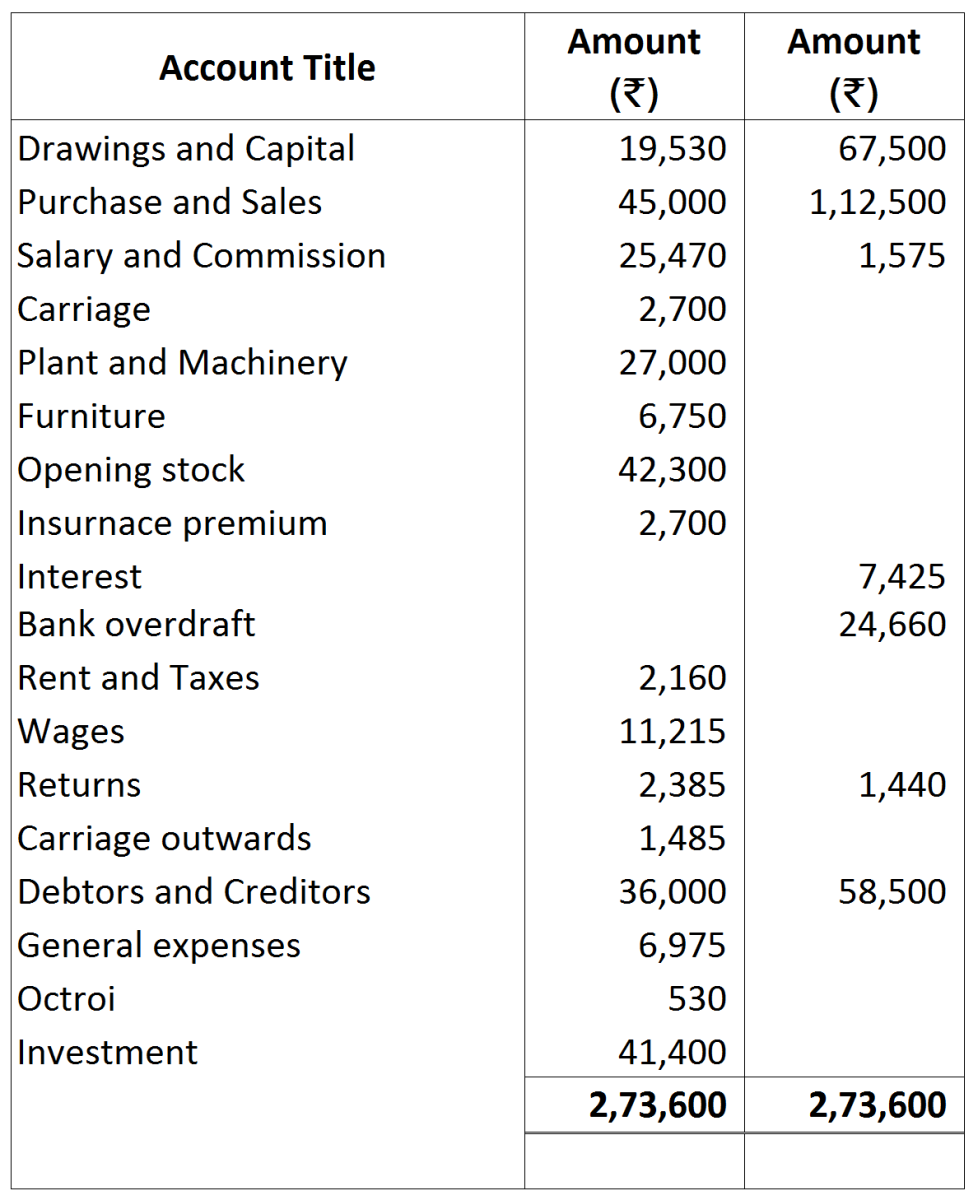
Following is the Trial Balance of Laxminath as at 31st March, 2019:

Additional Informantion:
  1. Closing Stock as on 31st March, 2019 was ₹ 42,000.
  2. Rent is payble at the rate of ₹ 300 per month.
  3. Insurance Premium was paid for the year ending on 30th June, 2019.
  4. Write off futher bad debts of ₹ 5,000.
  5. Create Provision for Discount on Debtors @ 2%.
  6. Create a Provision for Doubtful Debts @ 10%.
  7. Provide for depreciation on fixed assets @ 10% p.a.
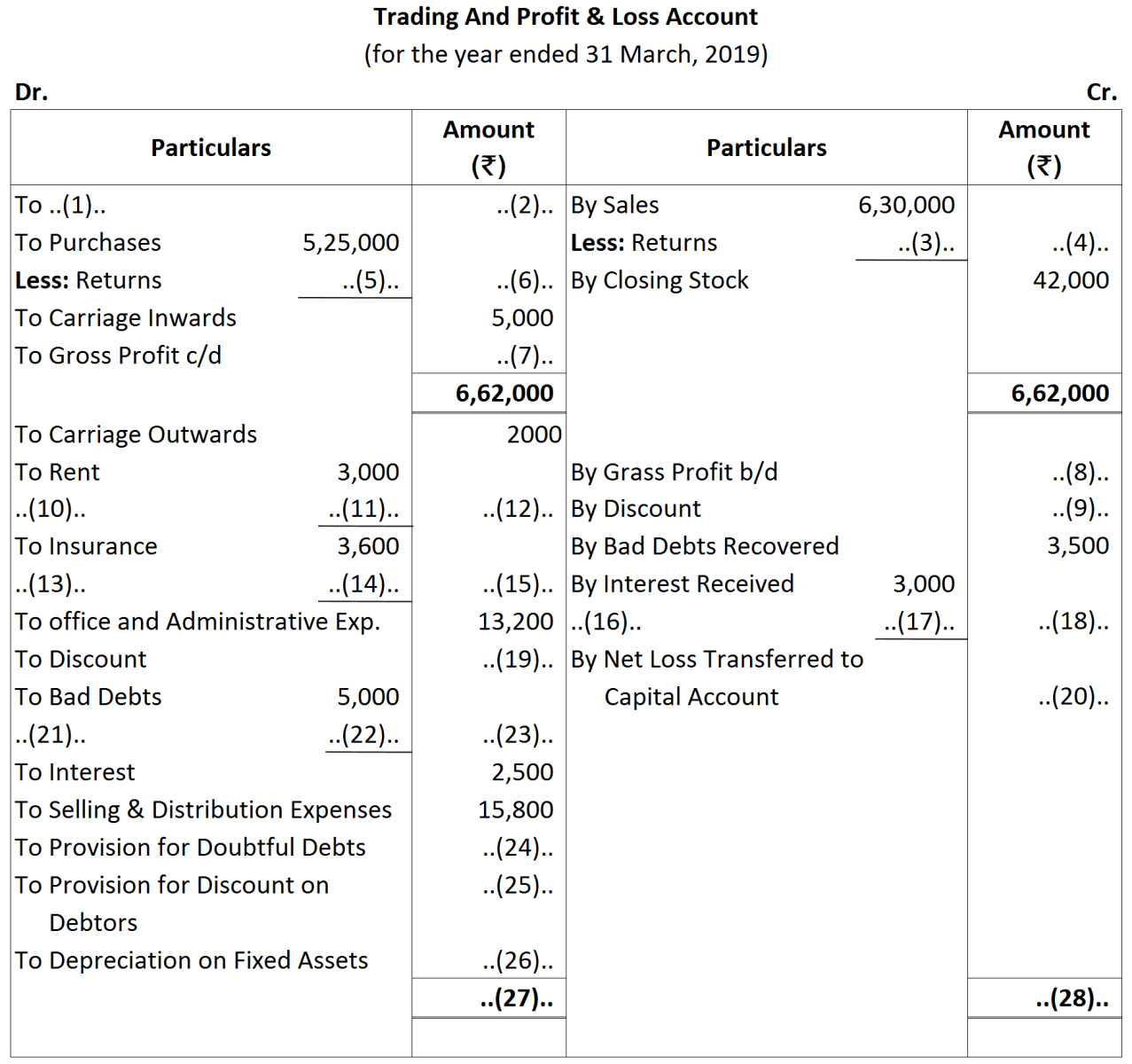
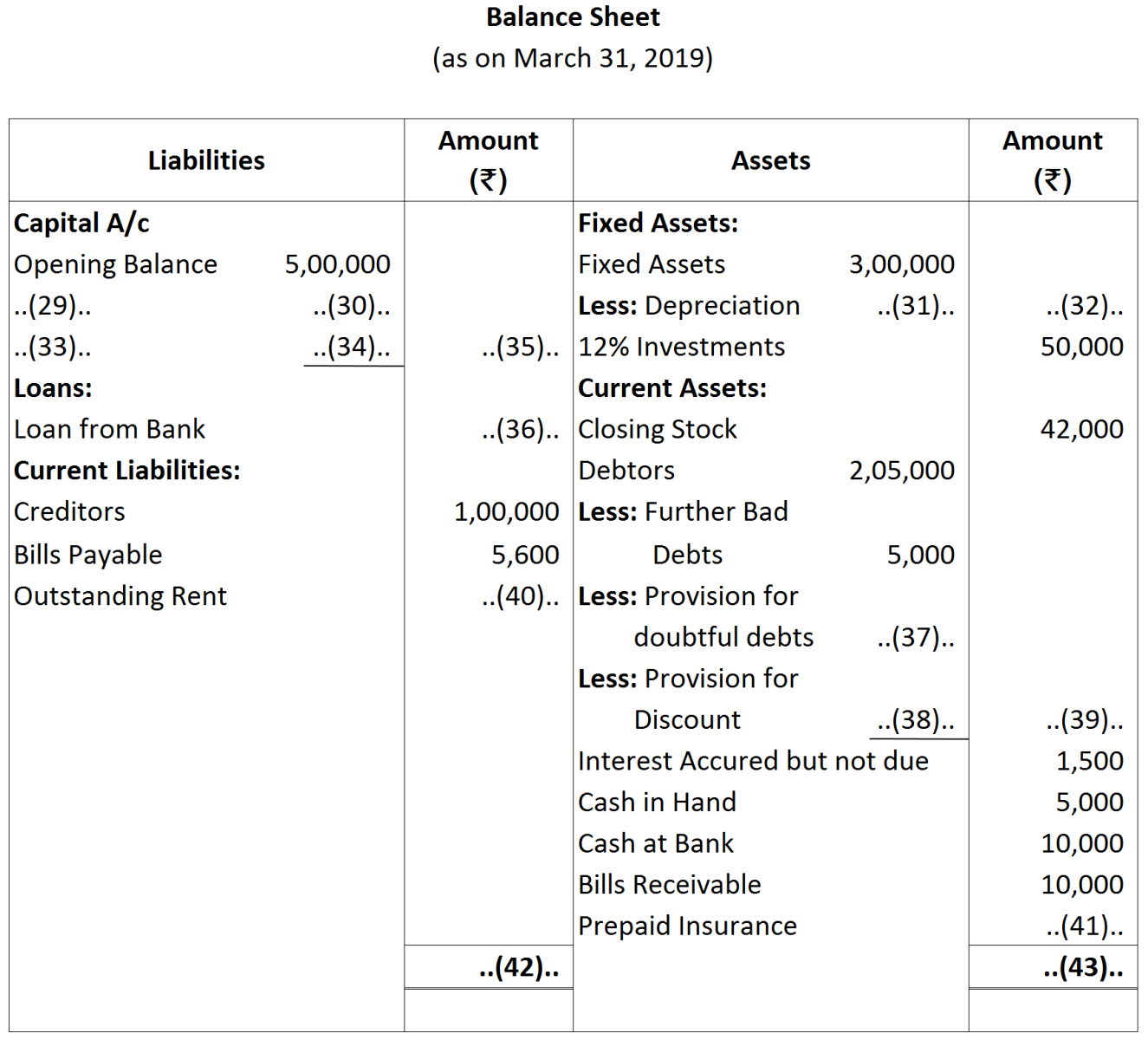
Required: Complete the missing values of Trading Account, Profit and Loss Account and Balance Sheet.

Mr. Gopal Das has only a Bank Pass Book and does not keep any other books of accounts. From the following information prepare his Final Accounts for the year ended $31^{st} $ March, $2015.$ An analysis of the Pass Book shows: Total amount received from Debtors and deposited with the Bank $₹\ 2,20,000;$ Payment to Creditors $₹\ 1,82,000$; Salaries $₹\ 6,000;$ Rent paid $₹\ 4,800;$ Advertisement $₹\ 2,000;$ Printing $₹\ 800;$ Personal Expenses $₹\ 4,000;$ Payment for Furniture $₹\ 12,000;$ Balance at Bank on $31^{st}$ March, $2015, ₹\ 21,000.$ Other Assets and Liabilities were as follows:
Mr. Gopal Das takes $20\%$ profit on sales.
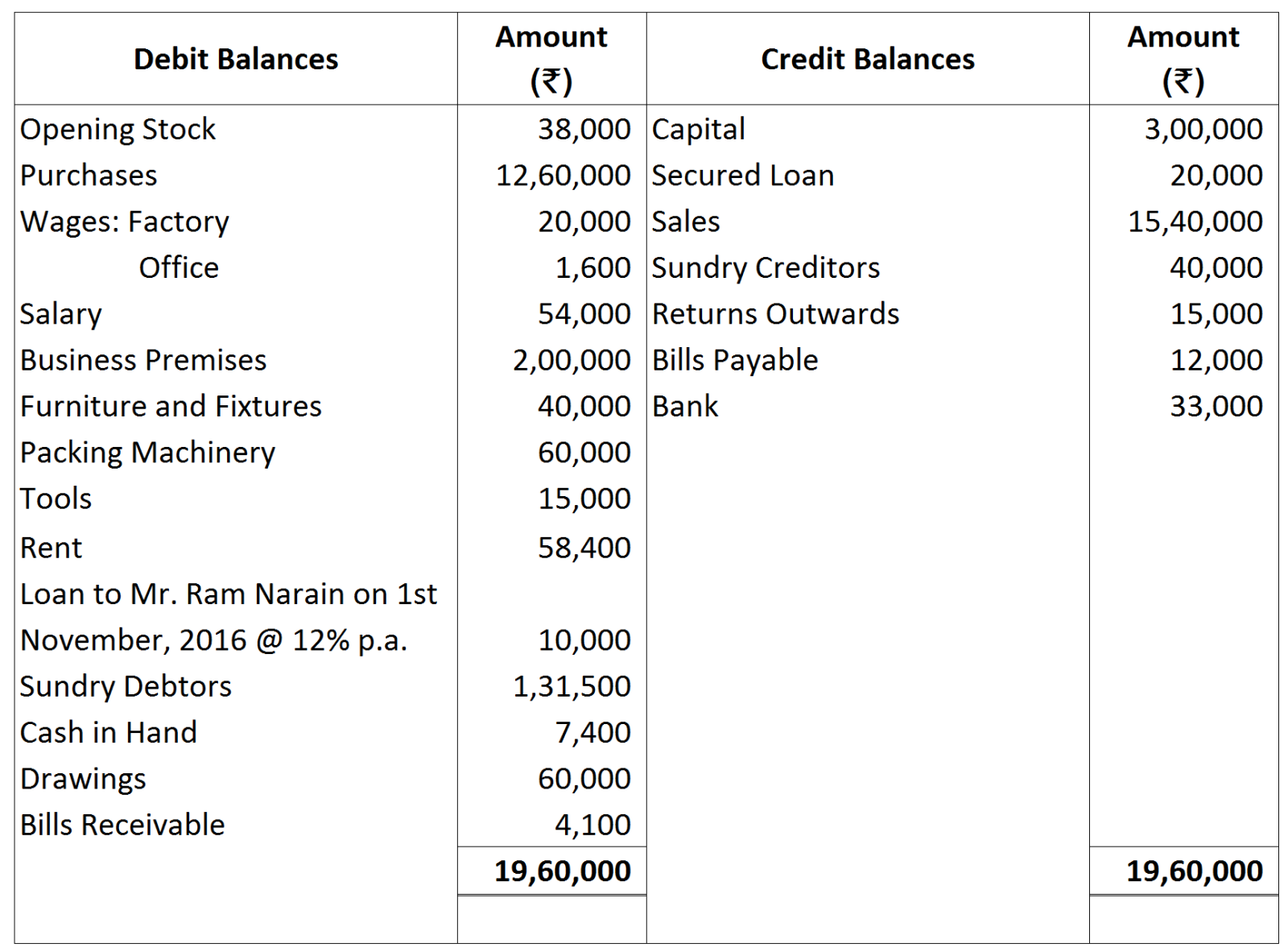
From the following balances prepare Final Accounts as at 31st March 2017:-
Value of Closing Stock was ₹ 36,500 on 31st March, 2017.
State three points of difference between Statement of Affairs and Balance Sheet.
Prepare the trading and profit and loss account and balance sheet of M/s ontrol Device India on March 31, 2017 from the following balance as on that date.
Closing stock was valued ₹ 20,000.
  1. Interest on capital @ 10%.
  2. Interest on drawings @ 5%.
  3. Wages outstanding ₹ 50.
  4. Outstanding salary ₹ 20.
  5. Provide a depreciation @ 5% on plant and machinery.
  6. Make a 5% provision on debtors.