- ✓these give unionised acid or base on reaction with added acid or alkali
- Bacids and alkalies in these solutions are shielded from attack by other ions
- Cthey have large excess of $H^+$ or $OH^-$ ions
- Dthey have fixed value of $pH.$
$\mathrm{H}_{3} \mathrm{O}^{+}+\mathrm{A}^{-} \rightleftharpoons \mathrm{H}_{2} \mathrm{O}+\mathrm{HA}$
$\mathrm{OH^-}+\mathrm{HA} \rightarrow \mathrm{H}_{2} \mathrm{O}+\mathrm{A}^{-}$
If acid is added, it reacts with $A^-$ to form undissociated $HA$. Similarly, if base/alkali is added, $OH^-$ combines with $HA$ to give $H_2O$ and Aand thus, maintains the acidity/alkalinity of buffer solution.
Generate a complete, print-ready paper with questions like this in minutes — across 16+ boards, with answer keys.
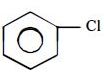
$[Image]$ is ..... .
$2$ $[image]$ + $\begin{array}{*{20}{c}}
{O\,\,\,\,\,\,} \\
{||\,\,\,\,\,\,} \\
{H - C - CC{l_3}}
\end{array}$ $\xrightarrow{{{H_2}S{O_4}}}$
The major product formed is


$(1)\,CH_3C \equiv C - CH_3$ $(2)\,CH_3CH_2 -CH_2 -CH_3$
$(3)\, CH_3CH_2C \equiv CH$ $(4)\, CH_3CH = CH_2$