MCQ
C and Si both have the same lattice structure, having 4 bonding electrons in each. However, C is an insulator whereas Si is an intrinsic semiconductor. This is because
A. In case of C the valence band is not completely filled at absolute zero temperature.
B. In case of C the conduction band is partly filled even at absolute zero temperature.
C. The four bonding electrons in the case of C lie in the second orbit, whereas in the case of Si they lie in the third.
D. The four bonding electrons in the case of C lie in the third orbit, whereas for Si they lie in the fourth orbit.
  • A
    Option B
  • B
    Option A
  • C
    Option D
  • D
    Option C

Answer

(d) Option C
Explanation: ${ }^6 C : 1 s^2 2 s^2 2 p^2$
${ }^{14} Si : 1 s^2 2 s^2 2 p^6 3 s^2 3 p^2$
The energy required to take out an electron from the 3rd orbit of Si is much smaller than to take out an electron from the 2nd orbit of C. So, Si has a significant number of free electrons while C has a negligibly small number of free electrons.

Need a full question paper?

Generate a complete, print-ready paper with questions like this in minutes — across 16+ boards, with answer keys.

Start Generating Free

Similar questions

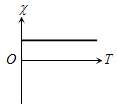
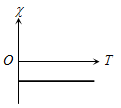
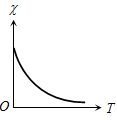
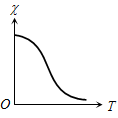
The variation of magnetic susceptibility (x) with temperature for a diamagnetic substance is best represented by

(a)

(b)

(c)

(d)

An electron falls from rest through a vertical distance h in a uniform and vertically upward directed electric field E. The direction of electric field is now reversed, keeping its magnitude the same. A proton is allowed to fall from rest in it through the same vertical distance h. The time of fall of the electron, in comparison to the time of fall of the proton is:
The size of an object as perceived by an eye depends primarily on:
  1. Actual size of the object.
  2. Distance of the object from the eye.
  3. Aperture of the pupil.
  4. Size of the image formed on the retina.
What is the amount of work done to bring a charge of 4 × 10-3C charge from infinity to a point whose electric potential is 2 × 102V?

The first excited state of hydrogen atom is 10.2 eV above its ground state. The temperature is needed to excite hydrogen atoms to first excited level, is

(a) 7.9  

(b) 3.5   

(c) 5.8   

(d) 14   

Two thin wire rings each having a radius R are placed at  a distance d apart with their axes coinciding. The charges on the two rings are +q  and -q. The potential difference between the centres of the two rings is

(a) Zero  

(b)

(c)

(d)

When   transforms to , then the number of the emitted a- and b-particles is, respectively

(a) 8α, 7β

(b) 4α, 7β

(c) 4 α, 4β

(d) 4α, 1β

Electron volt is a unit of

(a) Potential

(b) Charge

(c) Power   

(d) Energy

The conduction current is same as displacement current when source is:

The wavelength of yellow line of sodium is 5896 Å. Its wave number will be

(a) 50883 × 1010 per second

(b) 16961 per cm

(c) 17581 per cm

(d) 50883 per cm