Question
Calculate G.P. Ratio from the following:
Answer

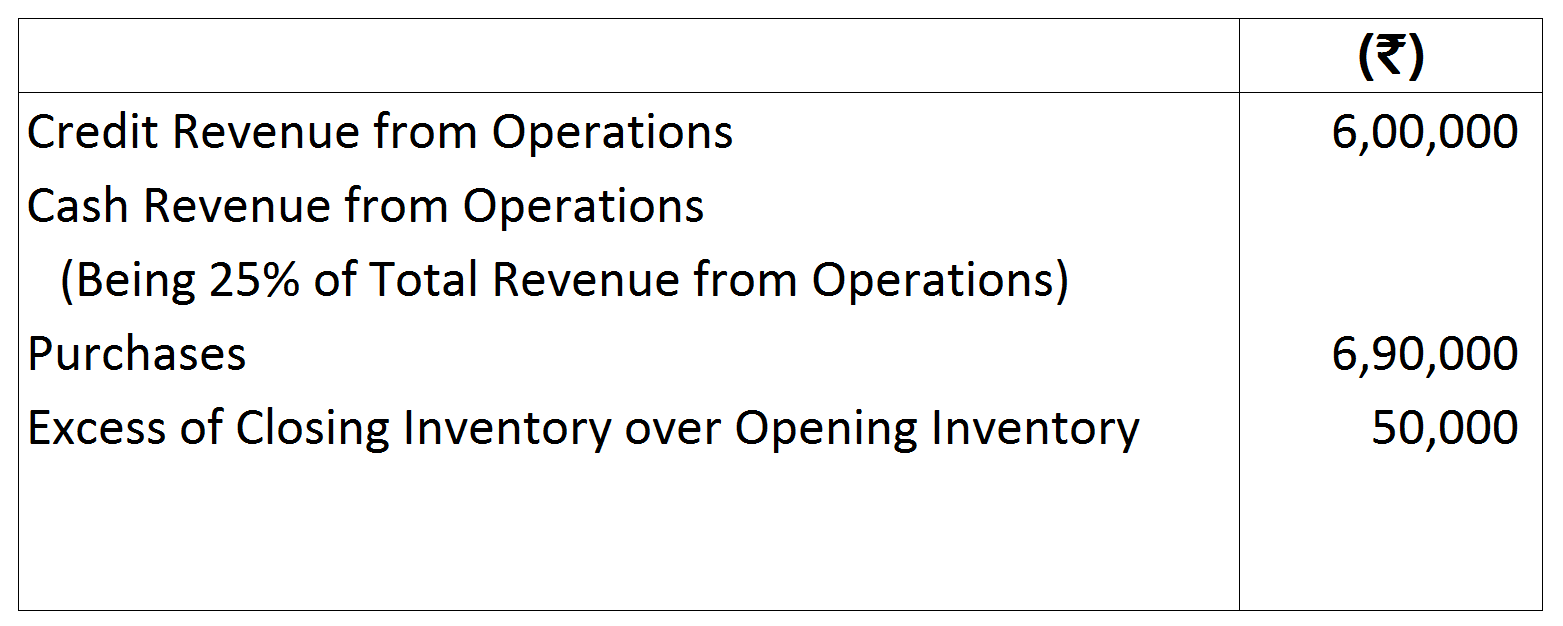
If Total Revenue from Operations is ₹ 100, Cash Revenue from Operations will be ₹ 25 and Credit Revenue from Operations ₹ 75
Hence,
If Credit Revenue from Operations is ₹ 75
Total Revenue from Operations will be = ₹ 100
If Credit Revenue from Operations is ₹ 6,00,000
Total Revenue from Operations will be $=\frac{100}{75}\times ₹\ 6,00,000$
Cost of Revenue from Operations = Purchases - Excess of Closing Inventory over Opening Inventory
= ₹ 6,90,000 - ₹ 50,000 = ₹ 6,40,000
Gross Profit = Total Revenue from Operations - Cost of Revenue from Operations
= ₹ 8,00,000- ₹ 6,40,000 = ₹ 1,60,000
Gross Profit Ratio $=\frac{\text{Gross Profit}}{\text{Net Revenue from Operations}}\times100$
$=\frac{₹\ 1,60,000}{₹\ 8,00,000}\times100= 20\%$

Need a full question paper?

Generate a complete, print-ready paper with questions like this in minutes — across 16+ boards, with answer keys.
Start Generating Free

Similar questions

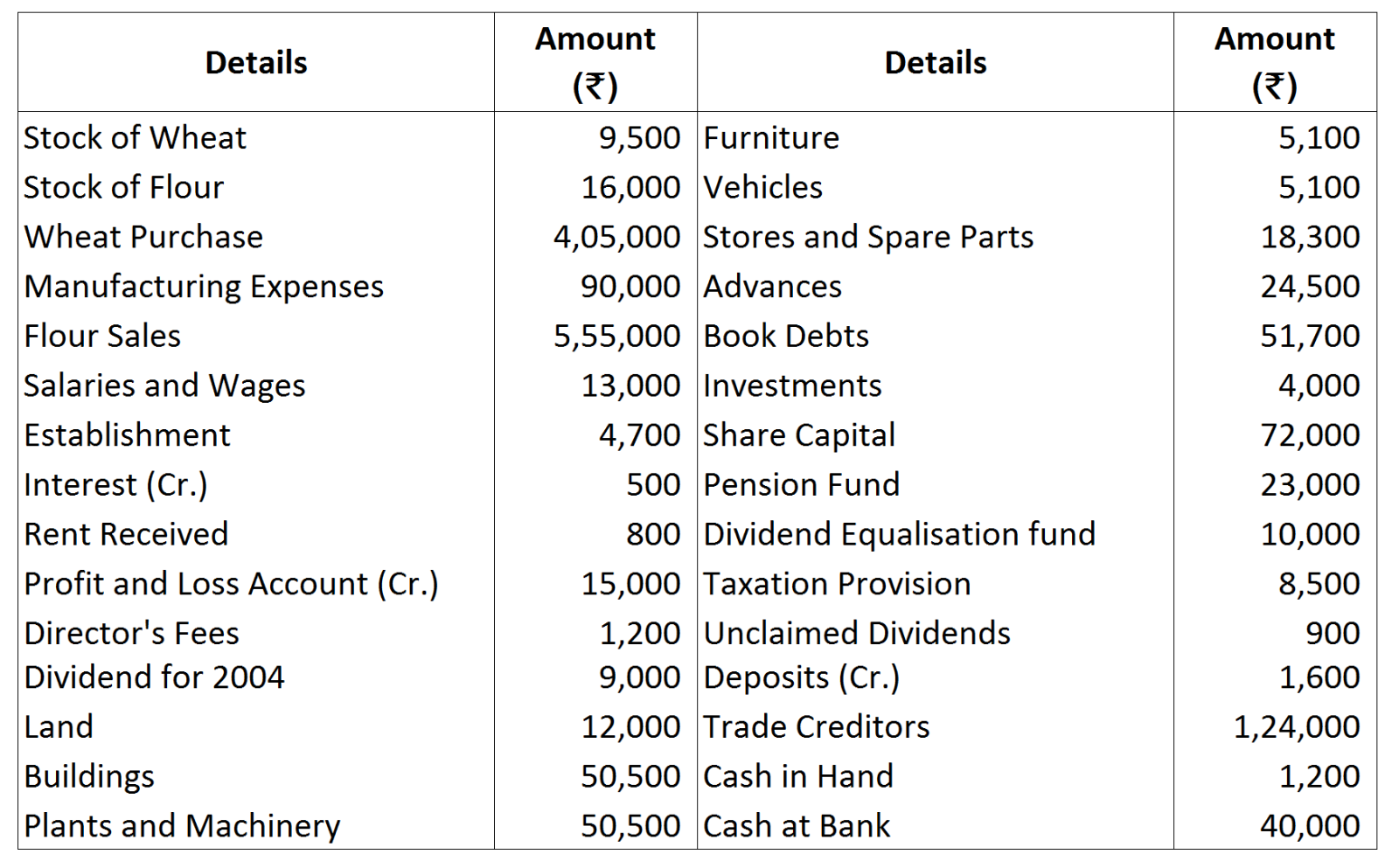
The following balances appeared in the books of Parasuram Flour Mills Ltd., as on December 31, 2005:
Prepare the company’s trading and profit and loss account for the year and balance sheet as on December 31, 2005 after taking the following adjustments into account:
  1. Stock on December 31, 2005 were: Wheat at cost, ₹ 14,900: Flour at market price, ₹ 21,700;
  2. Outstanding expenses: Manufacturing expenses, ₹ 23,500; and salaries and wages, ₹ 1,200;
  3. Provide depreciation: Building at 2% ; Plant and machinery at 10%: Furniture at 10% ; and Vehicle 20%.
  4. Interest accrued on Government Securities, ₹ 100
  5. A tax provision of ₹ 8,000 is considered necessary.
  6. The directors propose a dividend of 20%.
  7. The authorised capital consists of 12,000 equity shares of ₹ 10 each of which 7,200 shares were issued and fully paid up.
Rich sugar Ltd. issued ₹ 20 Lakh, 8% Debentures divided into debentures of ₹ 100 each on 1st April, 2013, redeemable in four equal annual instalments starting from 31st March, 2016. The company decided to transfer to Debentures Redemption Reserve ₹ 2,50,000 each year on 31st March, 2014 and 2015.
The company invested ₹ 3,00,000 in Government securities as required by the Companies Act, 2013.
Pass necessary journal entries for the above transactions.
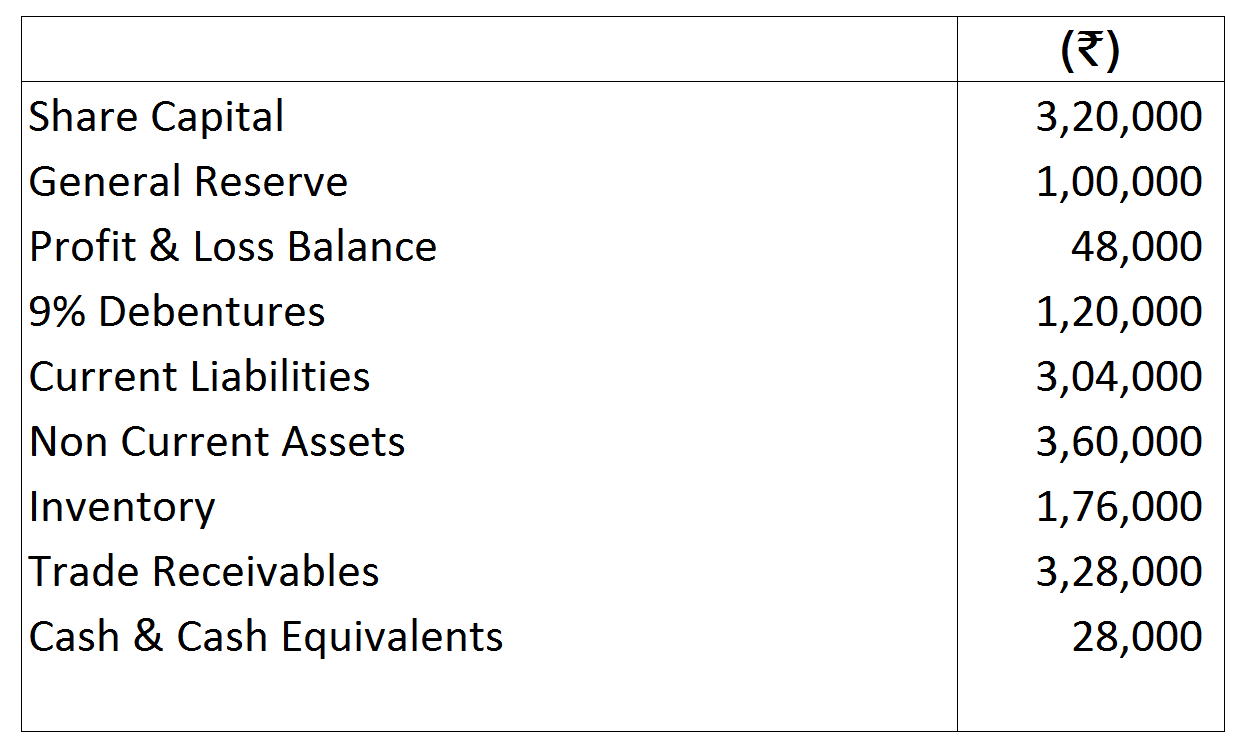
Following particulars are extracted from the books of Bharat Rubber Ltd.:

You are required to work out the following ratios:-
  1. Debt-Equity Ratio.
  2. Total Assets to Debt Ratio.
  3. Proprietary Ratio.
  4. Quick Ratio.
Calculate G.P. Ratio from the following:
Credit Revenue from Operations were $ \frac{1}{4}\text{th}$ of Total Revenue from Operations. Credit Revenue from Operations were ₹ 1,20,000. Credit Purchases were $ \frac{1}{5}\text{th}$ of Cash Purchases. Credit Purchases were ₹ 40,000. Opening Inventory ₹ 70,000. It was ₹ 20,000 more than Closing Inventory; Carriage ₹ 15,000, Wages ₹ 45,000.
India Textiles Corporation Ltd. has outstanding ₹ 50,00,000; 9% Debentures of ₹ 100 each due for redemption on 31st July, 2017. Pass journal entries for redemption assuming that there is a balance of ₹ 3,00,000 in Debentures Redemption Reserve on the date of redemption.
Iron Products Ltd. issued 5,000; 9% Debentures of ₹ 100 each at a premium of ₹ 40 payable as follows;
  1. ₹ 40, including premium of ₹ 10 on applications.
  2. ₹ 45, including premium of ₹ 15 on allotment.
  3. Balance as first and final call.
The issue was subscribed and allotment made. Calls were made and due amount was received.
Pass Journal entries.

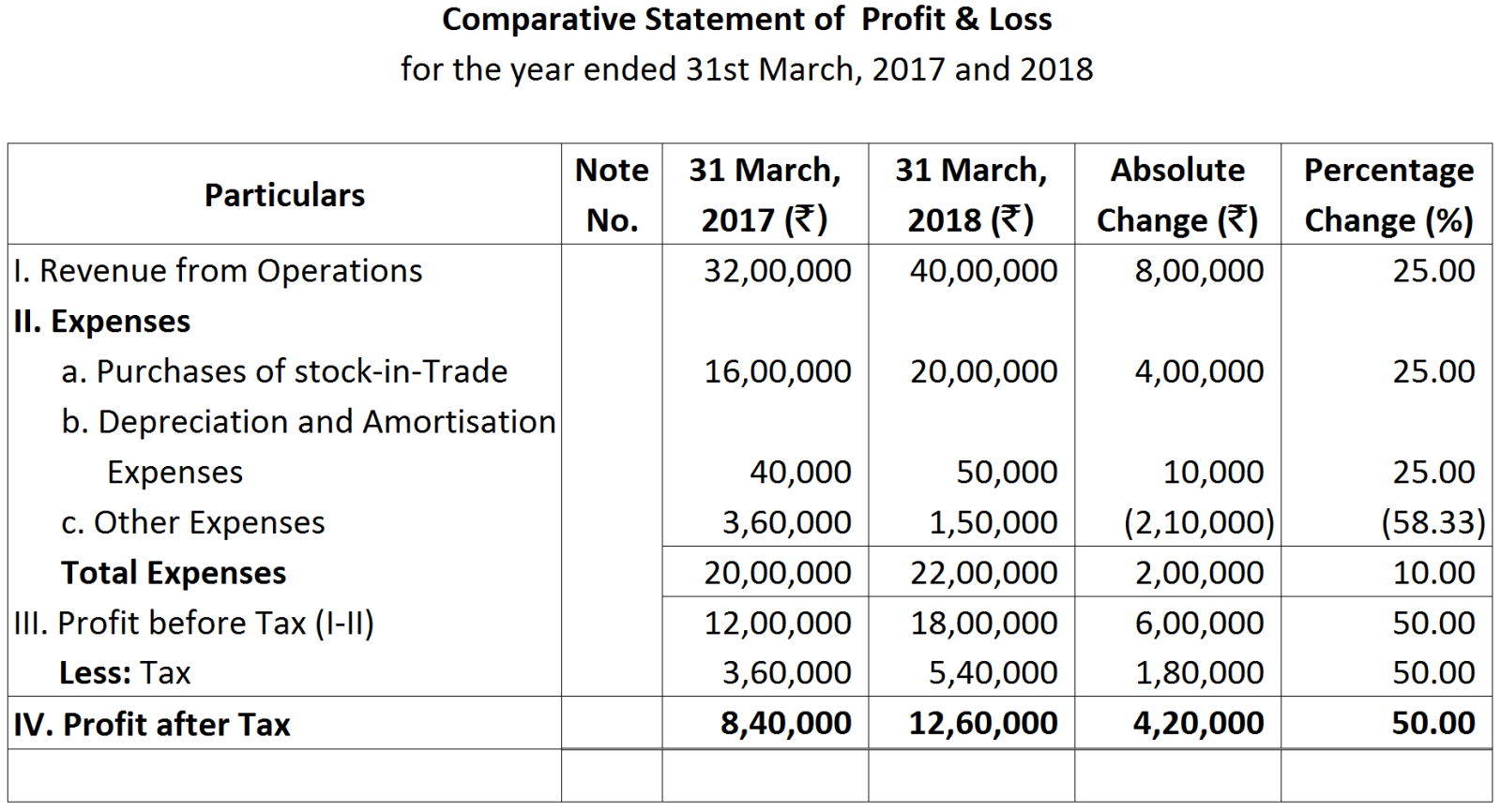
From the above Comparative Statment of Profit and loss for the year ended 31st March, 2017 and 31st March, 2018, compute Operating ratio.
Explain briefly the meaning and significance of any two of the following ratios:
  1. Debt-Equity Ratio.
  2. Operating Ratio.
  3. Trade Receivables Turnover Ratio.
XYZ Ltd. issued a prospectus inviting applications for 2,000 shares of ₹ 10 each at a premium of ₹ 4 per share, payable as:
On application - ₹ 6 (including ₹ 1 premium)
On allotment - ₹ 2 (including ₹ 1 premium)
On first call - ₹ 3 (including ₹ 1 premium)
On second and final call - ₹ 3 (including ₹ 1 premium)
Applications were received for 3,000 shares and pro rata allotment was made on the applications for 2,400 shares. It was decided to utilise excess application money towards the amount due on allotment.
X, to whom 40 shares were allotted, failed to pay the allotment money and on his subsequent failure to pay the first call, his shares were forfeited.
Y, who applied for 72 shares failed to pay the two calls and on his such failure, his shares were forfeited.
Of the shares forfeited, 80 shares were sold to Z credited as fully paid-up for ₹ 9 per share, the whole of Y's shares being included. Prepare Journal, Cash Book and the Balance Sheet.
Vikram Ltd. issued 50,000 shares of ₹ 10 each at a premium of ₹ 1 per share payable as follows:
₹ 3 on Application
₹ 4 on Allotment (including premium)
₹ 2 on Ist Call
Balance when required
Applications were received for 46,000 shares and all of these were accepted. Directors did not make the final call. A shareholder holding 800 shares did not pay the amount due on first call. The shares were forfeited and re-issued at ₹ 7 per share, ₹ 8 per share paid.
Pass Cash Book and Journal Entries.