Question
Calculate Return on Investment from the following:
Answer

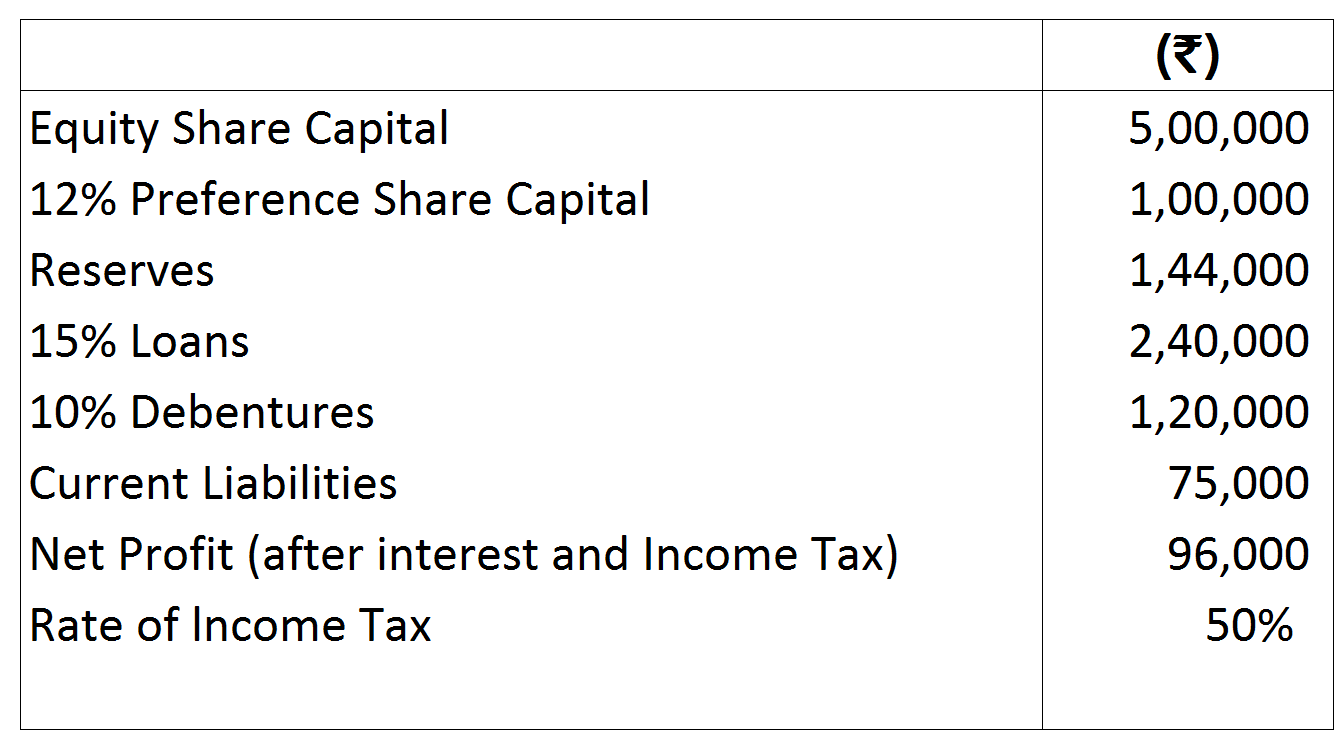
Return on Investment $=\frac{\text{Net profit before Interst and Tax}}{\text{Capital Employed }}\times10$ Calculation of Net Profit before Interest and Tax: Net Profit after Tax = ₹ 96,000 Net Profit before Tax $=96,000\times\frac{100}{50}=1,92,000$
Net Profit before Interest and Tax = ₹ 1,92,000 + Interest on Loan ₹ 36,000 + Interest on Debentures ₹ 12,000 = ₹ 2,40,000 Capital Employed = Shareholder's Funds + Non Current Liabilities = Equity Capital + Pref. Capital + Reserves + Current year's Profit + 15% Loans + 10% Debentures = ₹ 5,00,000 + ₹ 1,00,000 + ₹ 1,44,000 + ₹ 96,000 + ₹ 2,40,000 + ₹ 1,20,000 = ₹ 12,00,000 $=\frac{2,40,000}{12,00,000}\times100=20\%$

Need a full question paper?

Generate a complete, print-ready paper with questions like this in minutes — across 16+ boards, with answer keys.
Start Generating Free

Similar questions

On 1-4-2013 JN Ltd. had 10,000, 9% Debentures of ₹ 100 each outstanding.
  1. On 1-4-2014 the company purchased in the open market 2000 of its own debentures for ₹ 101 each and cancelled the same immediately.
  2. On 1-4-2015 the company redeemed at par debentures of ₹ 4,00,000 by draw of a lot.
  3. On 28-2-2016 the remaining debentures were purchased for immediate cancellation for ₹ 3,97,000.
Pass necessary journal entries for the above transactions in the books of the company ignoring debenture redemption reserve and interest on debentures.
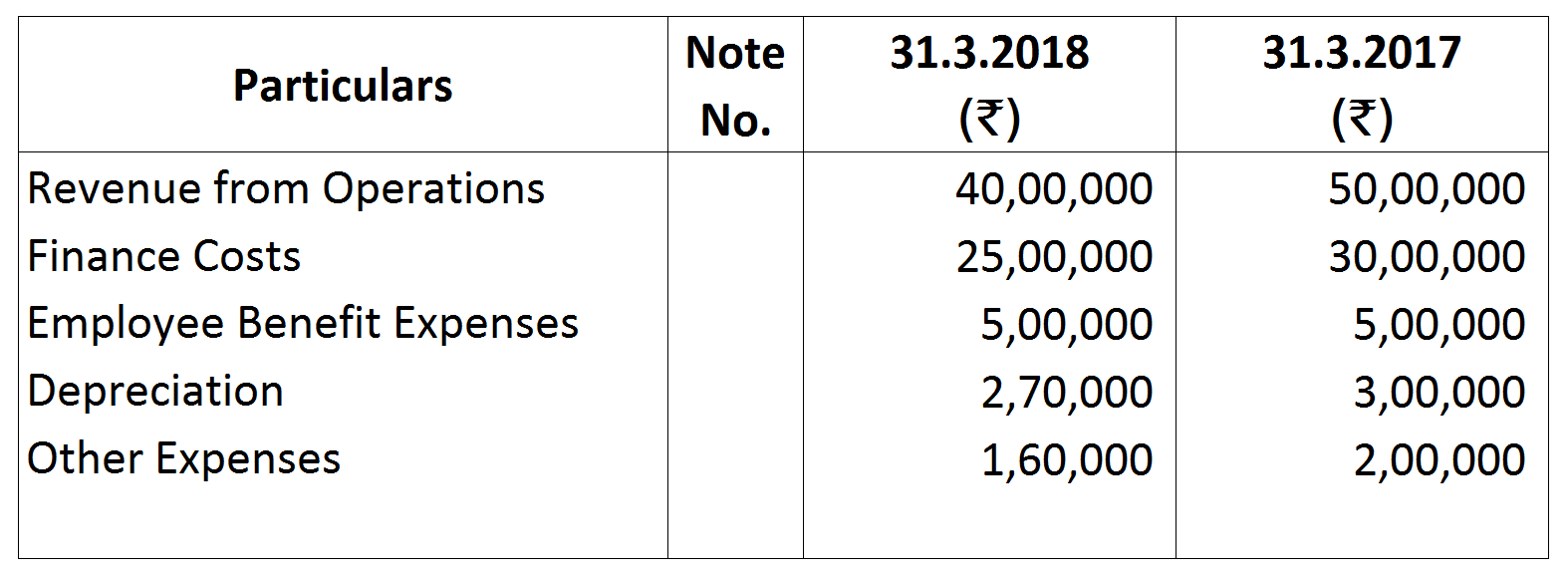
Prepare commom size statement of profit and loss from the following statement of profit and loss:
Z. Ltd. issued 2,000, 14% debentures of ₹ 100 each on April 01, 2013 at a discount of 10%, redeemable at a premium of 10% in equal annual drawings in 4 years out of profits.
Give journal entries both at the time of issue and redemption of debentures. (Ignore the treatment of loss on issue of debentures and interest).
On 1st April, 2014, Popular Ltd. issued 20,000; 10% Debentures of ₹ 100 each at a discount of 10% redeemable at par. Show the 'Discount on Issue of Debentures Account' if:
  1. Such debentures are redeemable after 4 years.
  2. Such debentures are redeemable by equal annual drawings in 4 years, starting from 31st March, 2015. Popular Ltd. follows financial year as its accounting year.
On 1st April, 2013 the following balances appeared in the books of Blue and Green Ltd:
12%Debentures (Redeemable on 31st August, 2015).
₹ 20,00,000
Debentures Redemption Reserve.
₹ 2,00,000
The company met the requirements of Companies Act, 2013 regarding Debentures Redemption Reserve and Debentures Redemption Investments and redeemed the debentures.
Ignoring interest on investments, pass necessary journal entries for the above transactions in the books of company.
From the following information, prepare a Comparative Statement of Profit:
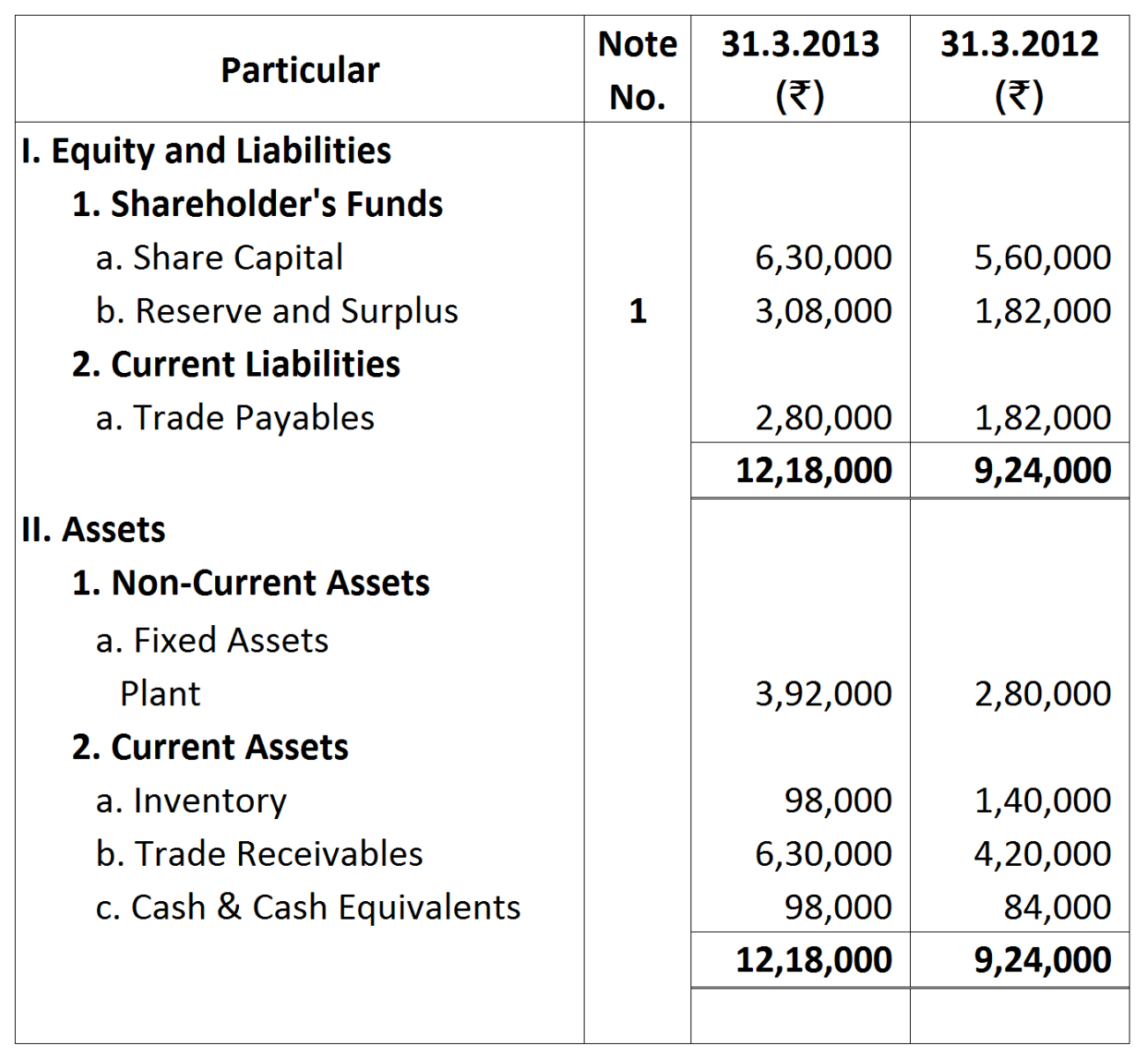
Prepare a Cash Flow Statement from the following Balance Sheet:

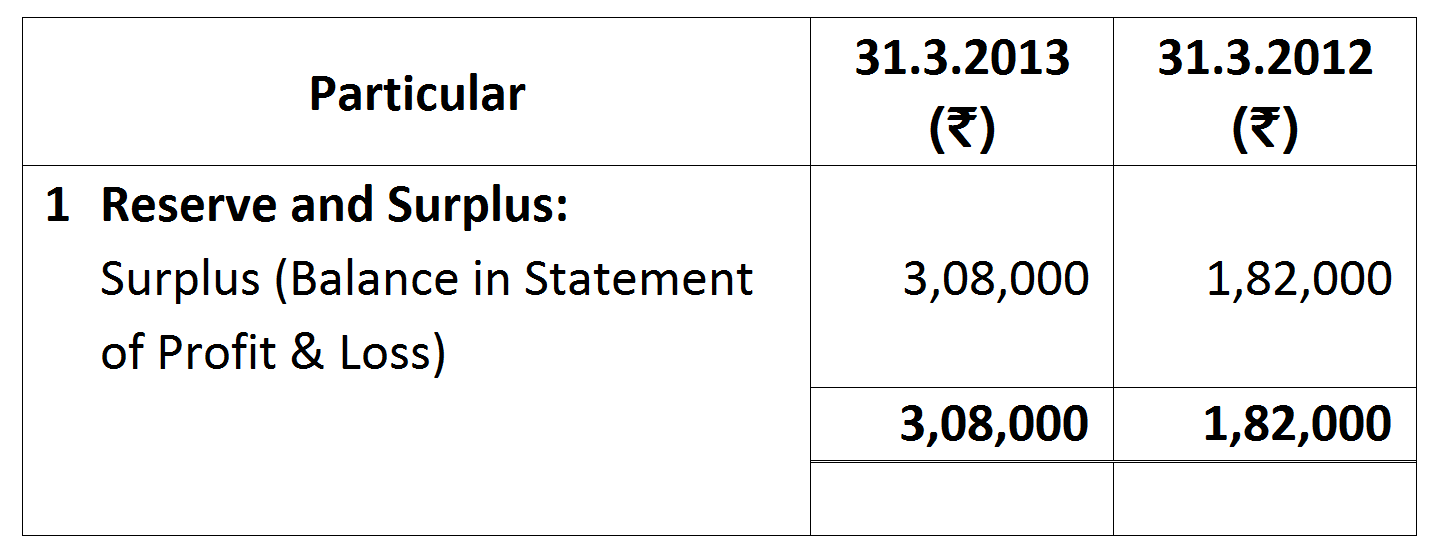
Note:

Additional Information:
An old machinery having book value of ₹ 42,000 was sold for ₹ 56,000.
Depreciation provided on machinery during the year was ₹ 28,000.
Assuming that Debt to Equity Ratio is 0.5 : 1, state, giving reasons, whether this ratio will increase or decrease or will have no change in each one of the following cases:
  1. Issue of Preference Shares for Cash.
  2. Issue of Debentures for Cash
  3. Issue of Bonus Shares.
  4. Redemption of Debentures for Cash.
  5. Conversion of Debentures into Equity Shares.
  6. Purchase of a Fixed Asset for Cash.
  7. Purchase of a fixed Asset by taking long-term loan.
  8. Sale of Fixed Asset (Book value ₹ 5,00,000) for ₹ 4,00,000
  9. Sale of Fixed Asset (Book value ₹ 2,00,000) at a profit of ₹ 50,000.
Govind Ltd., issued a prospectus inviting applications for 20,000 shares of ₹ 10 each at a premium of ₹ 3 per share, payable as to ₹ 4 on application; ₹ 5 on allotment (including premium); ₹ 2 on First call; and ₹ 2 on Final call.
Applications were received for 27,000 shares. Directors allotted the shares as follows:
To applicants of 16,000 shares full allotment
To applicants of 6,000 shares 4,000 shares
To applicants of 5,000 shares Nil
Give entries in the Cash Book and Journal, assuming that all sums due on allotment and calls have been received.
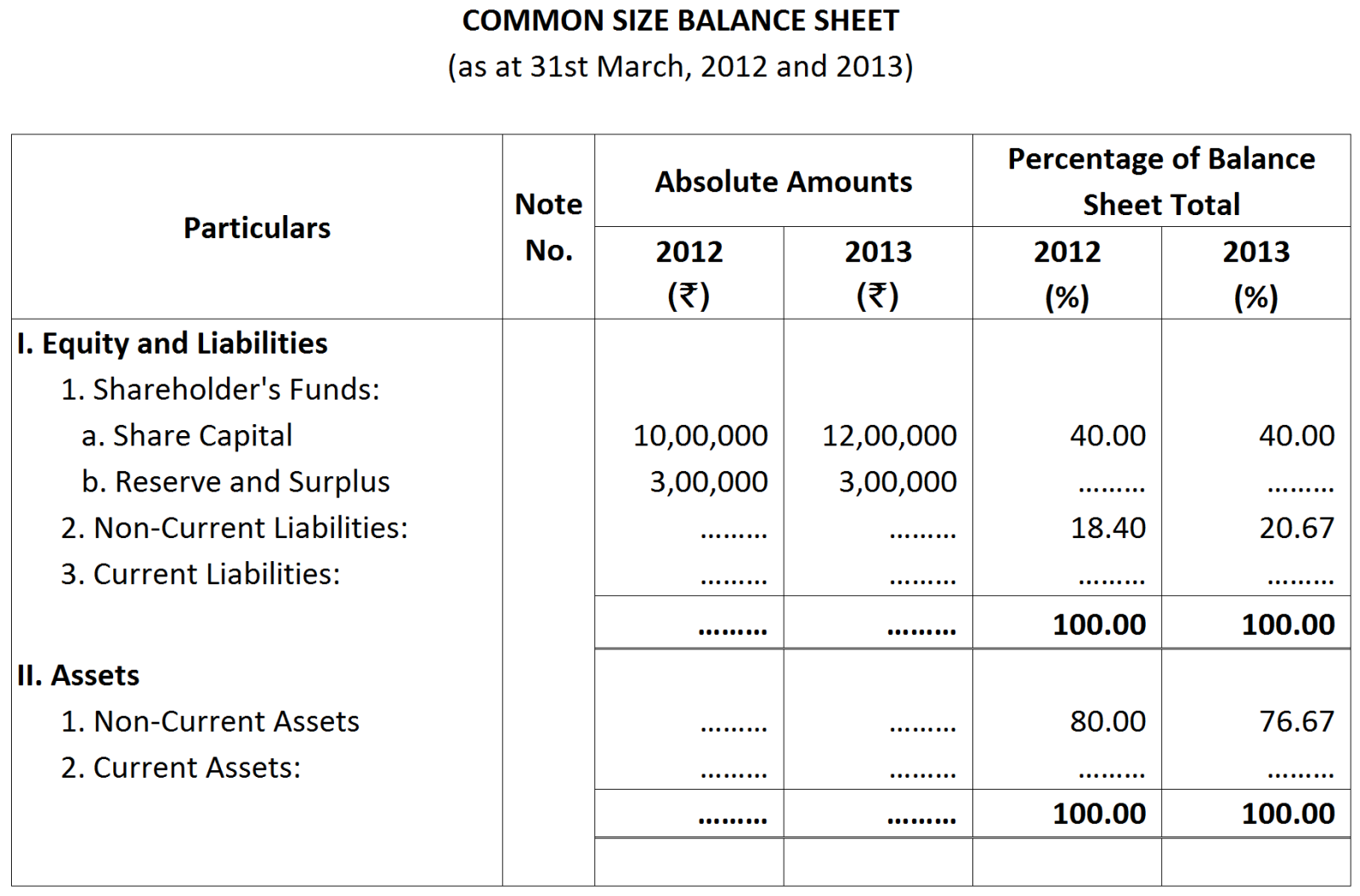
  1. Fill in the missing figures in the following Common Size Balance Sheet:
  1. Also calculate the Proprietary Ratio.