Question
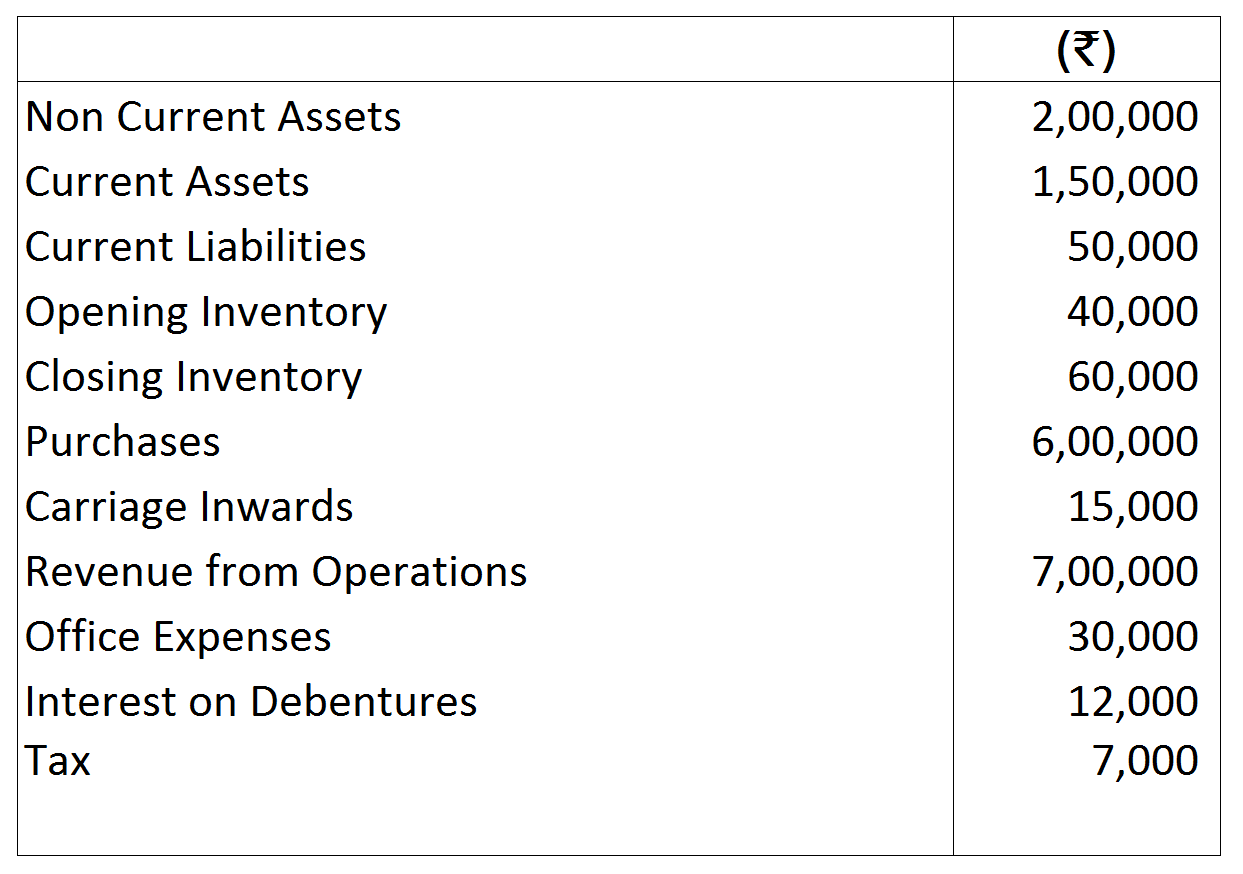
Calculate Return on Investment from the following:
Answer

Return on Investment or Capital Employed $=\frac{\text{Net profit before Interst & Tax}}{\text{Capital Employed }}\times100$
Net Profit before Interest = Gross Profit - Indirect Expenses (i.e., Office Expenses)
Gross Profit = Revenue from Operations -Cost of Revenue from Operations
Cost of Revenue from Operations = Opening Inventory + Purchases + Carriage Inwards - Closing Inventory
= ₹ 40,000 + ₹ 6,00,000 +₹ 15,000 - ₹ 60,000
= ₹ 5,95,000
Gross Profit = ₹ 7,00,000 - ₹ 5,95,000 = ₹ 1,05,000
Net Profit before Interest = Gross Profit - Office Expenses
= ₹ 1,05,000 - ₹ 30,000 = ₹ 75,000
Capital Employed = Non Current Assets + Current Assets - Current Liabilities
= ₹ 2,00,000 + ₹ 1,50,000 - ₹ 50,000
= ₹ 3,00,000
Return on Investment $=\frac{75,000}{3,00,000}\times100=25\%$

Need a full question paper?

Generate a complete, print-ready paper with questions like this in minutes — across 16+ boards, with answer keys.
Start Generating Free

Similar questions

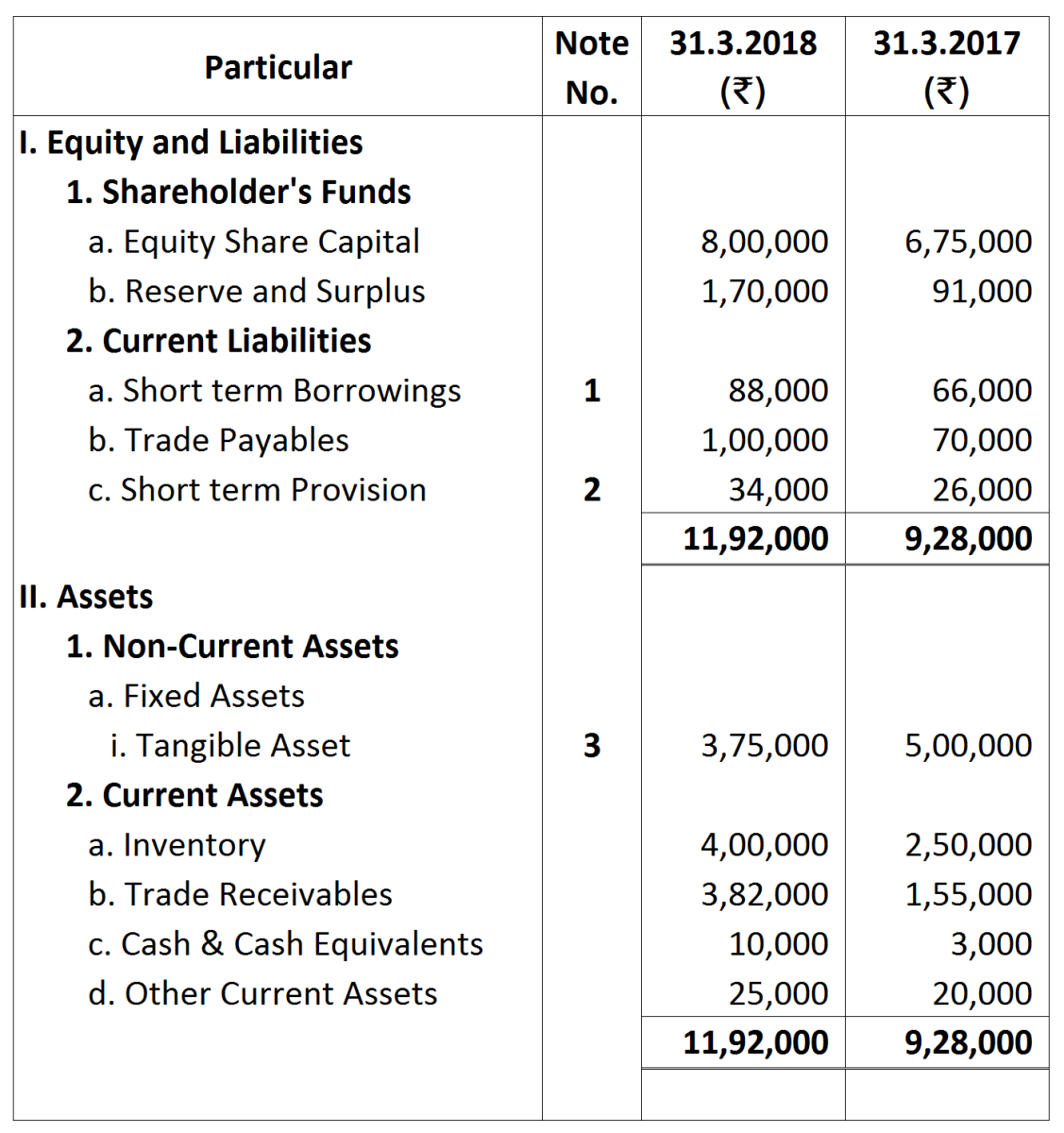
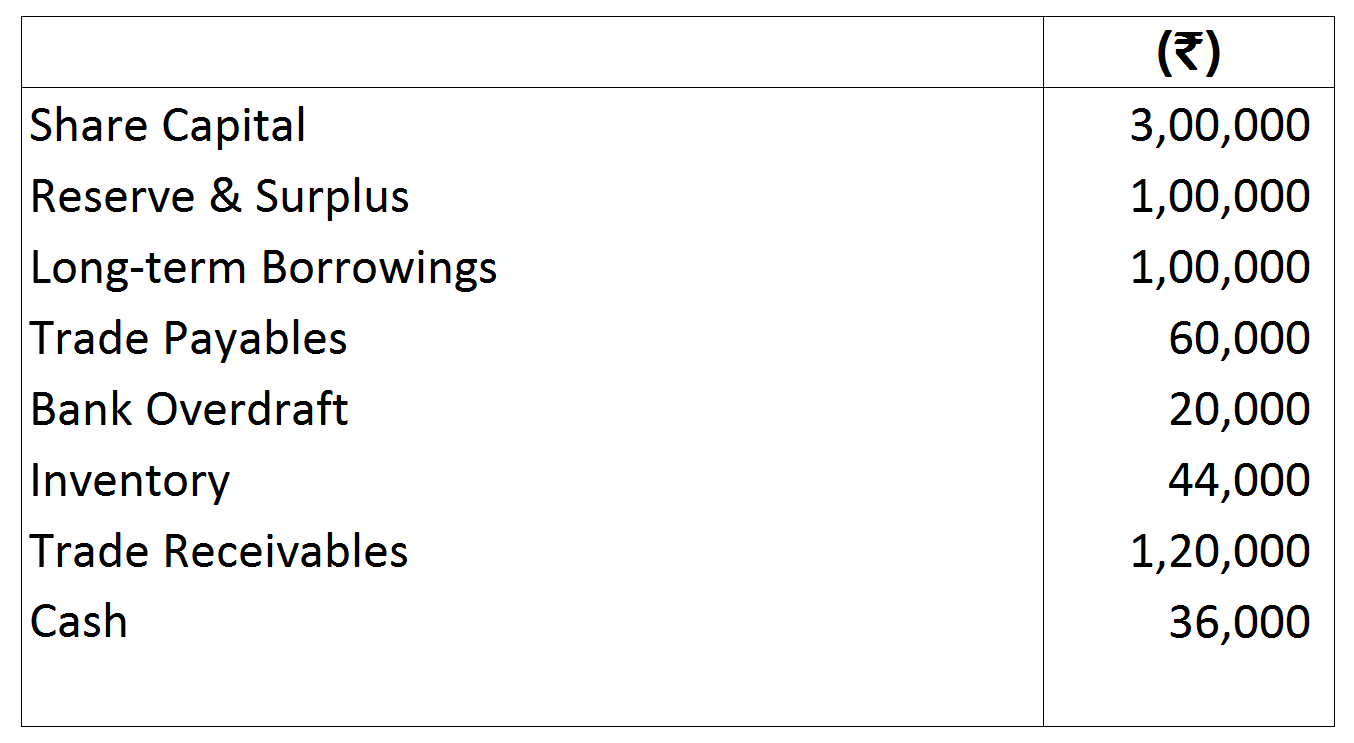
Following particulars are obtained from the books of A Ltd. as on 31.3.2018

You are required to calculate:
  1. Working Capital Ratio.
  2. Debt Equity Ratio.
  3. Trade Receivables Turnover Ratio if credit revenue from operations are ₹ 7,20,000.
The quick ratio of a company is 1 : 1. State giving reasons, which of the following would improve, reduce or not change the ratio?
  1. Purchase of machinery for cash.
  2. Purchase of goods on credit.
  3. Sale of furniture at cost.
  4. Sale of goods at a profit.
  5. Redemption of Debentures.
  6. Cash received from Debtors.
Kochi Silk Ltd. issued a prospectus inviting applications for 40,000 shares of ₹ 10 each at a premium of ₹ 8 per share, payable as follows:
On Application
₹ 6 (including ₹ 2 premium)
On Allotment
₹ 6 (including ₹ 2 premium)
On First Call
₹ 3 (including ₹ 2 premium)
On Second & Final Call
₹ 3 (including ₹ 2 premium)
Applications were received for 80,000 shares and pro-rata allotment was made on the applications for 70,000 shares. It was decided to utilise excess application money towards the sums due on allotment.
X, to whom 1,200 shares were allotted, failed to pay the allotment money and on his subsequent failure to pay the first call his shares were forfeited
Y, who applied for 3,500 shares failed to pay the two calls and on his such failure, his shares were also forfeited.
Of the shares forfeited, 2,500 shares were reissued as fully paid up for ₹ 9 per share, the whole of Ys shares being included. Prepare Cash Book and Journal entries.
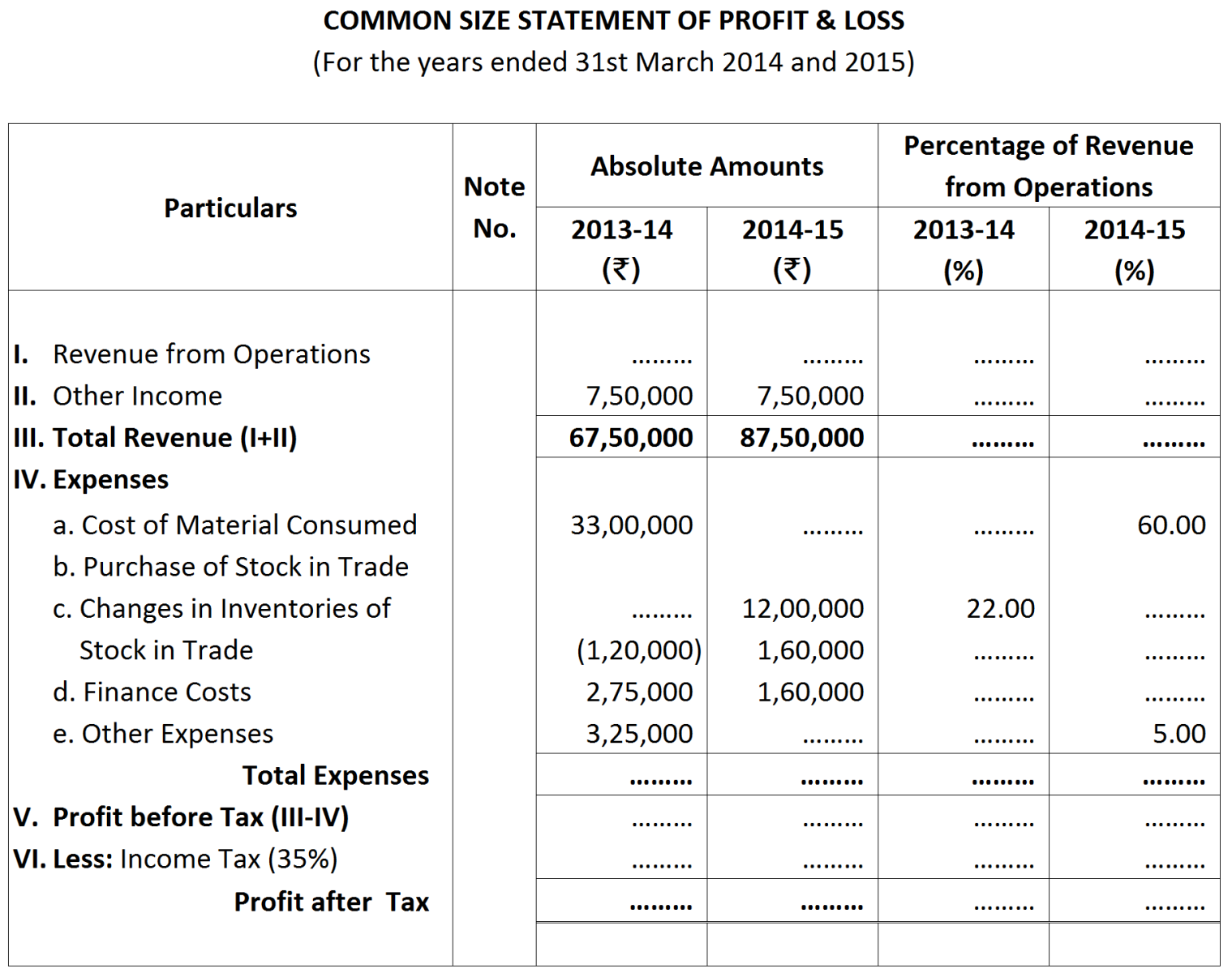
Following is the Common-Size Statement of Profit and Loss:
You are required to:
  1. Fill in the missing figures.
  2. Compute the following ratios:
  1. Gross Profit Ratio.
  2. Interest Coverage Ratio.
New Company Ltd. has a nominal capital of ₹ 2,50,000 in shares of ₹ 10. Of these, 4,000 shares were issued as fully paid in payment of building purchased, 8,000 shares were subscribed by the public and during the first year ₹ 5 per share were called-up, payable ₹ 2 on application, ₹ 1 on allotment, ₹ 1 on first call and ₹ 1 on second call. The amounts received in respect of these shares were:
On 6,000 shares Full amount called,
On 1,250 shares ₹ 4 per share,
On 500 shares ₹ 3 per share,
On 250 shares ₹ 2 per share.
The Directors forfeited the 750 shares on which less than ₹ 4 had been paid. The shares were subsequently reissued at ₹ 3 per share.
Pass journal entries recording the above transactions and prepare the company's Balance Sheet.
Tushar Ltd. invited applications for issuing 3,00,000 equity shares of ₹ 10 each at a premium of ₹ 4 per share. The amount was payable as follows:
On Application ₹ 8 (including premium) and balance on Allotment.
Applications for 4,00,000 shares were received. Pro-rata allotment was made to all applicants. Excess money received on application was adjusted towards sums due on allotment.
A shareholder to whom 1,800 shares were allotted failed to pay the allotment money and therefore, his share was forfeited. Later on the forfeited shares were re-issued for ₹ 15,000 as fully paid up.
Pass necessary journal entries in the books of Tushar Ltd.
From the following Balance Sheets of XLtd., you are required to prepare Cash Flow Statement. Notes:
1.
Short-term Borrowings:
31.3.2018
31.3.2017
 
Bank Overdraft
88,000
66,000
2.
Short-term Provision


Taxation Provision
34,000
26,000
3
Tangible Assets:


Land
1,50,000
2,00,000
 
Plant
2,25,000
3,00,000
 
 
3,75,000
5,00,000
Additional Information:
  1. Interim Dividend paid during the year ₹ 60,000
  2. Land was sold at a profit of ₹ 30,000
  3. Plant costing ₹ 20,000 was sold during the year at a loss of ₹ 8,000.
A Ltd. company with registered capital of ₹ 5,00,000 in shares of ₹ 10 each issued 20,000 of such shares payable ₹ 2 on application, ₹ 4 on allotment, ₹ 2 on final call. All the money payable on allotment was duly received but on the first call being made, one shareholder paid the entire balance on his holding of 300 shares and five shareholders with a total holding of 1,000 shares failed to pay their dues on the first call. These shares were forfeited for non-payment of first call money. Final call was made and all the money due was received. Later on, forfeited shares were reissued @ ₹ 6 per share as fully paid-up.
Record the above in the company's journal and prepare the Balance Sheet.
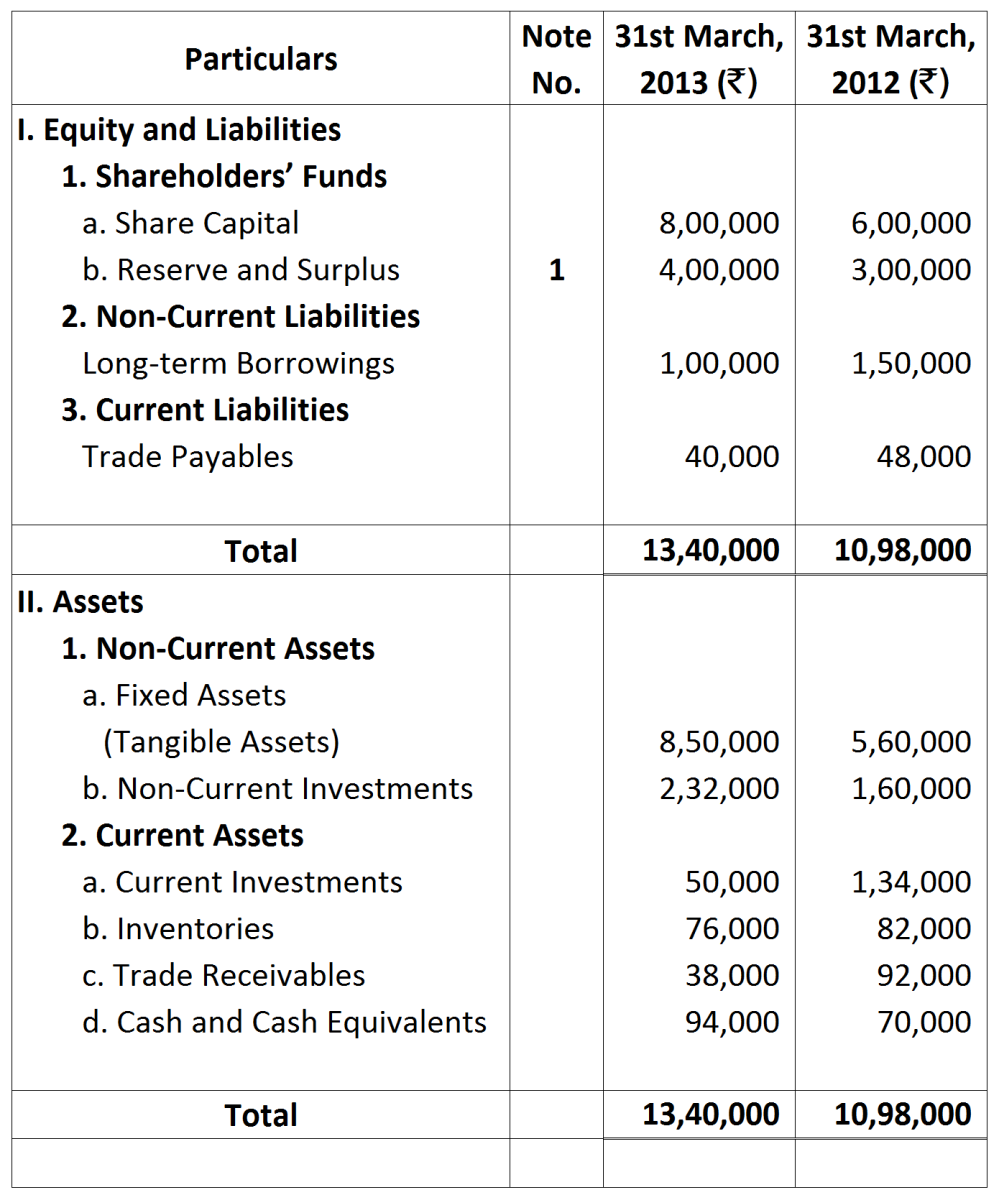
Perpare a cash Flow Statemennt on the basis of the informantion given in the Balance Sheets of Libra Ltd. as at 31st March, 2013 and 31st March 2012:
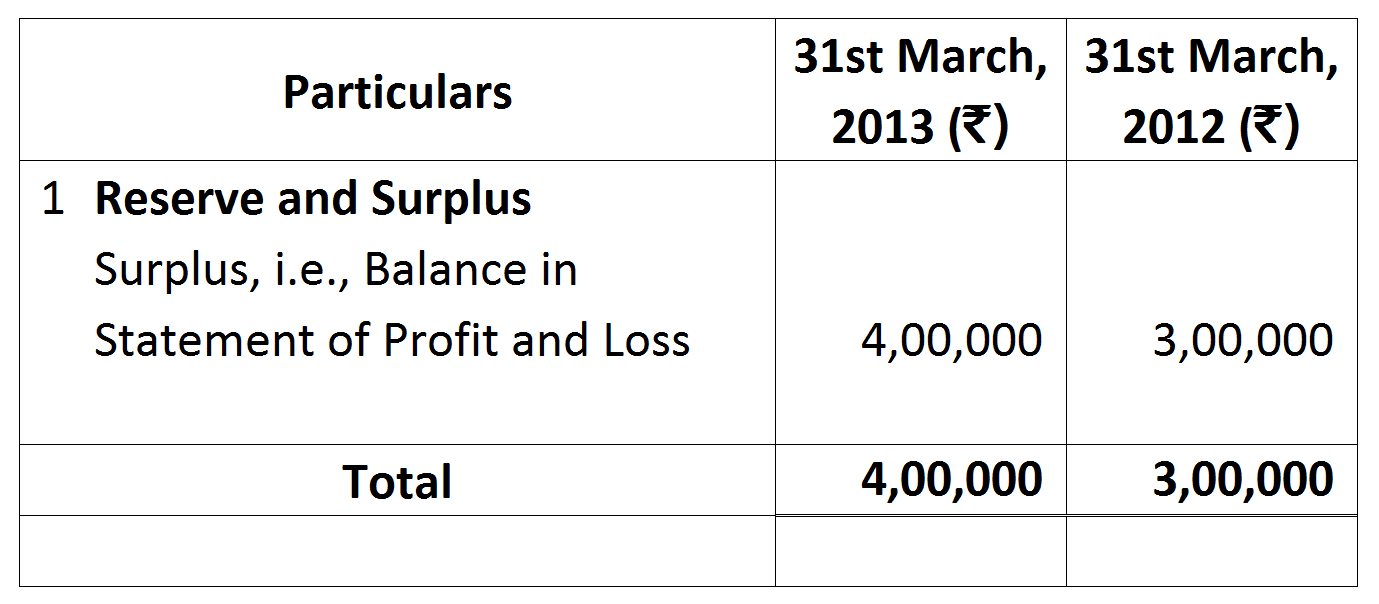
Notes to Accounts:
What is meant by Common Size Statements? Give any two uses of Common Size Statements.