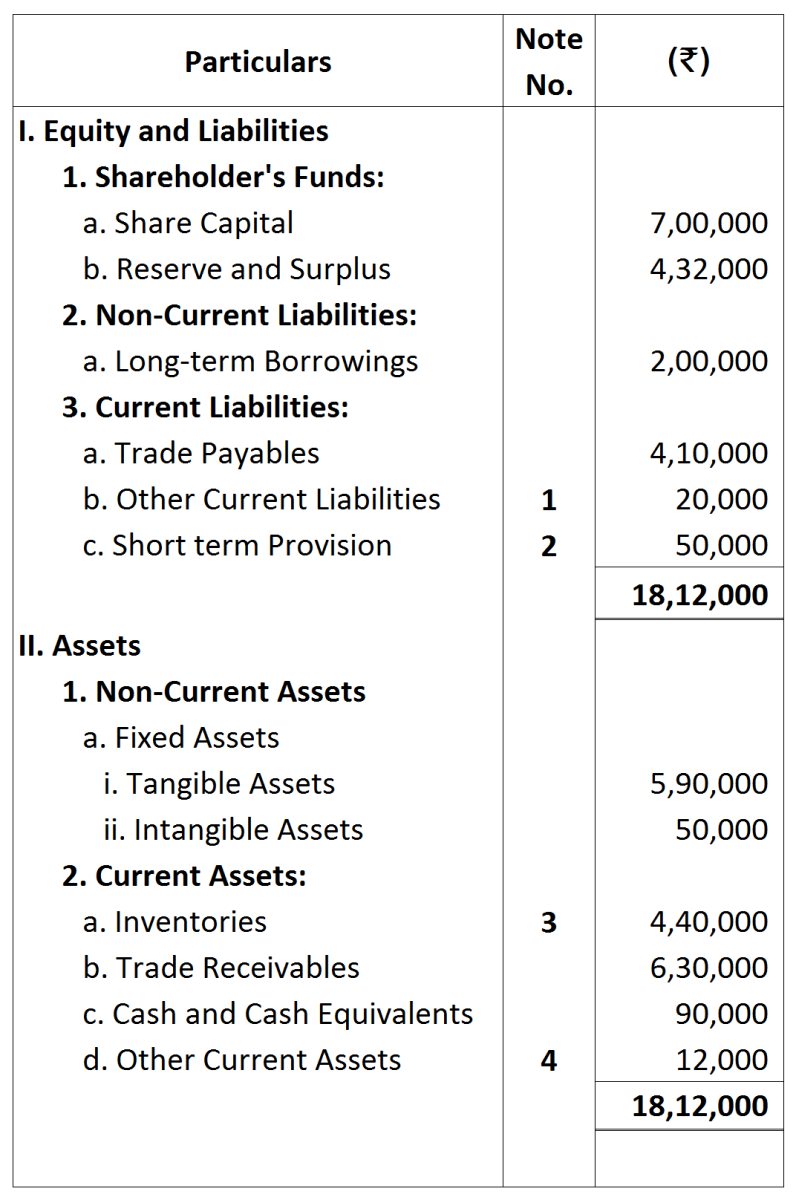
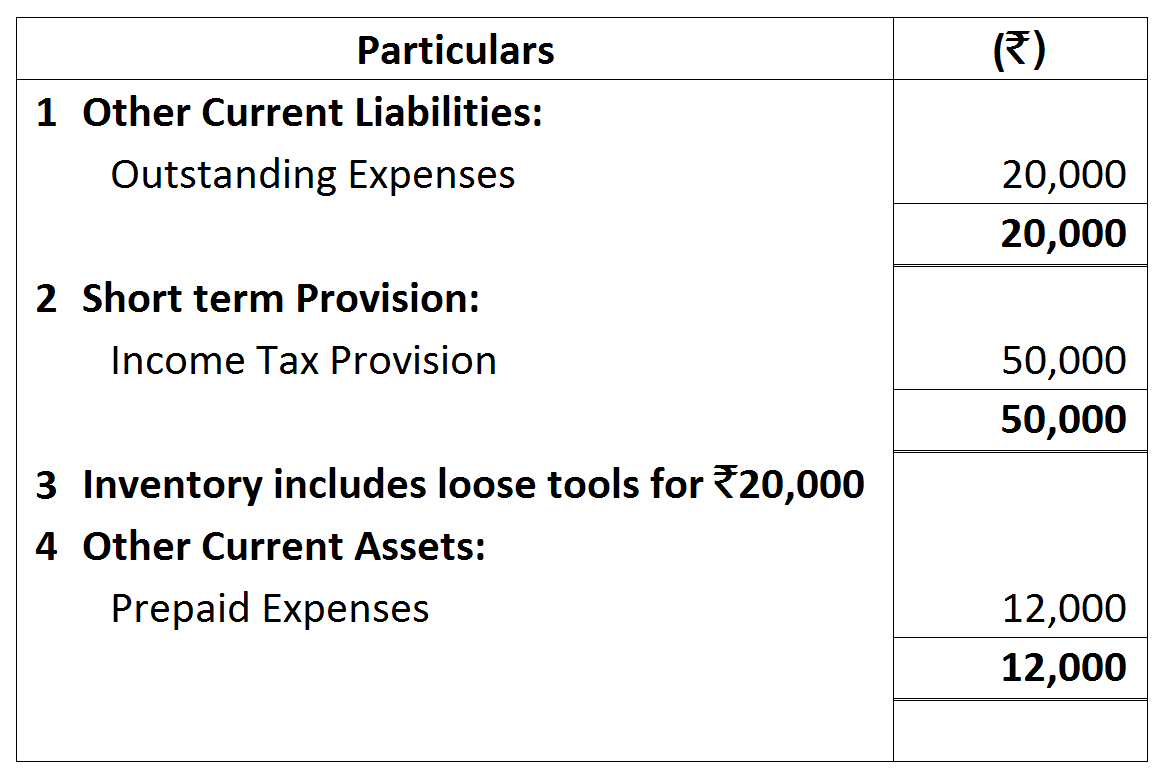
Question
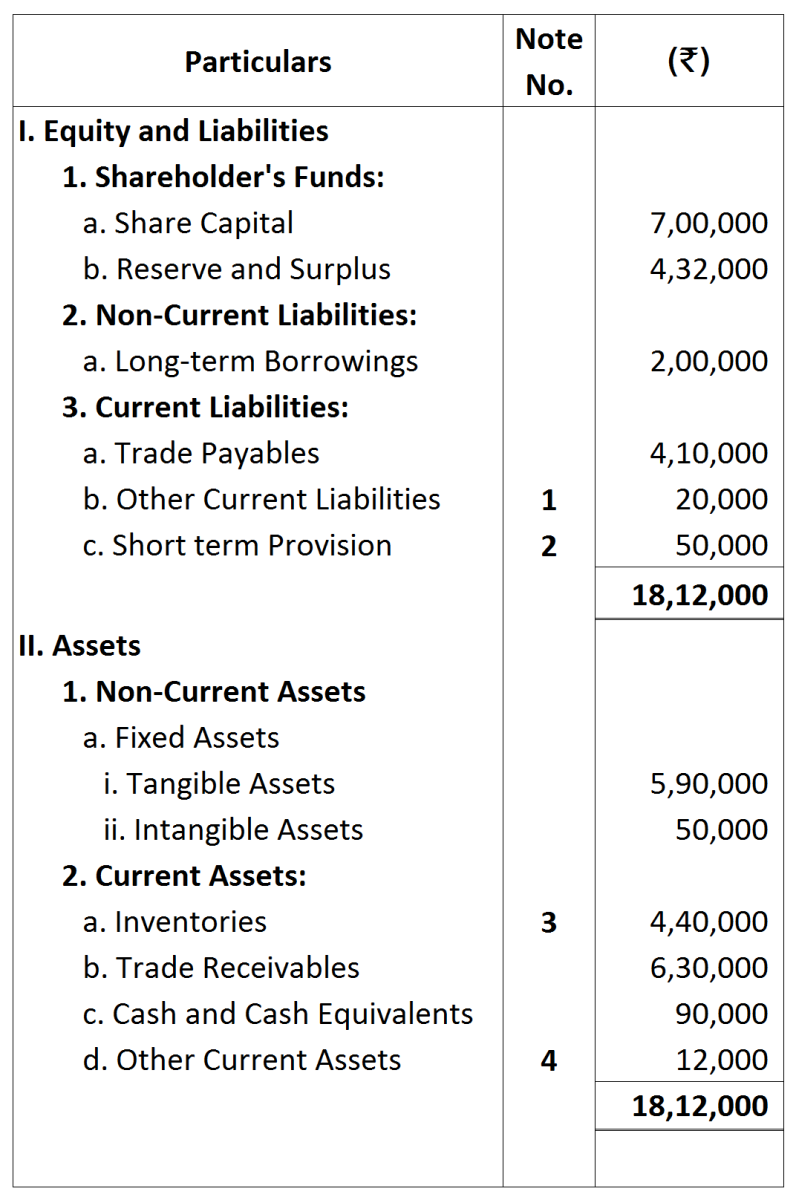
Calculate Total Assets to Debt Ratio from the following:

Answer

Total Assets to Debt Ratio $=\frac{\text{Total Assets}}{\text{Debt}}$
Capital Employed = Shareholder's Funds (i.e., Share Capital + Reserve and Surplus) + Long term Debts.
₹ 60,00,000= ₹ 20,00,000 + ₹ 16,00,000 + Long term Debts.
Long term Debts = ₹ 24,00,000
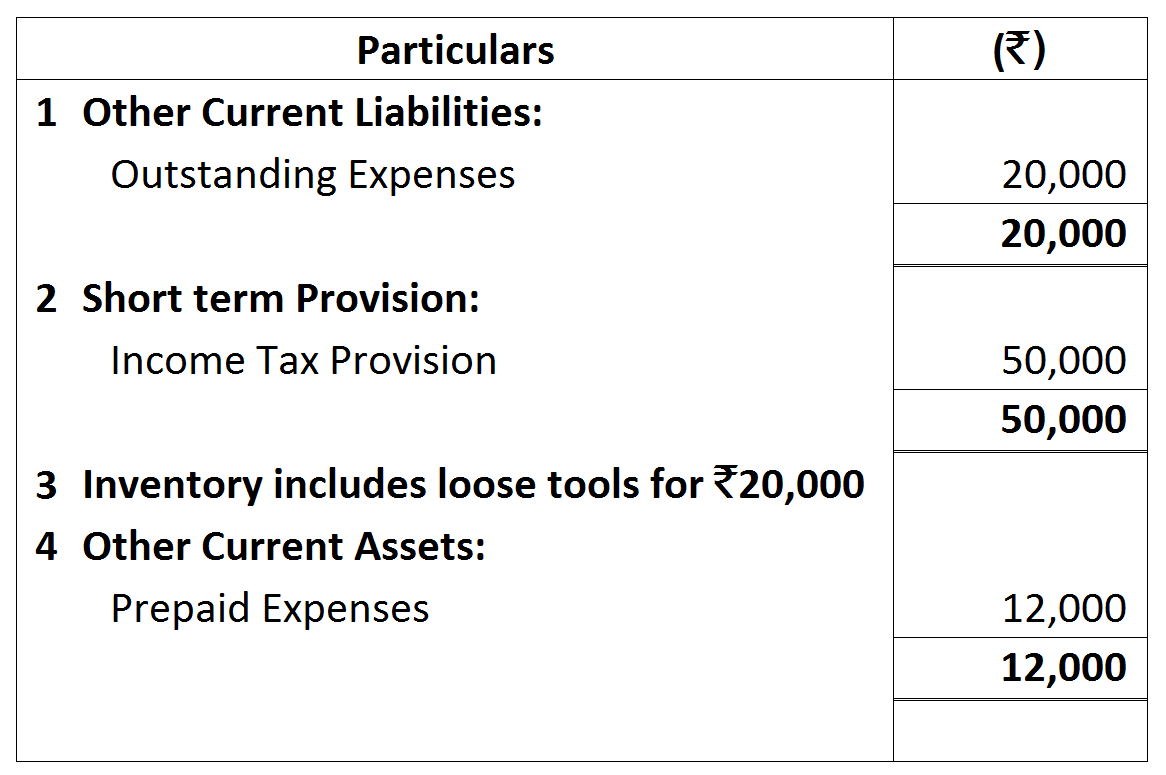
Total Assets = Shareholder's Funds (i.e., Share Capital + Reserve and Surplus) + Long term Debts + Current Liabilities (i.e., Trade Payables + Outstanding Exp.)
= ₹ 20,00,000 + ₹ 16,00,000 + ₹ 24,00,000 + ₹ 8,00,000 + ₹ 40,000
= ₹ 68,40,000
Total Assets to Debt Ratio $=\frac{68,40,000}{24,00,000}=2.85:1$

Need a full question paper?

Generate a complete, print-ready paper with questions like this in minutes — across 16+ boards, with answer keys.

Start Generating Free

Similar questions

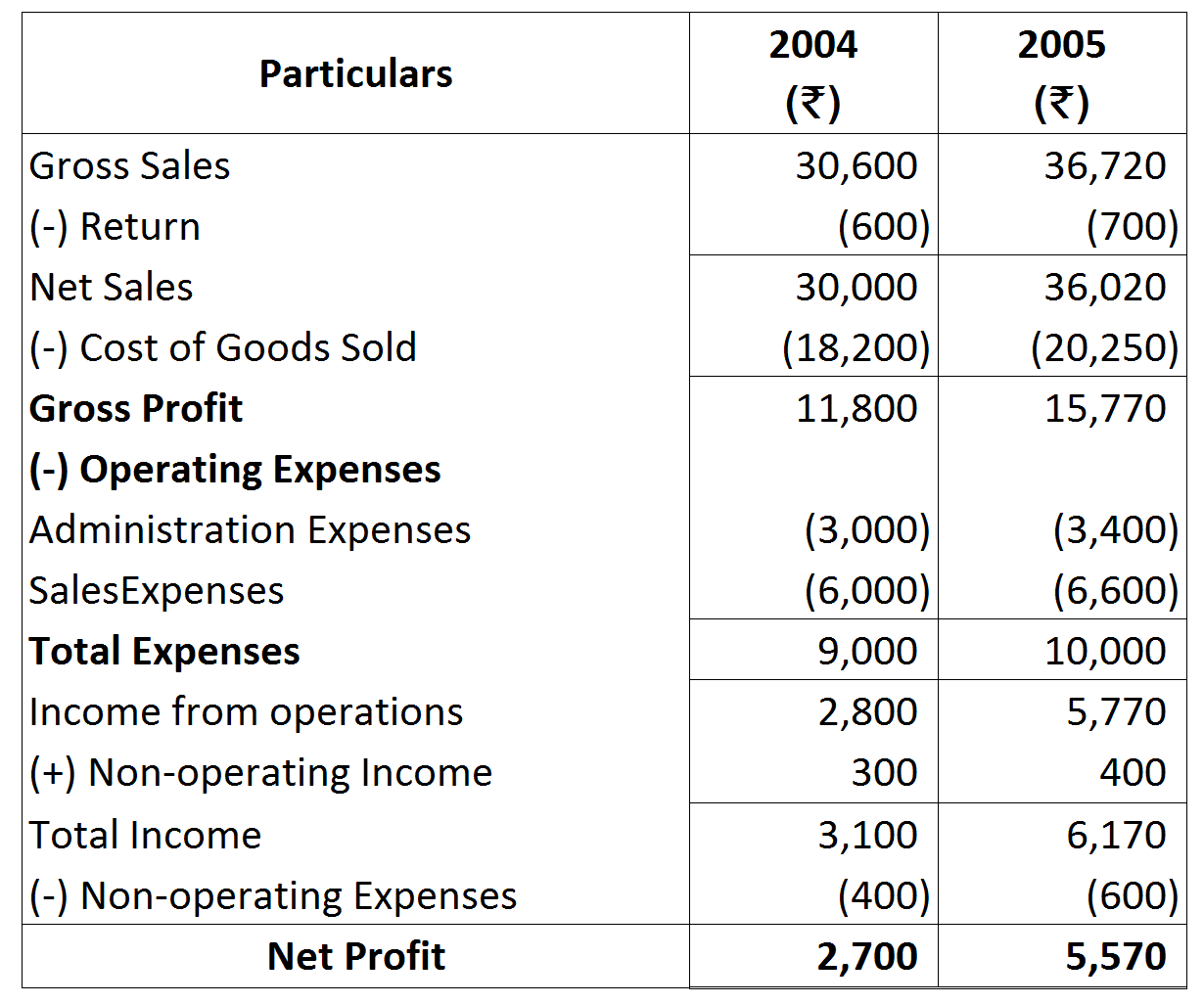
Convert the following income statement into Common Size Statement and interpret the changes in 2005 in the light of the conditions in 2004.
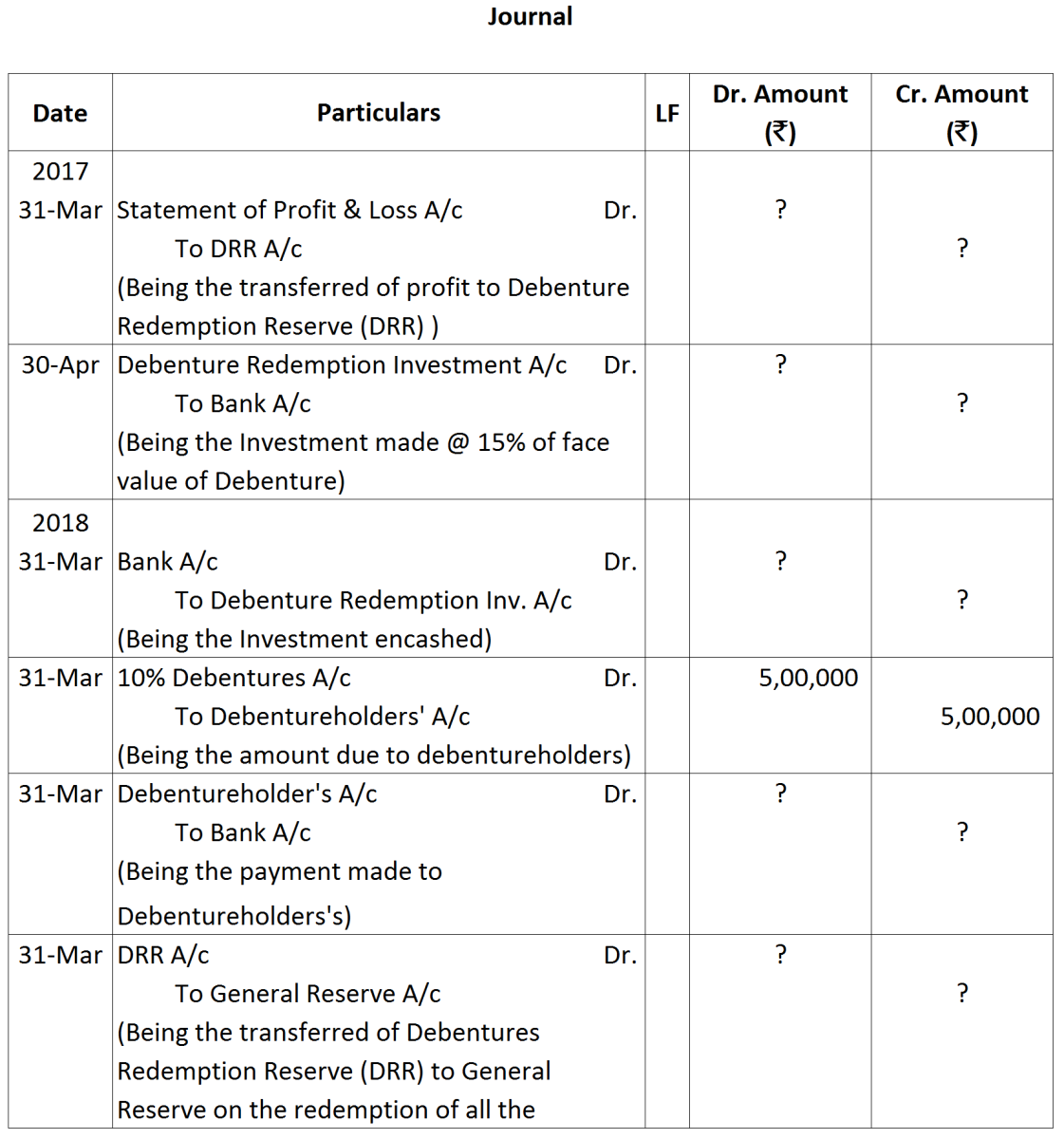
Moon Ltd. has 5,000; 10% 0f ₹ 100 each outstanding as on 31st March, 2017. These Debentures are due for redemption on 31st March, 2018. The company has a Debentures Redemption Reserve of ₹ 75,000 on that date. Determine the missing values in the following Journal entries of Moon Ltd.
Record necessary journal entries in the books of the Company in following case for redemption of 1,000, 12% Debentures of ₹ 10 each issued at par:
  1. Debentures redeemed at par by conversion into 12% Preference Shares of ₹ 100 each,
  2. Debentures redeemed at a premium of 10% by conversion into Equity Share issued at par,
  3. Debentures redeemed at a premium of 10% by conversion into Equity Shares issued at a premium of 25%.
Prepare a common size Balance Sheet of L.X. Ltd. from the following information:
Pass journal entries in the following cases:
M. Ltd forfeited 200 Equity Shares of ₹ 10 each, issued at a premium of ₹ 5 per share, held by Ram for non-payment of the final call of ₹ 3 per share. Of these, 100 shares were reissued to Vishu at a discount of ₹ 4 per share.
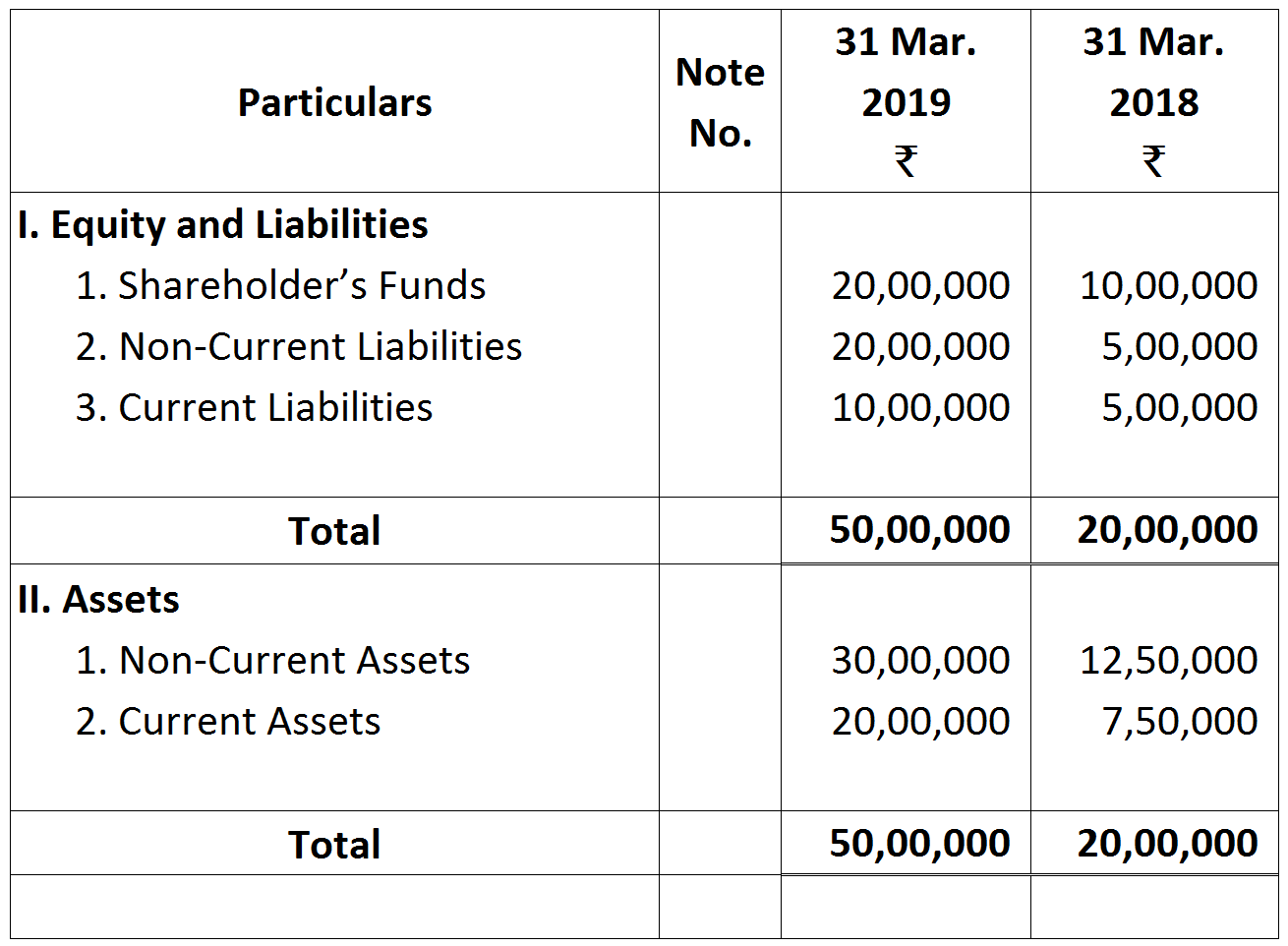
Calculate Current Ratio and Quick Ratio from the following Balance Sheet:

Calculate Current Ratio and Quick Ratio from the following Balance Sheet:

Calculate 'Cash from Operating activities' from the following figures:
Assuming that the Debt-Equity ratio is 2, State giving reasons whether this ratio would increase, decrease or remain unchanged in the following cases:
  1. Purchase of fixed asset on a credit of 2 months.
  2. Purchase of fixed asset on a long term deferred payment basis.
  3. Issue of new shares for cash.
  4. Issue of bonus shares.
  5. Sale of fixed asset at a loss of ₹ 3,000.
Calculate Net Profit Ratio from the following information:
Revenue from Operations ₹ 25,00,000; Operating Ratio 90%; Loss on Sale of Fixed Assets ₹ 25,000; Interest on Long term Borrowings ₹ 30,000; Income from Investments ₹ 40,000.