MCQ
Carbylamine reaction is given by
  • ${1^o}$ amine
  • B
    ${3^o}$ amine
  • C
    ${2^o}$ amine
  • D
    Quarternary salts

Answer

Correct option: A.
${1^o}$ amine
a
It’s obvious.

Need a full question paper?

Generate a complete, print-ready paper with questions like this in minutes — across 16+ boards, with answer keys.

Start Generating Free

Similar questions

A gaseous mixture of two substances $A$ and $B$, under a total pressure of $0.8\,atm$ is in equilibrium with an ideal liquid solution. The mole fraction of substance $A$ is $0.5$ in the vapour phase and $0.2$ in the liquid phase. The vapour pressure of pure liquid $A$ $......$ is atm. (Nearest integer)
The following data are for the decomposition of ammonium nitrate in aqueous solution Volume of ....... The order of the reaction is
${N_2}$ in $cc$ $6.25$ $9.50$ $11.42$ $13.65$ $35.05$
 Time (minutes) $10$ $15$ $20$ $25$ Finally
How many of the following metal ions have similar value of spin only magnetic moment in gaseous state? 

(Given: Atomic number: $V , 23 ; Cr , 24 ; Fe , 26;Ni , 28)$

$V ^{3+} \cdot Cr ^{3+}, Fe ^{2+}, Ni ^{3+}$
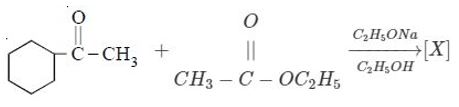
In the given reaction :  $[X]$ will be :
The base present in $DNA$, but not in $RNA$ is
$[CoCl_2(NH_3)_4]^+ Cl^- \to [CoCl_3(NH_3)_3]+ NH_3$ . If in this reaction two  isomers of the product are obtained, which is true for the initial (reactant) complex 
Among $V ( CO )_6, Cr ( CO )_5, Cu ( CO )_3, Mn ( CO )_5, Fe ( CO )_5,\left[ Co ( CO )_3\right]^{3-},\left[ Cr ( CO )_4\right]^{4-}$, and $\operatorname{Ir}( CO )_3$, the total number of species isoelectronic with $Ni ( CO )_4$ is. . . . . [Given atomic number : $V =23, Cr ,=24, Mn =25, Fe =26, Co =27, Ni =28, Cu =29, Ir =77$ ]
Which is the correct increasing order of boiling points of the following compounds- $CH _3 OCH _3$, $CH _3 CH _2 OH$ and $CH _3 CH _2 CH _3$.
The lanthanide contraction is responsible for the fact that
The vapour pressures of two liquids $A$ and $B$ in their pure states are in the ratio of $1 : 2.$ A binary solution of $A$ and $B$ contains $A$ and $B$ in the mole proportion of $1 : 2.$ The mole fraction of $A$ in the vapour phase of the solution will be: