MCQ
Chlorine gas is not produced by heating
- ✓$SOCl_2$
- B$PbCl_4$
- C$FeCl_3$
- D$Hg_2Cl_2$
$(hot \;and \;conc.)\quad \quad (A)\quad \quad \quad side \;product$
$2 \mathrm{Ca}(\mathrm{OH})_{2}+2 \mathrm{Cl}_{2} \rightarrow \mathrm{Ca}(\mathrm{OCl})_{2}+\mathrm{CaCl}_{2}+2 \mathrm{H}_{2} \mathrm{O}$
$(dry)\quad \quad \quad \quad \quad \quad \quad \quad (B)\quad \quad \quad side \;product$
Generate a complete, print-ready paper with questions like this in minutes — across 16+ boards, with answer keys.
$Fe _{2} N ( s )+\frac{3}{2} H _{2}( g ) \rightleftharpoons 2 Fe ( s )+ NH _{3}( g )$
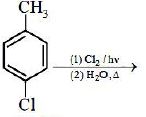
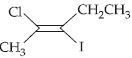
(image)
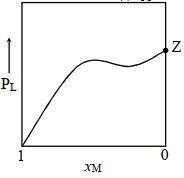
$[A]$ Attractive intermolecular interactions between $L-L$ in pure liquid $L$ and $M-M$ in pure liquid $M$ are stronger than those between $L-M$ when mixed in solution
$[B]$ The point $Z$ represents vapour pressure of pure liquid $M$ and Raoult's law is obeyed when $x_{L} \rightarrow 0$
$[C]$ The point $Z$ represents vapour pressure of pure liquid $L$ and Raoult's law is obeyed when $x_{\mathrm{L}} \rightarrow 1$
$[D]$ The point $Z$ represents vapour pressure of pure liquid $M$ and Raoult's law is obeyed from $x_{L}=0$ to $x_{L}=1$