Question
Choose the correct answer from the given four options.
A die is thrown and a card is selected at random from a deck of $52$ playing cards. The probability of getting an even number on the die and a spade card is:
Answer

Let $E_{1 }=$ Event for getting an even number on the die
And $E_{2 }=$ Event that a spade card is selected.
$\therefore\text{P}(\text{E}_1)=\frac{3}{6}=\frac{1}{2}$ and $\text{P}(\text{E}_2)=\frac{13}{52}=\frac{1}{4}$
Then, $\text{P}(\text{E}_1\cap\text{E}_2)=\text{P}(\text{E}_1)\cdot\text{P}(\text{E}_2)$
$=\frac{1}{2}\cdot\frac{1}{4}=\frac{1}{8}$

Need a full question paper?

Generate a complete, print-ready paper with questions like this in minutes — across 16+ boards, with answer keys.

Start Generating Free

Similar questions

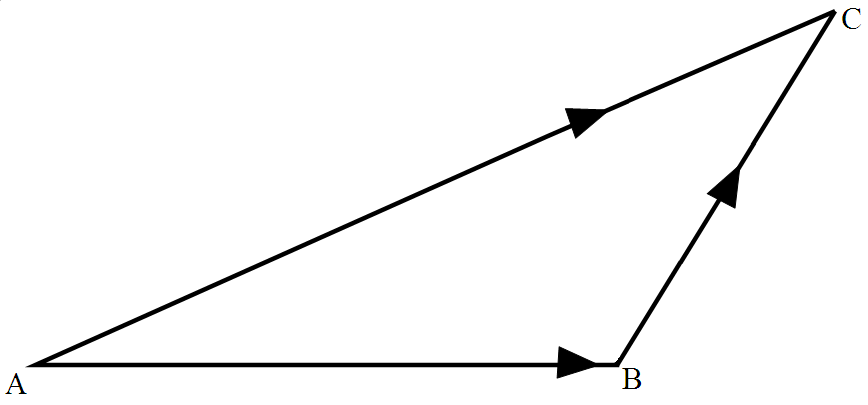
In figure, which of the following is not true?
  1. $​​​​​\overrightarrow{\text{AB}}+\overrightarrow{\text{BC}}+\overrightarrow{\text{CA}}=\vec0$
  2. $​​​​​\overrightarrow{\text{AB}}+\overrightarrow{\text{BC}}-\overrightarrow{\text{AC}}=\vec0$
  3. $​​​​​\overrightarrow{\text{AB}}+\overrightarrow{\text{BC}}-\overrightarrow{\text{CA}}=\vec0$
  4. $​​​​​\overrightarrow{\text{AB}}-\overrightarrow{\text{CB}}+\overrightarrow{\text{CA}}=\vec0$
If $y=\cos ^2\left(\frac{3 x}{2}\right)-\sin ^2\left(\frac{3 x}{2}\right)$, then $\frac{d^2 y}{d x^2}$ is equal to
Choose the correct answer in the following:
The area bounded by the y-axis, y = cos x and y = sin x when $0\leq\text{x}\leq\frac{\pi}{2}$
  1. $2(\sqrt2-1)$
  2. $\sqrt2-1$
  3. $\sqrt2+1$
  4. $\sqrt2.$
The differential equation satisfied by $\text{ax}^{2}+\text{by}^{2}=1$ is:
  1. $\text{xyy}_{2}+\text{y}_{1}^{2}+\text{yy}_{1}=0$
  2. $\text{xyy}_{2}+\text{xy}_{1}^{2}-\text{yy}_{1}=0$
  3. $\text{xyy}_{2}+\text{xy}_{1}^{2}+\text{yy}_{1}=0$
  4. None of these. 
Let $A=\{1,2,3\}$ and consider the relation $R=\{(1,1),(2,2),(3,3),(1,2),(2,3),(1,3)\}$. Then $R$ is
Order and degree of the differential equation $\left(1+\left(\frac{d y}{d x}\right)^3\right)^{\frac{7}{3}}=7 \frac{d^2 y}{d x^2}$ are respectively
If the set $A$ contains 5 elements and the set $B$ contains 6 elements, then the number of one-one and onto mappings from $A$ to $B$ is
Let A = {2, 3, 4, 5, ..., 17, 18}. Let $'\simeq'$ be the equivalence relation on A × A, cartesian product of A with itself, defined by $(\text{a, b})\simeq(\text{c, d)}$ if ad = bc. Then, the number of ordered pairs of the equivalence class of (3, 2) is:
  1. 4
  2. 5
  3. 6
  4. 7
If $\text{y}=\log\Big(\frac{1-\text{x}^2}{1+\text{x}^2}\Big),$ then $\frac{\text{dy}}{\text{dx}}=$
  1. $\frac{4\text{x}^3}{1-\text{x}^4}$
  2. $-\frac{4\text{x}}{1-\text{x}^4}$
  3. $\frac{1}{4-\text{x}^4}$
  4. $-\frac{4\text{x}^3}{1-\text{x}^4}$
Choose the correct answer from the given four option.
$\text{y}= \text{a}\text{e}^{\text{mx}}+\text{b}\text{e}^{-\text {mx}}$ satisfies which of the following differential equation?
  1. $\frac{\text{dy}}{\text{dx}}+\text {my}=0$
  2. $\frac{\text{dy}}{\text{dx}}-\text {my}=0$
  3. $\frac{\text{d}^2\text{y}}{\text{dx}^2}-\text{m} ^2\text{y}=0$
  4. $\frac{\text{d}^2\text{y}}{\text{dx}^2}+\text{m} ^2\text{y}=0$