MCQ
Choose the correct answer from the given four options:
A mason constructs a wall of dimensions $270\ cm \times 300\ cm \times 350\ cm$ with the bricks each of size $22.5\ cm \times 11.25\ cm \times 8.75\ cm$ and it is assumed that $\frac{1}{8}$ space is covered by the mortar. Then the number of bricks used to construct the wall is:
  • A
    $11100$
  • $11200$
  • C
    $11000$
  • D
    $11300$

Answer

Correct option: B.
$11200$

Volume of the wall $=270 \times 300 \times 350=28350000 \ cm^3$
$[\because$ volume of chboid $=$ lenth $\times $ breadth $\times $ height$]$
Since, $\frac{1}{8}$ space of wall is covered by mortar.
So, remainig space of wall $=$ Volume of wall $-$ Volume of mortar
$=28350000-28350000\times\frac{1}{8}$
$=28350000-3543750=24806250\text{cm}^3$
Now, volume of one birck $= 22.5 \times 1125 \times 875 = 2214.844\ cm^3$
$[\because$ volume of chboid $=$ lenth $\times $ breadth $\times $ height$]$
$\therefore$ Required number of bricks $=\frac{24806250}{2214.844}=11200\ (\text{approx})$
Hence, the number of used to construct the wall is $11200.$

Need a full question paper?

Generate a complete, print-ready paper with questions like this in minutes — across 16+ boards, with answer keys.

Start Generating Free

Similar questions

Directions : In the following questions, the Assertions $(A)$ and Reason $(s) \ (R$) have been put forward. Read both the statements carefully and choose the correct alternative from the following:
Assertion : $a_1x + b_1y + c1 =0; a_2x + b_2y + c_2 = 0$ represent parallel line if $\frac{\text{a}_1}{\text{a}_2}=\frac{\text{b}_1}{\text{b}_2}\neq\frac{\text{c}_1}{\text{c}_2}$
Reason : $3x + 4y + 5 = 0$ and $6x + ky + 9 = 0$ represent parallel line if $K= 5$
The probability of guessing the correct answer to a certain test questions is $\frac{x}{12}$. If the probability of not guessing the correct answer to this question is $\frac{2}{3}$, then $x =$
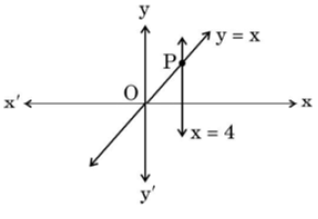
The lines represented by the linear equations y = x and x = 4 intersect at P. The coordinates of the point P are:
Image
Which of the following numbers cannot be the probability of an event?
$\triangle D E F \sim \triangle A B C$; If $D E: A B=2: 3$ and $\operatorname{ar}(\triangle D E F)$ is equal to $44 $ square units, then area $(\triangle A B C)$ in square units is
The volume of a solid hemisphere is $\frac{396}{7} cm^3$. The total surface area of the solid hemisphere (in sq.cm) is
If the perimeter of a sector of a circle of radius $6.5\ cm$ is $29\ cm,$ then its area is :
If $29x + 37y = 103$ and $37x + 29y = 95$ then :
In a circle of radius $21 \ cm ,$ an $arc$ subtends an angle of $60^{\circ}$ at the centre. The area of the sector formed by the $arc$ is:
If the point $C ( k , 4)$ divides the join of the points $A (2, 6)$ and $B(5,1)$ in the ratio $2: 3$ then the value of $k$ is