Question
Choose the correct option from given four options:
$\int\limits^{\frac{\pi}{2}}_0\sqrt{1-\sin2\text{x}}\text{ dx}$ is equal to:
  1. $2\sqrt{2}$
  2. $\big(\sqrt{2}+1)$
  3. $2$
  4. $2\big(\sqrt{2}-1)$

Answer

  1. $2\big(\sqrt{2}-1)$

​​​​​Solution:

Let $\text{I}=\int\limits^{\frac{\pi}{2}}_0\sqrt{1-\sin2\text{x}}\text{ dx}$

$=\int\limits^{\frac{\pi}{2}}_0\sqrt{(\cos\text{x}-\sin\text{x})^2}\text{ dx}+\int\limits^{\frac{\pi}{2}}_{\frac{\pi}{4}}\sqrt{(\sin\text{x}-\cos\text{x})^2}\text{ dx}$

$=\Big[\sin\text{x}+\cos\text{x}\Big]^{\frac{\pi}{4}}_0+\Big[-\cos\text{x}-\sin\text{x}\Big]^{\frac{\pi}{2}}_{\frac{\pi}{4}}$

$=\frac{1}{\sqrt{2}}+=\frac{1}{\sqrt{2}}-0-1+\Big(-0-1+\frac{1}{\sqrt{2}}+\frac{1}{\sqrt{2}}\Big)$

$=2\sqrt{2}-2=2(\sqrt{2}-1)$

Need a full question paper?

Generate a complete, print-ready paper with questions like this in minutes — across 16+ boards, with answer keys.

Start Generating Free

Similar questions

Let $\mathrm{a}, \mathrm{b} \in R, \mathrm{b} \neq 0$, Define a function

$f(x)= \begin{cases}\operatorname{a} \sin \frac{\pi}{2}(x-1), & \text { for } x \leq 0 \\ \frac{\tan 2 x-\sin 2 x}{b x^{3}}, & \text { for } x>0\end{cases}$

If $f$ is continuous at $x=0$, then $10-a b$ is equal to ...... .

The anti derivative of $\Big(\sqrt{\text{x}}+\frac{1}{\sqrt{\text{x}}}\Big)$ equals:
  1. $\frac{1}{3}\text{x}^\frac{1}{3}+2\text{x}^\frac{1}{2}+\text{c}$
  2. $\frac{2}{3}\text{x}^\frac{2}{3}+\frac{1}{2}\text{x}^{2}+\text{c}$
  3. $\frac{2}{3}\text{x}^\frac{3}{2}+2\text{x}^\frac{1}{2}+\text{c}$
  4. $\frac{3}{2}\text{x}^\frac{3}{2}+\frac{1}{2}\text{x}^\frac{1}{2}+\text{c}$
If $f(x)$ satisfies the relation $f\left( {\frac{{5x - 3y}}{2}} \right) = \frac{{5f(x) - 3f(y)}}{2}\forall x,y\, \in \,R$ and $f(0)=1, f'(0)=2$ then the period of $sin(f(x))$ is 
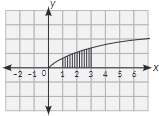
Shown below is the curve defined by the equation $y=\log (x+1)$ for $x \geq 0$.
Image
Which of these is the area of the shaded region?
The area (in sq. units) of the region $\left\{(x, y): 0 \leq y \leq x^{2}+1,0 \leq y \leq x+1\right.$ $\left.\frac{1}{2} \leq x \leq 2\right\}$ is 
If $x + \frac{1}{x} = 2$, the principal value of ${\sin ^{ - 1}}$ $x$ is
Let $f : R \to R, f(x) = max.\{|tan^{-1}x|, cot^{-1}x\}.$ Consider the following statements :
$I.$ Function is continuous and derivable $\forall x \in R$
$II.$ Range of function is $\left[ {\frac{\pi }{4},\pi } \right]$
$III.$ $f(x)$ is many one-into. Identify the correct option -
$\mathop {\lim }\limits_{n \to \infty } \frac{1}{{{n^3}}}\left[ {{1^2}\sin \frac{1}{n} + {2^2}\sin \frac{2}{n} + {3^2}\sin \frac{3}{n} + ....+{n^2}\sin \frac{n}{n}} \right]$ equals
The corner points of the feasible region determined by the system of linear constraints are (0, 10), (5, 5), (15, 15), (0, 20). Let z = px + qy where p, q > 0. Condition on p and q so that the maximum of z occurs at both the points (15, 15) and (0, 20) is __________.
  1. q = 2p
  2. p = 2p
  3. p = q
  4. q = 3p
Choose the correct answer from the given four options.

Three persons, A, B and C, fire at a target in turn, starting with A. Their probability
of hitting the target are 0.4, 0.3 and 0.2 respectively. The probability of two hits
is:

  1. 0.024
  2. 0.188
  3. 0.336
  4. 0.452