MCQ
Choose the correct statement
  • A
    While watching television by means of an antenna, a passing nearby aeroplane can produce wavering ghost images in the television picture
  • B
    Solar cells are often coated with a transparent thin film, such as silicon monoxide $(SiO)$ to minimize reflective losses.
  • C
    Glass lenses used in cameras and other optical instruments are usually coated with a transparent thin film, such as magnesium fluoride $\left( MgF _2\right)$ to reduce or eliminate unwanted reflection
  • All of these

Answer

Correct option: D.
All of these
d
(d)

Need a full question paper?

Generate a complete, print-ready paper with questions like this in minutes — across 16+ boards, with answer keys.

Start Generating Free

Similar questions

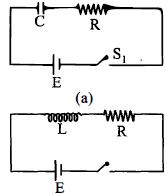
In the circuits $(a)$ and $(b)$ switches $S_1$ and $S_2$  are closed at $t = 0$  and are kept closed for a long time. The variation of current in the two circuits for $t \ge 0$ are roughly shown by figure (figures are schematic and not drawn to scale)
Which of the following functions for $y$ can never represent a travelling wave?

$(a)$ $\left(x^2-v t\right)^2$

$(b)$ $\log \left[\frac{(x+v t)}{x_0}\right]$

$(c)$ $e^{\left\{-\frac{(x+v t)}{x_0}\right\}^2}$

$(d)$ $\frac{1}{x+v t}$

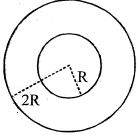
Consider the shown system of two concentric thin metal shells. The inner hell has charge $Q$, while the outer shell is neutral. Potential difference between the shells is $V$. If the shell are joined by metal wire, then potential of the inner shell is
A circular plate of uniform thickness has diameter $56\ cm$. A circular part of diameter $42\ cm$ is removed from one edge. What is the position of the centre of mass of the remaining part ........ $cm$.
The angle of an equilateral prism is $60^o$. What should be the refractive index of prism so that the ray is parallel to the base inside the prism?
The instantaneous voltages at three terminals marked $\mathrm{X}, \mathrm{Y}$ and $\mathrm{Z}$ are given by

$V_x=V_0 \sin \omega t$ $V_y=V_0 \sin \left(\omega t+\frac{2 \pi}{3}\right) \text { and }$ $V_z=V_0 \sin \left(\omega t+\frac{4 \pi}{3}\right)$

An ideal voltmeter is configured to read rms value of the potential difference between its terminals. It is connected between points $\mathrm{X}$ and $\mathrm{Y}$ and then between $\mathrm{Y}$ and $\mathrm{Z}$. The reading(s) of the voltmeter will be

$[A]$ $\mathrm{V}_{\mathrm{XY}}^{\mathrm{mms}}=\mathrm{V}_0 \sqrt{\frac{3}{2}}$

$[B]$ $\mathrm{V}_{\mathrm{YZ}}^{\mathrm{mms}}=\mathrm{V}_0 \sqrt{\frac{1}{2}}$

$[C]$ $\mathrm{V}_{\mathrm{XY}}^{\mathrm{mms}}=\mathrm{V}_0$

$[D]$ independent of the choice of the two terminals

Two parallel plates separated by a distance of $5\,mm$ are kept at a potential difference of $50\,V.$ A particle of mass ${10^{ - 15}}\,kg$ and charge ${10^{ - 11}}\,C$ enters in it with a velocity ${10^7}\,m/s.$ The acceleration of the particle will be
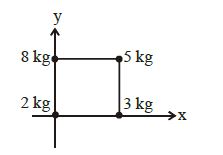
Four bodies of masses $2, 3, 5$ and $8\,kg$ are placed at the four corners of a square of side $2\,m$ as shown. The position of $CM$ will be
A body $A$ moves with a uniform acceleration $a$ and zero initial velocity. Another body $B$, starts from the same point moves in the same direction with a constant velocity $v$. The two bodies meet after a time $t$. The value of $t$ is
When an unpolarized light of intensity ${I_0}$ is incident on a polarizing sheet, the intensity of the light which does not get transmitted is