MCQ
Choose the correct statement
  • In thorium, the last electron enters $d$ subshell but still it belongs to the $f$ block of the modern periodic table.
  • B
    The modern periodic table is based on the increasing order of the atomic mass
  • C
    The ionization energy of an atom can be lower than its electron affinity
  • D
    None of these

Answer

Correct option: A.
In thorium, the last electron enters $d$ subshell but still it belongs to the $f$ block of the modern periodic table.
a

Need a full question paper?

Generate a complete, print-ready paper with questions like this in minutes — across 16+ boards, with answer keys.

Start Generating Free

Similar questions

The $IUPAC$ name of $\begin{matrix}
   O\,\,\,\,\,\,\,\,\,\,\,\,\,\,\,\,\,\,\,\,\,\,\,\,\,\,\,\,\,\,  \\
   ||\,\,\,\,\,\,\,\,\,\,\,\,\,\,\,\,\,\,\,\,\,\,\,\,\,\,\,\,\,\,  \\
   C{{H}_{3}}-C-CH-CH-C{{H}_{3}}  \\
   \,\,\,\,\,\,|\,\,\,\,\,\,\,\,\,\,\,\,\,|  \\
   \,\,\,\,\,\,\,\,\,\,\,{{C}_{2}}{{H}_{5}}\,\,\,C{{H}_{3}}  \\
\end{matrix}$ is
Given below are two statements: One is labelled as Assertion A and the other is labelled as Reason $R$

Assertion $A$ : Zero orbital overlap is an out of phase overlap.

Reason $R$ : It results due to different orientation/ direction of approach of orbitals.

In the light of the above statements. Choose the correct answer from the options given below.

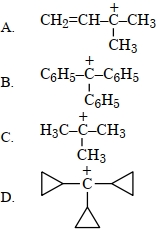
The decreasing order of hydride affinity for following carbocations is:

Choose the correct answer from the options given below:

The structure of $IF_7$ is ...... .
$AlF_3$ is soluble in $HF$ only in presence of $KF.$ It is due to the formation of
The decreasing order of the repulsive interaction of electron pairs is $($Here, $\ce{lp} =$ lone pair, $\ce{bp} =$ bond pair$)$ :
The electronic configuration $1 s^2 2 s^2 2 p ^6 3 s^2 3 p ^6$ $3 d^5 4 s^1$ of any element represents :
The reducing power of a metal depends on various factors. Suggest the factor which makes $Li$, the strongest reducing agent in aqueous solution.
For the energy levels in an atom which one of the following statements is(are) correct ?
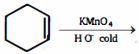
What is the major product expected from the following reaction ?