d
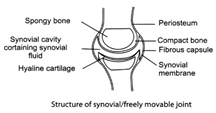
Structure of synovial joint is as follows
$(i)$ Synovial Cavity
$(a)$ Contains mucin, a lubricant for joint surfaces
$(b)$ Reduces friction between the joint surface
$(c)$Allows the movements of nutrients and respiratory gases
$(ii)$ Hyaline Cartilage
$(a)$ Contains no blood vessels or nerves
$(b)$ Reduces the friction between bones during movement
$(c)$ Because of its elastic property, it also acts as shock absorber
$(iii)$ Fibrous Capsule
$(a)$ Formed by the number of ligaments
$(b)$ Arrangement in such a way, as to cope effectively with the particular stresses suffered by the joints
$(iv)$ Synovial membrane
$(a)$ Secretes synovial fluid (a clear sticky fluid) into the synovial cavity
$(b)$ Acts as water proof seal, preventing escape of synovial fluid
$(c)$ Allows movement of nutrients and respiratory gases