Question
Compare the properties of ionic compounds and covalent compounds.

Answer

Ionic compounds
  1. Ionic compounds are usually crystalline solids.
  2. Ionic compounds have high melting and boiling points.
  3. Ionic compounds are usually soluble in water.
Covalent compounds
  1. Covalent compounds are usually liquids or gases.
  2. Covalent compounds have low melting and boiling points.
  3. Covalent compounds are usually insoluble in water.

Need a full question paper?

Generate a complete, print-ready paper with questions like this in minutes — across 16+ boards, with answer keys.
Start Generating Free

Similar questions

There are four tiny organisms A, B, C and D. The organism A is a parasitic protozoan which causes a disease known as kala-azar. The organism B is a microscopic single-celled animal which causes malaria disease in human beings. The organism C is a unicellular animal which can change its body shape according to need, it has no fixed shape. The organism D is also a unicellular animal which is slipper-shaped having a large number of tiny hair all around its body.
  1. Name the organisms A, B, C and D.
  2. Name one characteristic body feature of organism A.
  3. Name the insect which carries organism B and transmits it from one person to another.
  4. What name is given to the asexual method of reproduction of (i) organism A, and (ii) organism B?
  5. Where do organisms C and D live?
Write short note: Benefits of classification.
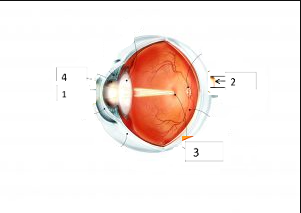
Write the function of the human eye and label parts of the figure given below.

Image
How will you justify that overcoming the pollution is a powerful way of environmental management?###Why is it said that pollution control is important?
 Explain the Krebs cycle with reaction.
A thickened underground stem X of a plant which is swollen with stored food has a number of points Y on its surface. When the old stem X is planted in the soil of a field in the next growing season, then each point Y present on its surface grows into a new plant.
  1. What is the general name of the underground stems like X?
  2. Give one example of X.
  3. What are points Y present on X known as?
  4. Is it necessary to plant the whole of stem X in the ground to obtain its new plants? Explain your answer.
  5. What is the name of this method of reproduction of plants?
  6. What is the advantage of growing new plants from the underground stems like X?
What are the main uses of coal and petroleum products?
There are four organisms A, B, C and D. The organism A eats only the flesh of other animals as food. The organism B can eat grains, fruits and vegetables as well as meat and fish. The organism C can make the food itself from simple inorganic substances present in the environment by utilising sunlight energy. On the other hand, organism D eats only plants and their products as food.
  1. Which organism is
  1. Omnivore,
  2. Herbivore,
  3. Carnivore?
  1. Which organism is an autotroph?
  2. Which organism is/ are heterotroph (s)?
  3. Which organism can be a producer?
  4. Which organism is/ are consumer (s)?
Give one example each of organisms which could be like A, B, C and D.
Complete the following chart with reference to pre-disaster management.