Question
Complete the following Accounting Equation by filling the missing amounts: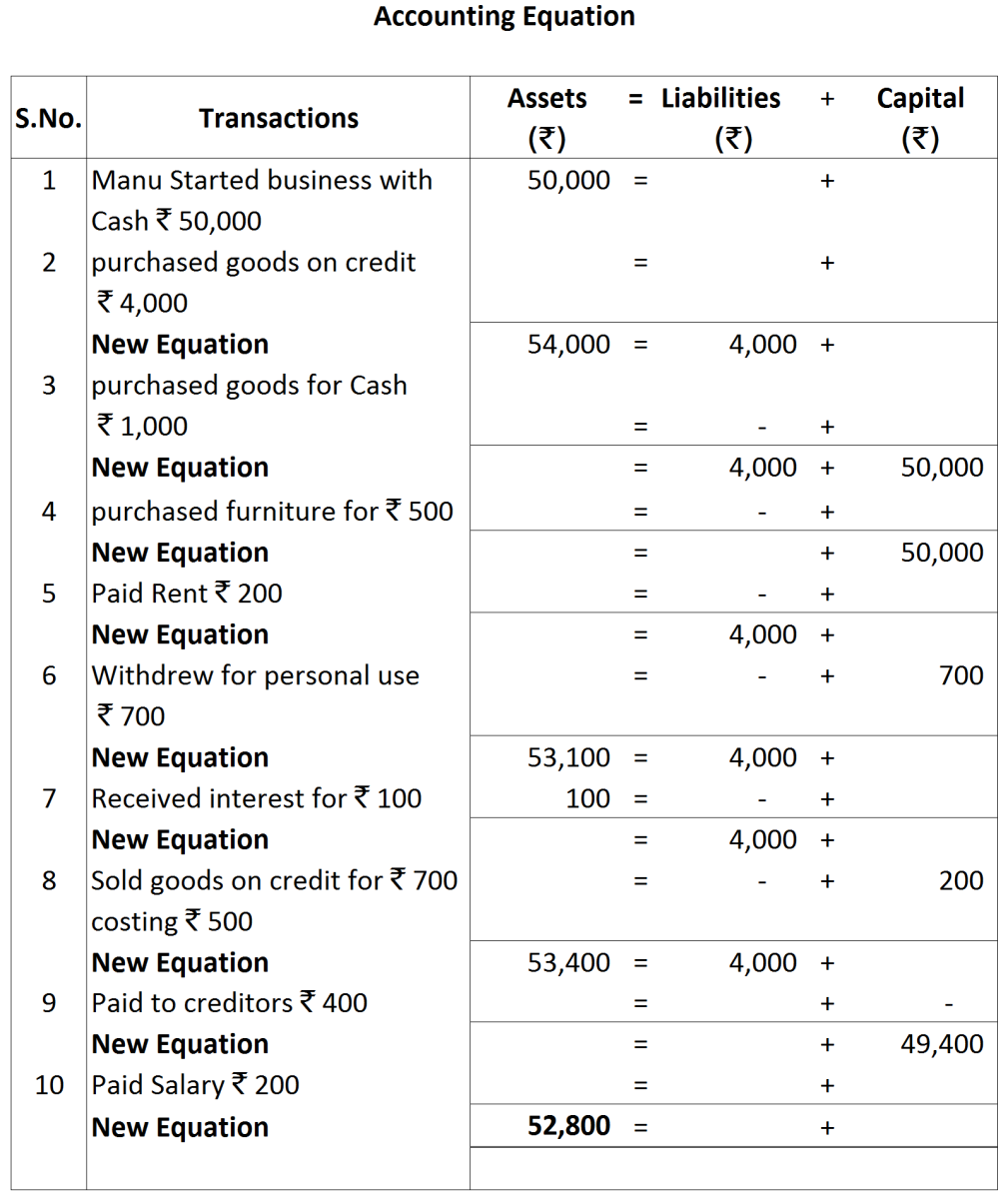
Get the step-by-step solution for this question inside the Vidyadip app.
Get the answer in the appGenerate a complete, print-ready paper with questions like this in minutes — across 16+ boards, with answer keys.
|
2017
|
|
(₹)
|
|
March 1
|
Commenced business with ₹ 1,00,000 of which ₹ 20,000 were borrowed from Mr. Ratan
|
|
|
March 2
|
Opened current account with Punjab National Bank
|
75,000
|
|
March 4
|
Bought goods by cheque
|
60,000
|
|
March 5
|
Purchased a typewriter for ₹ 4,000 and spent ₹ 500 on its repairs
|
|
|
March 8
|
Paid petty cash expenses
|
200
|
|
March 10
|
Transferred from Current account to Fixed Deposit Account in the Bank
|
5,000
|
|
March 12
|
Sold goods for Cash ₹ 25,000 and cheque ₹ 15,000
|
|
|
March 13
|
Deposited the above cheque into bank
|
|
|
March 15
|
Purchased goods from Ram Singh on Credit
|
25,000
|
|
March 18
|
Settled Ram Singh's Account by cheque
|
24,750
|
|
March 20
|
Sent a cheque in payment of the fees of Proprietor's son
|
500
|
|
March 25
|
Cash sales, received a cheque
|
4,000
|
|
March 28
|
Deposited the above cheque into bank, collection charges
|
25
|
|
March 31
|
Repaid the loan taken from Mr. Ratan including interest @18% p.a.
|
|
2019
|
|
₹
|
|
Jan.1
|
Commenced business with Cash
|
25,000
|
|
Jan.2
|
Opened Bank Account with cheque from his Savings Account
|
2,25,000
|
|
Jan.3
|
Bought goods from Ramesh & Co., Delhi, plus CGST and SGST @ 6% each
|
54,000
|
|
Jan.3
|
Sold goods to Rajesh of ₹ 60,000, charged CGST and SGST @ 6% each
|
|
|
Jan.7
|
Bought goods from Rahul, Chennal, plus IGST @ 12%
|
65,000
|
|
Jan.8
|
Paid wages in cash (GST not levied)
|
8,000
|
|
Jan.8
|
Sold goods to Mahesh, Kochi of ₹ 60,000; charged IGST @ 12%
|
|
|
Jan.10
|
Received cheque from Rajesh (Discount allowed ₹ 1,200)
|
66,000
|
|
Jan.11
|
Paid to Ramesh & Co. (Discount received ₹ 2,700)
|
51,300
|
|
Jan.12
|
Paid rent @ ₹ 15,000 per month for three months up to March, plus CGST and SGST @ 6% each
|
|
|
Jan.15
|
Paid office expenses in cash
|
700
|
|
Jan.21
|
Sold to Rakesh, Delhi goods of ₹ 25,000, charged CGST and SGST @ 6% each
|
|
|
Jan.22
|
Paid office expenses in cash
|
500
|
|
Jan.22
|
Paid to Rahul by cheque (discount ₹ 3,200)
|
61,300
|
|
Jan.25
|
Received cheque from Mahesh Kochi (discount ₹ 1,500)
|
65,700
|
|
Jan.27
|
Rakesh, Delhi returned goods (being not as per sample)
|
2,000
|
|
Jan.31
|
Paid salaries for the month
|
20,000
|
| 2019 | |
| March 1 | Cash in Hand ₹ 15,000; Cash at Bank ₹ 5,000 |
| March 3 | Purchased goods for cash ₹ 6,720 including CGST and SGST @ 6% p.a; received discount of ₹ 220 |
| March 5 | Deposited into bank ₹ 5,000 |
| March 7 | Cash sales ₹ 10,000 plus CGST and SGST @ 6% each |
| March 10 | Cash withdrawn from Bank for Office use ₹ 2,000 |
| March 15 | Received three months post dated cheque of ₹ 20,000 from Raj and deposited in the bank on the same day, discounted from bank paying discounting charges ₹ 750 |
| March 18 | Received cheque from Deepak for ₹ 5,000 (not banked), allowed discount ₹ 200 |
| March 20 | Cheque received from Deepak deposited in Bank |
| March 22 | Paid to Chandra by cheque ₹ 2,500; received discount ₹ 100 |
| March 25 | Withdrew from bank for personal use ₹ 1,000 |
| March 28 | Sold goods on credit to Ashok Mitra, Kolkata ₹ 10,000, charged IGST @ 12% |
| March 30 | Purchased goods on credit from Chander, Delhi ₹ 20,000, paid IGST @ 12% |
| March 31 | Received cheque from Ashok Mitra ₹ 5,000 and deposited in bank, allowed cash discount ₹ 200 |
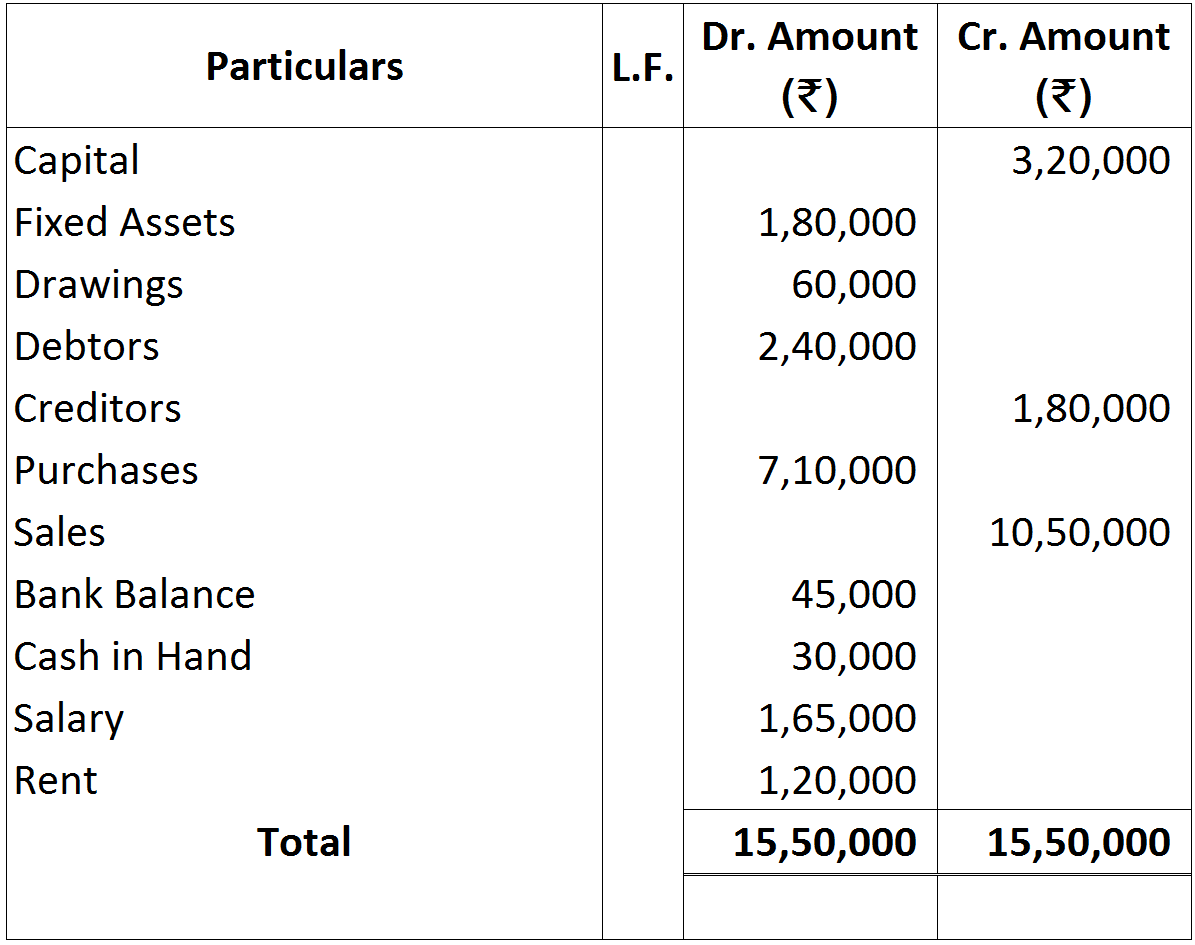 Having prepared the Trial Balance, it was discovered that following transactions remained unrecorded:
|
2016
|
|
(₹)
|
|
June 20
|
Opening Balance of Cash
|
1,180
|
|
Progressive Bank
|
19,040
|
|
|
Goodwill Bank (Overdraft)
|
6,460
|
|
|
June 20
|
Received cheque for ₹ 1,800 from a debtor Mr. X and deposited in Goodwill Bank. The Bank credited the amount on 23rd June and debited ₹ 4 as its collection charges.
|
|
|
June 21
|
Purchased goods for ₹ 18,210 and a cheque issued on Progressive Bank.
|
|
|
June 22
|
Paid office expenses ₹ 410 and ₹ 80 for stationery in cash.
|
|
|
June 23
|
Deposited a cheque for ₹ 21,090 being sale proceeds of goods in Progressive Bank. The Bank credited the amount on the same day and debited ₹ 21 as cheque discounting charges.
|
|
|
June 23
|
A cheque for ₹ 8,000 drawn by Mr. Lal himself on Progressive Bank was deposited in his account with Goodwill Bank.
|
|
|
June 25
|
Cash drawn from the account with Progressive Bank ₹ 600 for office use.
|
|
|
June 25
|
A cheque for ₹ 1,100 received from Mr. A and earlier deposited in Goodwill Bank (on 14th June) was returned unpaid and Bank debited ₹ 10 towards its charges. Mr. Lal received the amount of returned cheque and Bank charges in cash from Mr. A.
|
|
|
June 28
|
Deposited cash ₹ 1,500 in the account with Goodwill Bank.
|
|
|
June 29
|
Purchased postal stamps for ₹ 200 and paid in cash.
|
|