Question
Complete the following chemical equations:
  1. $\text{MnO}_{4}^{-}+\text{C}_{2}\text{O}_{4}^{2-}+\text{H}+\rightarrow$
  2. $\text{KMnO}_{4}\xrightarrow{\text{heated}}$
  3. $\text{Cr}_{2}\text{O}_{4}^{2-}+\text{H}_{2}\text{S}+\text{H}^{+}+\rightarrow$
Answer

  1. $\text{5C}_{2}\text{O}_{4}^{2-}+\text{2MnO}_{4}^{-}+\text{16H}^{4+}\xrightarrow{\ \ \ \ \ }\ \text{2Mn}^{2+}+\text{8H}_{2}\text{O}+\text{10CO}_{2}.$
  2. $\text{KMnO}_{4}\xrightarrow{\text{heat}}\ \text{K}_{2}\text{MnO}_{2}+\text{MnO}_{2}+\text{O}_{2}$
  3. $\text{Cr}_{2}\text{O}_{7}^{2-}+\text{3H}_{2}\text{S}+\text{8H}^{+}\xrightarrow{\ \ \ \ \ \ }\ \text{2Cr}^{3+}+\text{3S}+\text{7H}_{2}\text{O}$.

Need a full question paper?

Generate a complete, print-ready paper with questions like this in minutes — across 16+ boards, with answer keys.

Start Generating Free

Similar questions

Calculate e.m.f of the following cell at 298 K :
$2 \mathrm{Cr}(\mathrm{~s})+3 \mathrm{Fe}^{2+}(0.1 \mathrm{M}) \rightarrow 2 \mathrm{Cr}^{3+}(0.01 \mathrm{M})+3 \mathrm{Fe}(\mathrm{~s})$
$\text { Given: } \mathrm{E}^{\circ}\left(\mathrm{Cr}^{3+} \mid \mathrm{Cr}\right)=-0.74 \mathrm{VE}^{\circ}\left(\mathrm{Fe}^{2+} \mid \mathrm{Fe}\right)=-0.44 \mathrm{~V}$
Explain nitration of aniline. Explain what is done by this process to obtain the para nitro derivative as the major product.
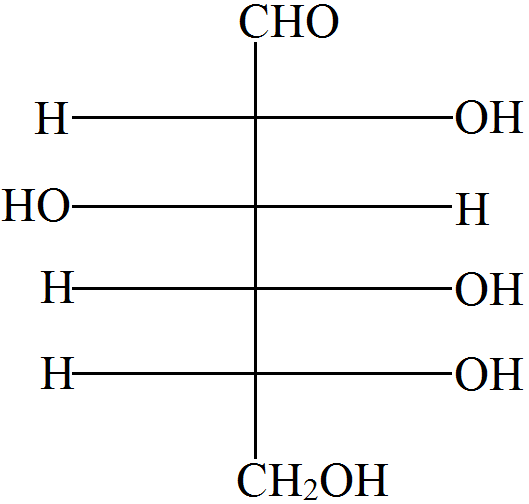
The Fischer projection of D-Glucose is given alongside.
Give the Fischer projection of L-Glucose.
For the first order thermal decomposition reaction, the following data were obtained:
$\text{C}_{2}\text{H}_{5}\text{Cl}\text{(g)}\rightarrow \text{C}_{2}\text{H}_{4}\text{(g)} + \text{HCl}\text{(g)} $
Time/sec Total pressure/atm
0 0.30
300 0.50
Calculate the rate constant
(Given: log 2 = 0.301, log 3=0.4771, log 4 =0.6021)
The density of copper metal is $8.95\ g\ cm^{–3}.$ If the radius of copper atom be $127.8$ pm, is the copper unit cell simple cubic, body-centred cubic or face-centred cubic$?\ ($Given: Atomic mass of $Cu = 63.54\ g\ mol^{–1}$ and $N_A = 6.02 \times 10^{23}\ mol^{–1}).$
An element crystallizes in a bcc. lattice with cell edge of $500$ pm. The density of the element is $7.5g\ cm^{-3}.$ How many atoms are present in $300$ g of the element?
Calculate the e.m.f at $25^{\circ} c$ for the following cell:
$N i(s)\left|N i^{2+}(0.01 M) \| C u^{2+}(0.1 M)\right| C u(s)$
Given: $E ^0 Ni ^{+2} / Ni =-0.25 V$
$E_{C u^{2+} / C u}^0=+0.34 V$
$\left[1 F=96,500 Cmol ^{-1}\right]$. Calculate the maximum work that can be accomplished by the operation of this cell
An optically active amino acid (A) can exist in three forms depending on the pH of the medium. The molecular formula of (A) is $C_3H_7NO_2$.
  1. Write the structure of compound (A) in aqueous medium. What are such ions called?
  2. In which medium will the cationic form of compound (A) exist?
  3. In alkaline medium, towards which electrode will the compound (A) migrate in electric field?
Explain each of the following with a suitable example:
  1. Paramagnetism.
  2. Piezoelectric effect.
  3. Frenkel defect in crystals.
Give reasons for the following:
i. The transition metals generally form coloured compounds.
ii. $\mathrm{E}^{\circ}$ value for $\left(\mathrm{Mn}^{3+} \mid \mathrm{Mn}^{2+}\right)$ is highly positive than that for $\left(\mathrm{Cr}^{3+} \mid \mathrm{Cr}^{2+}\right)$ couple.
iii. The chemistry of actinoids elements is not so smooth as that of the lanthanoids.