Question
Complete the following multiplication table:
Second number
First number
$x$
$-4$
$-3$
$-2$
$-1$
$0$
$1$
$2$
$3$
$4$
$-4$


$-3$


$-2$


$-1$


$0$


$1$


$2$


$3$


$4$


ls the multiplication table symmetrical about the diagonal joining the upper left corner to the lower right corner?

Answer

Second number
First number
$x$
$-4$
$-3$
$-2$
$-1$
$0$
$1$
$2$
$3$
$4$
$-4$
$16$
$12$
$8$
$4$
$0$
$-4$
$-8$
$-12$
$-16$
$-3$
$12$
$9$
$6$
$3$
$0$
$-3$
$-6$
$-9$
$-12$
$-2$
$8$
$6$
$4$
$2$
$0$
$-2$
$-4$
$-6$
$-8$
$-1$
$4$
$3$
$2$
$1$
$0$
$-1$
$-2$
$-3$
$-4$
$0$
$0$
$0$
$0$
$0$
$0$
$0$
$0$
$0$
$0$
$1$
$-4$
$-3$
$-2$
$-1$
$0$
$1$
$2$
$3$
$4$
$2$
$-8$
$-6$
$-4$
$-2$
$0$
$2$
$4$
$6$
$8$
$3$
$-12$
$-9$
$-6$
$-3$
$0$
$3$
$6$
$9$
$12$
$4$
$-16$
$-12$
$-8$
$-4$
$0$
$4$
$8$
$12$
$16$

Need a full question paper?

Generate a complete, print-ready paper with questions like this in minutes — across 16+ boards, with answer keys.

Start Generating Free

Similar questions

The following data gives the amount of manure (in thousand tonnes) manufactured by a company during some years:
Year199219931994199519961997
Manure (in thousand tonnes)153545304020
(i) Represent the above data with the help of a bar graph.
(ii) Indicate with the help of the bar graph the year in which the amount of manure manufactured by the company was maximum.
(iii) Choose the correct alternative:
The consecutive years during which there was maximum decrease in manure production are:
(a) 1994 and 1995 $\quad$ (b) 1992 and 1993 $\quad$ (c) 1996 and 1997 $\quad$ (d) 1995 and 1996
Find the values of n in the following:
If $\frac{9^{\text{n}}\times3^2\times3^{\text{n}}-27^{\text{n}}}{(3^3)^5\times2^3}=\frac{1}{27},$ find the value of $n$
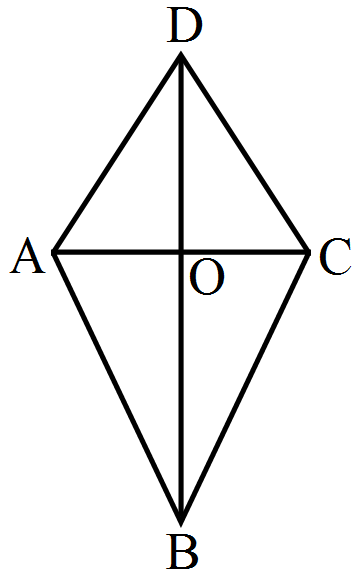
Calculate the area of the quadrilateral $ABCD$ as shown in Figure, given that $BD = 42\ cm, AC = 28\ cm, OD = 12\ cm$ and $\text{AC}\bot\text{BO}.$
The foot of a ladder is $6\ m$ away from a wall and its top reaches a window $8\ m$ above the ground. If the ladder is shifted in such a way that its foot is $8\ m$ away from the wall, to what height does its top reach?
Simplify: $\frac{-7}{10}+\frac{13}{-15}+\frac{27}{20}$
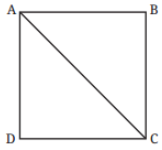
ABCD is a square. Show that ∆ABC ≅ ∆ADC. Is ∆ABC also congruent to ∆CDA?
Image
Give more examples of two triangles where one triangle is congruent to the other in two different ways, as in the case above. Can you give an example of two triangles where one is congruent to the other in six different ways?
The side $B C$ of $\triangle A B C$ is produced to a point $D$. The bisector of $\angle A$ meets side $B C$ in $L$. If $\angle A B C=30^{\circ}$ and $\angle A C D=115^{\circ}$, find $\angle A L C$.
Find the area of a rhombus each side of which measures $20\ cm$ and one of whose diagoanls is $24\ cm.$
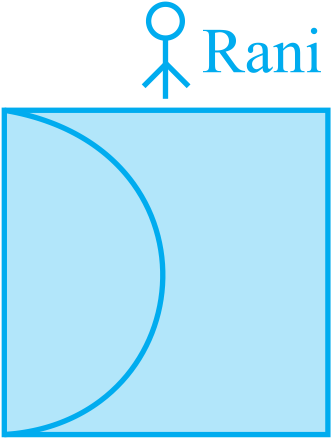
Rani bought a new field that is next to one she already owns Fig. This field is in the shape of a square of side $70\ m$. She makes a semi circular lawn of maximum area in this field.
$i.$ Find the perimeter of the lawn.
$ii.$ Find the area of the square field excluding the lawn.
Simplify: $-1+\frac{7}{9}+\frac{11}{12}$