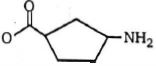
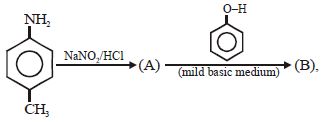
Compound $(B)$ is

- A
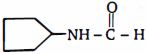
- B

- C
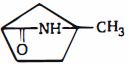
- D
Advanced



Download our appand get started for free
Experience the future of education. Simply download our apps or reach out to us for more information. Let's shape the future of learning together!No signup needed.*
Similar Questions
- 1View SolutionWhich of the following amine will not react with nitrous acid to give nitrogen
- 2$\mathrm{X}$ of enthanamine was subjected to reaction with $\mathrm{NaNO}_2 / \mathrm{HCl}$ followed by hydrolysis to liberate $\mathrm{N}_2$ and $\mathrm{HCl}$. The $\mathrm{HCl}$ generated was completely neutralised by $0.2$ moles of $\mathrm{NaOH} . \mathrm{X}$ is . . . . $g$.View Solution
- 3View Solution'Oil of mirbane' is
- 4Aniline when treated with conc. $HN{O_3}$ givesView Solution
- 5Which of the following will not exist in zwitter ionic form at $pH = 7$ ?View Solution
- 6View SolutionThe major product of the following reaction is

- 7View SolutionMajor product of following reaction will be
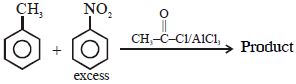
- 8Product $(B)$ of this reaction isView Solution
- 9In the chemical reaction,View Solution
$CH_3CH_2NH_2 + CHCl_3 + 3KOH \rightarrow (A)+ (B) + 3H_2O,$
the compounds $(A)$ and $(B)$ are respectively
- 10Two benzyne intermediates are likely to be formed equally. Reaction with amide ion can occur in two different directions with each benzyne, giving three possible products. They are formed in a $1 : 2 : 1$ ratio. Asterisk $(^*)$ refers to $^{14}C.$View Solution
product $(A)$ is
