MCQ
Consider a binary operation $∗$ on $N$ defined as $a ∗ b = a^3 + b^3.$
  • A
    $∗$ is both associative and commutative.
  • $∗$ is commutative but not associative.
  • C
    $∗$ is neither commutative nor associative.
  • D
    $∗$ is associative but not commutative.

Answer

Correct option: B.
$∗$ is commutative but not associative.
Given that the binary operation $∗$ on $N$ is defined as $a∗b = a^3 + b^3$.
Apply the given binary operation on $ b∗a$.
$b∗a = b^3 + a^3 = a^3 + b^3$
It shows that the value of $a∗b$ is equal to that of $b∗a$.
So, the operation is commutative.
Consider different values of the variable as $a = 1, b = 2$ and $c = 3.$
Apply the given binary operation on $(a∗b)∗c$.
$(a∗b)∗c = (1∗2)∗3 = (1^3 + 2^3)∗3 = 9^3 + 3^3 = 729 + 27 = 756$
Apply the given binary operation on $a∗(b∗c).$
$(a∗b)∗c = 1∗(2∗3) = 1∗(2^3 + 3^3) = 1^3 + 35^3 = 42876$
$(a∗b)∗c \neq a∗(b∗c)$
So the operation is not associative.
Therefore, the given operation is commutative but not associative.

Need a full question paper?

Generate a complete, print-ready paper with questions like this in minutes — across 16+ boards, with answer keys.
Start Generating Free

Similar questions

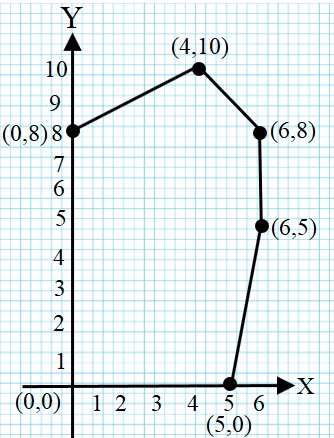
The feasible region for an LPP is shown below:
Let Z = 3x - 4y be the objective function. Minimum of Z occurs at
  1. (0, 0)
  2. (0, 8)
  3. (5, 0)
  4. (4, 10)
If $\alpha=\tan^{-1}\Big(\tan\frac{5\pi}{4}\Big)$ and $\beta=\tan^{-1}\Big(-\tan\frac{2\pi}{3}\Big),$ then:
  1. $4\alpha=3\beta$
  2. $3\alpha=4\beta$
  3. $\alpha-\beta=\frac{7\pi}{12}$
  4. $\text{none of these}$
If the events A and B are independent, then $\text{P}(\text{A}\cap\text{B})$ is equal to,
Integrate the following functions with respect to x: $\int\frac{\text{dx}}{4\text{x}+5}$
  1. $\frac{1}{4}\text{ In }(4\text{x}+5)+\text{c}$
  2. $\frac{1}{4}\text{ In }(4\text{x}+5)-\text{c}$
  3. $\frac{-1}{4}\text{ In }(4\text{x}+5)-\text{c}$
  4. $4\text{ In }(4\text{x}-5)-\text{c}$
If x < 0, y < 0 such that xy = 1, then $\tan^{-1}\text{x}+\tan^{-1}\text{y}$ equals:
  1. $\frac{\pi}{2}$
  2. $-\frac{\pi}{2}$
  3. $-\pi$
  4. $\text{none of these}$
The maximum value of $\text{f}(\text{x})=\frac{\text{x}}{4+\text{x}+\text{x}^{2}}$ on [-1, 1] is :
  1. $-\frac{1}{4}$
  2. $-\frac{1}{3}$
  3. $\frac{1}{6}$
  4. $\frac{1}{5}$
If $\theta=\tan ^{-1} a, \phi=\tan ^{-1} b$ and $a b=-1$, then $|\theta-\phi|$ is equal to
If an iso-profit line yielding the optimal solution coincides with a constaint line, then:
Four persons P, Q, R and S are initially at the four corners of a square side d. Each person now moves with a constant speed v in such a way that P always moves directly towards Q, Q towards R, R towards S, and S towards P. The four persons will meet after time.
  1. $\frac{\text{d}}{2\text{v}}$
  2. $\frac{\text{d}}{\text{v}}$
  3. $\frac{\text{3d}}{2\text{v}}$
  4. They will never meet
What is the length of the longer diagonal of the parallelogram constructed on $5\vec{\text{a}}+2\vec{\text{b}}$ and $\vec{\text{a}}-3\vec{\text{b}}$ if it is given that $|\vec{\text{a}}|=2\sqrt{2},\big|\vec{\text{b}}\big|=3$ and the angle between $\vec{\text{a}}$ and $\vec{\text{b}}$ is $\frac{\pi}{4}$?
  1. $15$
  2. $\sqrt{113}$
  3. $\sqrt{593}$
  4. $\sqrt{369}$