Question
Consider a sample of a pure beta-active material:
  1. All the beta particles emitted have the same energy.
  2. The beta particles originally exist inside the nucleus and are ejected at the time of beta decay.
  3. The antineutrino emitted in a beta decay has zero mass and hence zero momentum.
  4. The active nucleus changes to one of its isobars after the beta decay.
Answer

  1. The active nucleus changes to one of its isobars after the beta decay.

Explanation:

In a beta decay, either a neutron is converted to a proton or a proton is converted to a neutron such that the mass number does not change. Also, the number of the nucleons present in the nucleus remains the same. Thus, the active nucleus gets converted to one of its isobars after beta decay.

Need a full question paper?

Generate a complete, print-ready paper with questions like this in minutes — across 16+ boards, with answer keys.

Start Generating Free

Similar questions

From a point charge, there is a fixed point A. At A, there is an electric field of 500V/ m and potential difference of 3000V. Distance between point charge and A will be:
Phase difference between ac current and emf is $\frac{\pi}{2}$.Which of the following cannot be a component of the circuit?
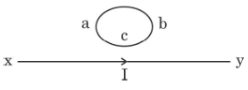
The direction of induced current in the loop abc is:
Image

Which of the following shows green house effect

(a) Ultraviolet rays

(b) Infrared rays

(c) X-rays   

(d) None of these

200 MeV of energy may be obtained per fission of . A reactor is generating 1000 kW of power. The rate of nuclear fission in the reactor is

(a) 1000  

(b) 2  

(c) 3.125  

(d)  931

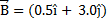
A magnet of magnetic moment  50   is placed along the x-axis in a magnetic field T. The torque acting on the magnet is

(a) 175  

(b) 150  

(c) 75 

(d) 25 

A point source of light is placed 4 m below the surface of water of refractive index 5 / 3. The minimum diameter of a disc which should be placed over the source on the surface of water to cut–off all light coming out of water is

(a) 2 m

(b) 6 m

(c) 4 m

(d) 3 m

A photon with energy twice the work function of the metal is incident on the surface of the metal. The value of maximum kinetic energy of the emitted photoelectron will be :
A particle is fastened at the end of a string and is whirled in a vertical circle with the other end of the string being fixed. The motion of the particle is:
  1. Periodic.
  2. Oscillatory.
  3. Simple harmonic.
  4. Angular simple harmonic.
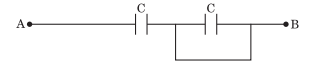
Equivalent capacity between A and B in figure is:
Image