Question

Consider the following statements A to B  and identify the correct answer

A. Polarised light can be used to study the helical surface of nucleic acids.

B. Optics axis is a direction and not any particular line in the crystal

(a) A and B are correct

(b) A and B are wrong

(c) A is correct but B is wrong

(d) A is wrong but B is correct

Answer

(a) A and B are correct

Need a full question paper?

Generate a complete, print-ready paper with questions like this in minutes — across 16+ boards, with answer keys.

Start Generating Free

Similar questions

AND gate:

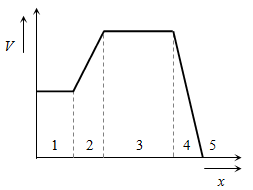
The figure gives the electric potential V as a function of distance through five regions on x-axis. Which of the following is true for the electric field E in these regions

(a)  

(b)   and  

(c)  and  

(d)  

In which type of molecule positive and negative charges coincide with each other?

Half-life of a substance is 10 years. In what time, it becomes  th part of the initial amount

(a) 5 years

(b) 10 years

(c) 20 years

(d) None of these

When the intensity of a light source is increased:
  1. The number of photons emitted by the source in unit time increases.
  2. The total energy of the photons emitted per unit time increases.
  3. More energetic photons are emitted.
  4. Faster photons are emitted.

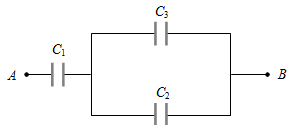
The combination of capacitors with   and   is charged by connecting AB to a battery. Consider the following statements

I.     Energy stored in  = Energy stored in   + Energy stored in  

II.    Charge on C1 = Charge on C2 + Charge on C3

III.  Potential drop across C1 = Potential drop across C2 = Potential drop across C3

Which of these is/are correct

(a) I and II

(b) II only

(c) I and III

(d) III only

Which of the following is an example of a molecule whose centre of mass of positive and negative charges coincide each other?

The minimum deviation produced by a hollow prism filled with a certain liquid is found to be 30°. The light ray is also found to be refracted at angle of 30°. The refractive index of the liquid is

(a)

 (b)  

(c)  

(d)  

Capacitance of spherical capacitor is $1 \mu F$, so its diameter $=$ __________ m.
$\left[\frac{1}{4 \pi \varepsilon_0}=9 \times 10^9 SI\right]$

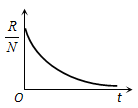
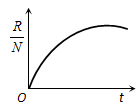
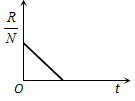
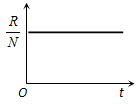
A radioactive sample has  active atoms at t = 0. If the rate of disintegration at any time is R and the number of atoms is N, then the ratio R/N varies with time as

(a)

(b)

(c)

(d)