Question
Construct a parallelogram ABCD in which BC = 5 cm CD = 3 cm and diagonal BD = 6 cm.

Answer

self

Need a full question paper?

Generate a complete, print-ready paper with questions like this in minutes — across 16+ boards, with answer keys.
Start Generating Free

Similar questions

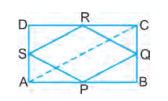
Show that the quadrilateral formed by joining the mid-points of the pairs of adjacent sides of a rectangle is a rhombus.
Image
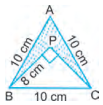
In the given figure, $\triangle ABC$ is an equilateral triangle having each side equal to 10 cm and $\triangle PBC$ is right angled at P in which $PB =8 cm$. Find the area of the shaded region.
Image
The diameter of two circles are $28\ cm$ and $24\ cm.$ Find the circumference of the circle having its area equal to sum of the areas of the two circles.
If $(a+b)=2$ and $(a-b)=10$, find the values of : $\left(a^2+b^2\right)$
Evaluate the following: $\frac{3 \sin 37^{\circ}}{\cos 53^{\circ}}-\frac{5 \operatorname{cosec} 39^{\circ}}{\sec 51^{\circ}}+\frac{4 \tan 23^{\circ} \tan 37^{\circ} \tan 67^{\circ} \tan 53^{\circ}}{\cos 17^{\circ} \cos 67^{\circ} \operatorname{cosec} 73^{\circ} \operatorname{cosec} 23^{\circ}}$
If an angle of a parallelogram is two-third of its adjacent angle, find the angles of the parallelogram.
If the mean of the following data is 18.75, find the value of p.
$x_i$1015p2530
$f_i$510782
How much will ₹ 12000 amount to in 2 years at compound interest, the rates of interest for the successive years being 10% and 11% respectively?
Find the area of an equilateral triangle having perimeter of $18\ cm.$
If $2^x=3^y=12^z$, show that $: \frac{1}{z}=\frac{1}{y}+\frac{2}{x}$.
[ Hint. Let $2^x=3^y=12^z=k$. Then, $2=k^{\frac{1}{x}}, 3=k^{\frac{1}{y}}$ and $12=k^{\frac{1}{z}}$.
Now, $\left.12=2^2 \times 3 \Rightarrow k^{\frac{1}{2}}=\left(k^{\frac{1}{x}}\right)^2 \times\left(k^{\frac{1}{y}}\right) \Rightarrow k^{\frac{1}{2}}=k^{\left(\frac{2}{x}+\frac{1}{y}\right)}\right]$