Question
Critical mass is minimum mass necessary for:

Answer

  1. Chain reaction
Explanation:
The minimum amount of fissile material needed to maintain a nuclear chain reaction.

Need a full question paper?

Generate a complete, print-ready paper with questions like this in minutes — across 16+ boards, with answer keys.
Start Generating Free

Similar questions

The magnetic moment of a current $(i)$ carrying circular coil of radius $(r)$ and number of turns $(n)$ varies as
A person is suffering from myopic defect. He is able to see clear objects placed at 15 cm. What type and of what focal length of lens he should use to see clearly the object placed 60 cm away(a) Concave lens of 20 cm focal length  (b) Convex lens of 20 cm focal length  (c) Concave lens of 12 cm focal length  (d) Convex lens of 12 cm focal length 
   
   
The brightness of a bulb will be reduced, if a resistance is connected in(a) Series with it(b) Parallel with it(c) Series or parallel with it(d) Brightness of the bulb cannot be reduced
   
   
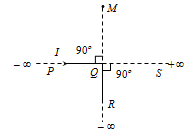
An infinitely long conductor $\text{PQR}$ is bent to form a right angle as shown. A current $I$ flows through $\text{PQR}$ The magnetic field due to this current at the point $M$ is $\mathrm{H}_1$. Now another infinitely long straight conductor $QS$ is connected at $Q$ so that the current is $\mathrm{I} / 2$ in $QR$ as well as in $QS ,$ The current in $PQ$ remaining unchanged. The magnetic field at $M$ is now $\mathrm{H}_2$. The ratio $\mathrm{H}_1 / \mathrm{H}_2$ is given by

 
Intensity of X-rays depends upon the number of(a) Electrons(b) Protons(c) Neutrons(d) Positrons
       
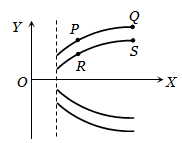
In Thomson spectrograph experiment, four positive ions $P,Q,R$ and $S$ are situated on $Y-X$ curve a shown in the figure
X-rays can be used to study crystal structure, if the wavelength lies in the range(a) 2 Å to 0.1 Å(b) 10 Å to 5 Å(c) 50 Å to 10 Å(d) 100 Å to 50 Å
       
Capacitiors are used in electrical circuits where appliances need more:
The focal length of convex lens is 30 cm and the size of image is quarter of the object, then the object distance is(a) 150 cm(b) 60 cm(c) 30 cm (d) 40 cm
       
Every atom makes one free electron in copper. If $1.1$ ampere current is flowing in the wire of copper having $1\ mm$ diameter, then the drift velocity $($approx.$)$ will be $($Density of copper  $= 9\times 10^3\ kgm^{-3}$ and atomic weight $= 63)$