MCQ
$D-$ Glucose exist in $x$ different forms. The value of $x$ (stereoisomer) is
  • A
    $2$
  • $3$
  • C
    $4$
  • D
    $5$

Answer

Correct option: B.
$3$
b
$(b)$ Three (open chain, $\alpha$)

Need a full question paper?

Generate a complete, print-ready paper with questions like this in minutes — across 16+ boards, with answer keys.
Start Generating Free

Similar questions

Which one will give $F{e^{3 + }}$ ions in solution
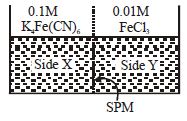
$FeCl_3$ on reaction with $K_4[Fe(CN)_6]$ in aqueous solution gives blue colour. These are separated by a semipermeable membrane $AB$ as shown. Due to osmosis there is
$A, B$ and $C$ are three biomolecules. The results of the tests performed on them are given below

$\begin{array}{|c|c|c|c|}\hline {} &\text { Molisch's Test} & {\text { Barfoed Test}} & {\text { Biuret Test}} \\ \hline \text { A} & { Positive } & {\text { Negative }} & {\text { Negative }} \\ \hline \text { B } & {\text { Positive }} & {\text { Positive }} & {\text { Negative }} \\ \hline \text { C } & {\text { Negative }} & {\text { Negative }} & {\text { Positive }} \\ \hline\end{array}$

$A, B$ and $C$ are respectively

What are $A\,\& \,B$ in the following reaction ?

 $\xrightarrow{{Mg/THF}}A\mathop {\xrightarrow{{(i)\,C{H_3}CHO}}}\limits_{(ii)\,aq.N{H_4}Cl} B$

Which one of the following reducing agents is likely to be the most effective in bringing about the following change

$R - \mathop {\mathop {C\,N{H_2} \to RC{H_2}N{H_2}}\limits^{||\,\,\,\,\,\,\,\,\,\,\,\,\,\,\,\,\,\,\,\,\,\,\,\,\,\,\,\,\,\,\,\,\,\,\,\,\,\,\,\,\,\,\,\,\,\,\,\,\,\,\,} }\limits^{O\,\,\,\,\,\,\,\,\,\,\,\,\,\,\,\,\,\,\,\,\,\,\,\,\,\,\,\,\,\,\,\,\,\,\,\,\,\,\,\,\,\,\,\,\,\,\,\,\,} $

$Ph - C{H_3}\xrightarrow{{Cr{O_2}C{l_2}}}(A)\xrightarrow{{conc.KOH}}Ph - C{H_2}OH + (B)$

Product $(B)$ of above the reaction is

Methyl alcohol (methanol), ethyl alcohol (ethanol) and acetone (propanone) were treated with iodine and sodium hydroxide solutions. Which substances will give iodoform test
Which of the following reaction is incorrect ?
Isotonic solutions have
An organic compound $\mathrm{A}\left(\mathrm{C}_{6} \mathrm{H}_{6} \mathrm{O}\right)$ gives dark green colouration with ferric chloride. On treatment with $\mathrm{CHCl}_{3}$ and $\mathrm{KOH}$, followed by acidification gives compound $\mathrm{B}$. Compound $B$ can also be obtained from compound $\mathrm{C}$ on reaction with pyridinium chlorochromate $(PCC).$ Identify $A, B$ and $C.$