Question
de Broglie relation is true  for:

Answer

  1. All particles
Explanation:
For any particle of mass m moving with velocity v has a de Broglie wavelength given by:
$\gamma=\frac{\text{h}}{\text{p}}$ This is true for all material particle.

Need a full question paper?

Generate a complete, print-ready paper with questions like this in minutes — across 16+ boards, with answer keys.
Start Generating Free

Similar questions

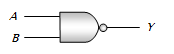
Which gates is represented by this figure
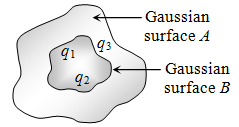
The electric flux for Gaussian surface $A$ that enclose the charged particles in free space is
$($given $q_1 = –14\ nC, q_2 = 78.85\ nC, q_3 = – 56\ nC)$ 
The work function of aluminium is 4.2 eV. If two photons, each of energy 3.5 eV strike an electron of aluminium, then emission of electrons will be (a) Possible(b) Not possible(c) Data is incomplete(d) Depend upon the density of the surface


A particle is kept at rest at a distance R (earth's radius) above the earth's surface. The minimum speed with which it should be projected so that it does not return is:
  1. $\sqrt{\frac{\text{GM}}{4\text{R}}}$
  2. $\sqrt{\frac{\text{RM}}{2\text{R}}}$
  3. $\sqrt{\frac{\text{GM}}{\text{R}}}$
  4. $\sqrt{\frac{2\text{GM}}{\text{R}}}$
The condition for stable orbit in Bohr's model of hydrogen atom is :
X-rays are(a) Stream of electrons(b) Stream of positively charged particles(c) Electromagnetic radiations of high frequency(d) Stream of uncharged particles


Assertion :   Charge is quantized
Reason    : Charge, which is less than 1 C is not possible(a) If both assertion and reason are true and the reason is the correct explanation of the assertion.(b) If both assertion and reason are true but reason is not the correct explanation of the assertion.(c) If assertion is true but reason is false.(d) If the assertion and reason both are false.


An electric field $\overrightarrow{\text{E}}$ and a magnetic field $\overrightarrow{\text{B}}$ exist in a region. The fields are not perpendicular to each other.
  1. This is not possible.
  2. No electromagnetic wave is passing through the region.
  3. An electromagnetic wave may be passing through the region.
  4. An electromagnetic wave is certainly passing through the region.
The time period of oscillation of a freely suspended bar magnet with usual notations is given by
Dielectric constant is the: