Question
Decibel is unit of

Answer

Decibel $(dB)$, unit for expressing the ratio between two physical quantities, usually amounts of acoustic or electric power, or for measuring the relative loudness of sounds

Need a full question paper?

Generate a complete, print-ready paper with questions like this in minutes — across 16+ boards, with answer keys.
Start Generating Free

Similar questions

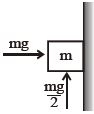
A block pressed against the vertical wall is in equilibrium. The minimum coefficient of  friction is:-
At time $t=0$ some radioactive gas is injected into a sealed vessel. At time $T$ some more of the gas is injected into the vessel. Which one of the following graphs best represents the logarithm of the activity $A$ of the gas with time $t$ ?
From a solid sphere of mass $M$ and radius $R$, a cube of maximum possible volume is cut. Moment of inertia of cube about an axis passing through its centre and perpendicular to one of its faces is
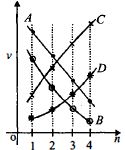
Which of the plots shown in the figure represents speed $(v)$ of the electron in a hydrogen atom as a function of the principal quantum number $(n)$ ?
Assertion : The Coulomb force is the dominating force in the universe.

Reason : The Coulomb force is weaker than the gravitational force.

How much energy will be necessary for making a body of 500 kg escape from the earth $[g = 9.8\,m/{s^2}$, radius of earth $ = 6.4 \times {10^6}\,m]$
A swimmer can swim in still water with speed $v$ and the river is flowing with velocity $v/2$. To cross the river in shortest distance, he should swim making angle $\theta$ with the upstream. What is the ratio of the time taken to swim across the shortest time to that is swimming across over shortest distance
Which of the following statement is true about magnetic moments of atoms of different elements
A block of mass $100 \mathrm{~kg}$ slides over a distance of $10 \mathrm{~m}$ on a horizontal surface. If the co-efficient of friction between the surfaces is $0.4$ , then the work done against friction (in $\mathrm{J}$ ) is :
In any fission process the ratio $\frac{{{\rm{mass\, of\, fission \,products}}}}{{{\rm{mass\, of \,parent\, nucleus}}}}$ is