Question
Define an operon. giving an example, explain an Inducible operon.

Answer

A functioning unit of genomic DNA containing a cluster of genes under the control of a single promoter is called operon. An operon is generally transcribed into polycistronic mRNA. A single mRNA which codes for more than one protein is called polycistronic mRNA. An operon is made up of 3 basic DNA components:

  1. Promoter: A nucleotide sequence that enables a gene to be transcribed is called promoter. It is recognized by RNA polymerase, which then initiates transcription.
  2. Operator: A segment of DNA to which a repressor binds is called operator.
  3. Structural genes: The genes that are co-regulated by the operon are called structural genes.

Inducible Operon: When the operon is regulated by an inducer, it is called inducible operon. An inducer can switch on or off the operon. Lac operon is an example of inducible operon. Lactose is a substrate of enzyme beta-galactosidase and is the inducer of lac operon.
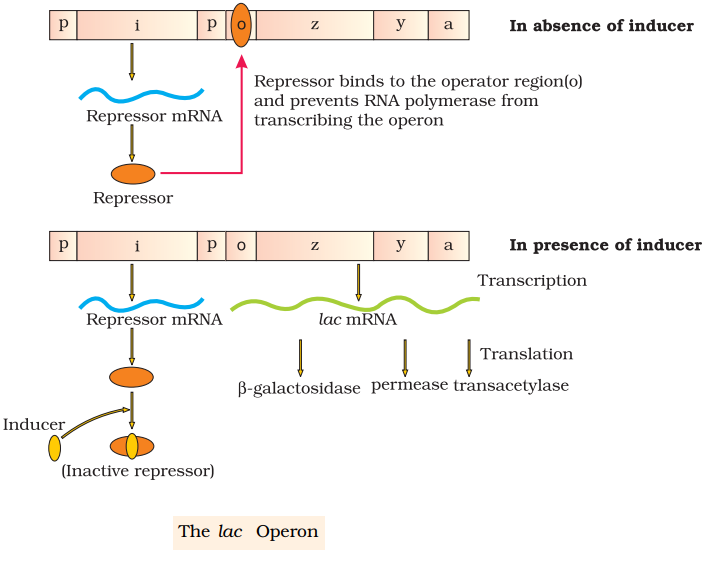
The given diagram shows the working of lac operon. In the absence of an inducer the repressor binds to the operator region and prevents transcription.

In the presence of an inducer, repressor becomes inactive. This allows transcription in the operator region which results in release of mRNA. Subsequently, mRNA promotes translation and protein synthesis is accomplished.

Need a full question paper?

Generate a complete, print-ready paper with questions like this in minutes — across 16+ boards, with answer keys.
Start Generating Free

Similar questions


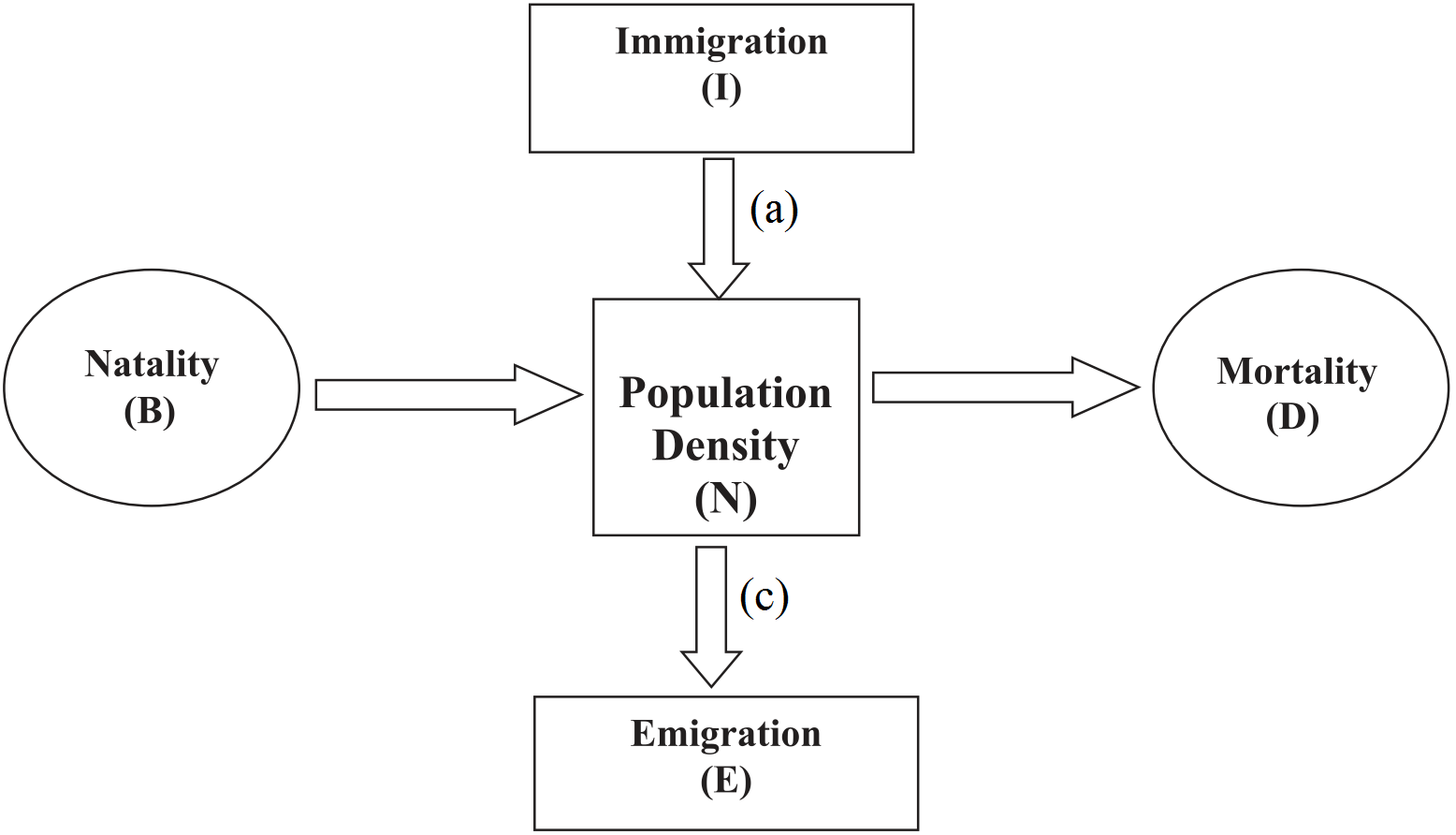
  1. Which of the above represents the increase or decrease of population?
  2. If N is the population density at time t, then what would be its density at time (t + 1)? Give the formula.
  3. In a barn there were 30 rats. 5 more rats enter the barn and 6 out of the total rats were eaten by the cats. If 8 rats were born during the time period under consideration and 7 rats left the barn, find out the resultant population at time (t + 1).
  4. If a new habitat is just being colonized, out of the four factors affecting the population growth, which factor contributes the most?
Arun visited his grandfather's farm and noticed that one of the workers was introducing earthworms in the soil. He quickly rushed to his grandfather and asked him the reason. His grandfather explained him the advantages of earthworm in soil improvement.
  1. Why are earthworms also known as detritivores?
  2. Explain fragmentation.
  3. Name the steps in the process of decomposition.
  4. What values are shown by Arun?
Write the symptoms of haemophilia and sickle-cell anaemia in humans. Explain how the inheritance pattern of the two diseases differ from each other.
Describe the characteristics a cloning vector must posses.
  1. What is “population” according to you as a biology student?
  2. “The size of a population for any species is not a static parameter.” Justify the statement with specific reference to fluctuations in the population density of a region in a given period of time.
Answer the following questions:
Name the hormones secreted and write their functions:
  1. By corpus luteum and placenta (any two) .
  2. During Follicular phase and parturition.
Give an account of Hershey and Chase experiment. What did it conclusively prove? If both DNA and proteins contained phosphorus and sulphur do you think the result would have been the same?
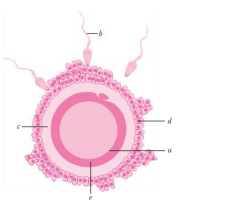
Study the illustration given and answer the questions that follow:

Draw a diagram of ‘b’ separately and label the parts:
  • That help its entry into ‘a’;
  • That carry genetic material;
  • That help in its movement.
What is vaccination? Explain in detail mother and child vaccination.
(a) Taking an example of a small pond, explain how the four components of an ecosystem function as a unit.
(b) Name the type of food chain that exists in a pond.