Question
Define spermiogenesis and spermiation.

Answer

Spermiogenesis is the process of transformation of spermatids into mature flagellated spermatozoa (sperms). Spermiation is the process of release of mature spermatozoa. In this spermatozoa are shed into the lumen of seminiferous tubule for transport.

Need a full question paper?

Generate a complete, print-ready paper with questions like this in minutes — across 16+ boards, with answer keys.

Start Generating Free

Similar questions

What is entomophily? Describe the features of entomophilous flowers.
What is meant by the following:
Somatic hybrid.
Describe application of biotechnology.
In a certain population, the frequency of three genotypes is an followers.
Genotypes: BB Bb bb
Frequency: 22% 62% 16%
What is the likely frequency of B and b alleles?
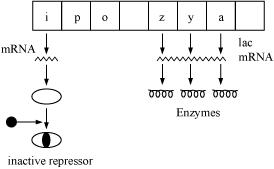
Study the figure given below and answer the questions:
  1. How does the repressor molecule get inactivated?
  2. When does the transcription of lac mRNA stop?
  3. Name the enzyme transcribed by the gene ‘Z’.
The species diversity of plants (22 per cent) is much less than that of animals (72 per cent). What could be the explanations to how animals achieve greater diversification ?
Why is ZIFT a boon to childless couples? Explain the procedure.
How does the HIV breakdown the immune system of the AIDS patient?
A set of terms are given below (box) followed by few statements in a box.
Outbreeding, Inbreeding, Out-crossing, Cross-breeding, Interspecific hybridisation.
Pick the correct term and write it against the appropriate statement.
  1. Male and female animals of two different related species are mated.
  2. Superior males of one breed are mated with superior females of another breed.
  3. Mating of animals within the same breed, but having no common ancestors on the either side of their pedigree up to 4-6 generations.
  4. Mating of more closely related individuals within the same breed for 4-6 generations.
Why are cloning vectors necessary in cloning? Name any two such vectors that are used in experiment with E. coli.