Question
Define the following terms:
  1. Colligative properties.
  2. Molality (m).

Answer

  1. Properties that are independent of nature of solute and depend on number of moles of solute only.
  2. Number of moles of solute dissolved per kg of the solvent.

Need a full question paper?

Generate a complete, print-ready paper with questions like this in minutes — across 16+ boards, with answer keys.
Start Generating Free

Similar questions

Differentiate between globular and fibrous proteins.
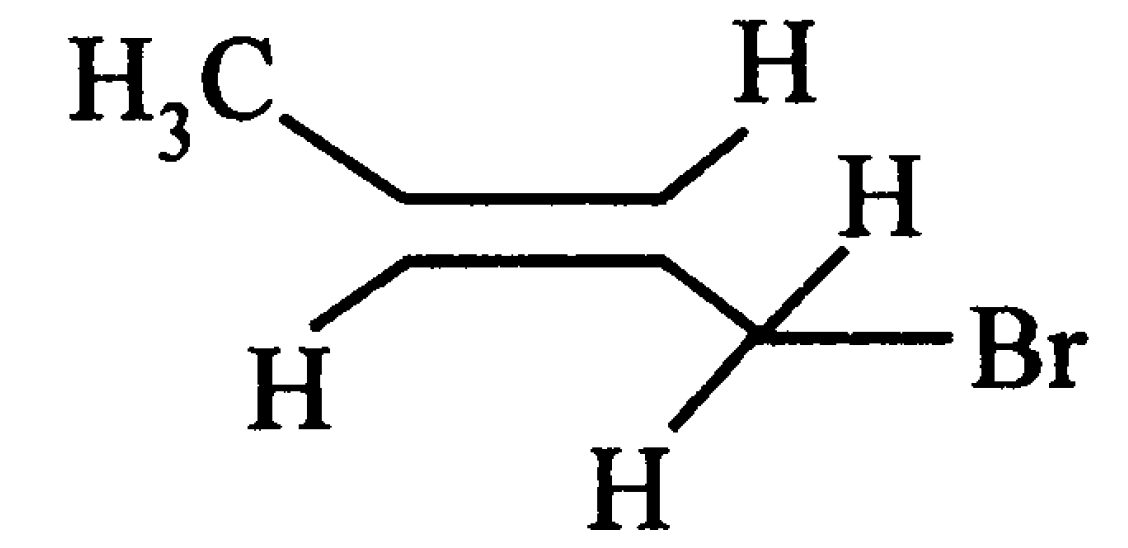
  1. State the IUPAC name of the following compound:

  1. Complete the following chemical equation:

CH3CH2CH=CH2 + HBr $\xrightarrow{\text{peroxide}}.........$
Predict the products of electrolysis in each of the following:
An aqueous solution of CuCl2 with platinum electrodes.
What are polysaccharides? Give one example.
Classify carbohydrates.
Explain the preparation of aldehydes and ketones by oxidation of alcohols with suitable examples.
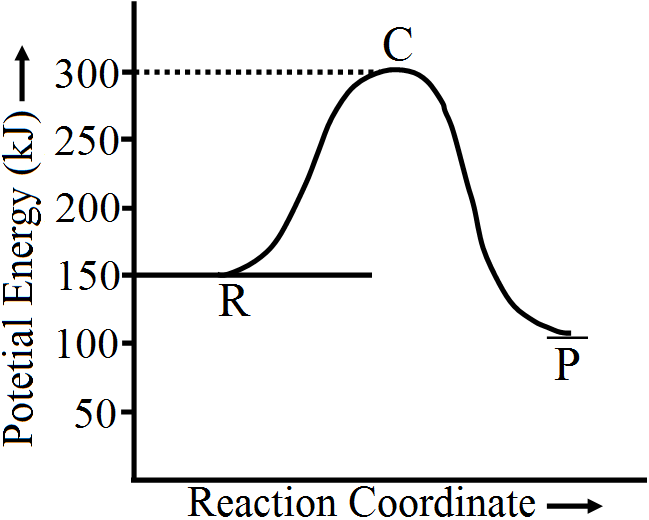
Answer the following questions on the basis of the given plot of potential energy vs reaction coordinate:

  1. What is the threshold energy for the reaction?
  2. What is the activation energy for forward reaction?
  3. What is the activation energy for backward reaction?
  4. What is enthalpy change for the forward reaction?

Given that the standard electrode potentials (Eo) of metals are:
K+/K = –2.93 V, Ag+/Ag = 0.80 V, Cu2+/Cu = 0.34 V,
Mg2+/Mg = -2.37 V, Cr3+/Cr = – 0.74 V, Fe2+/Fe = – 0.44 V.
Arrange these metals in an increasing order of their reducing power. 
State Raoult’s law for solutions of volatile liquid components. Taking a suitable example, explain the meaning of positive deviation from Raoult’s law.
Note: In the following questions a statement of assertion followed by a statement of reason is given. Choose the correct answer out of the following choices.
  1. Both assertion and reason are true and the reason is the correct explanation of assertion.
  2. Both assertion and reason are true and the reason is not the correct explanation of assertion.
  3. Assertion is true but the reason is false.
  4. Both assertion and reason are false.
  5. Assertion is false but reason is true.
Assertion: For measuring resistance of an ionic solution an AC source is used.
Reason: Concentration of ionic solution will change if DC source is used.