Question
Define the term inflorescence. Explain the basis for the different types inflorescence in flowering plants.

Answer

A flower is a modified shoot wherein the shoot apical meristem changes to floral meristem. Internodes do not elongate and the axis gets condensed. The apex pro-duces different kinds of floral appendages laterally at suc-cessive nodes instead of leaves. When a shoot tip transforms into a flower, it is always solitary. The arrangement of flow-ers on the floral axis is termed as inflorescence. Depending on whether the apex gets developed into a flower or contin-ues to grow, two major types of inflorescences are defined -racemose and cymose. In racemose type of inflorescences the main axis continues to grow, the flowers are borne later-ally in an acropetal succession. In cymose type of inflores-cence the main axis terminates in a flower, hence is limited in growth. The flowers are borne in a basipetal order .

Need a full question paper?

Generate a complete, print-ready paper with questions like this in minutes — across 16+ boards, with answer keys.
Start Generating Free

Similar questions

On an educational trip to Uttaranchal, Ketki and her friends observe that many local people were having swollen necks. Please help Ketki and her friends to find out the solutions to the following questions.
  1. Which probable disease are these people suffering from?
  2. How is it caused?
  3. What effect does this condition have on pregnancy?
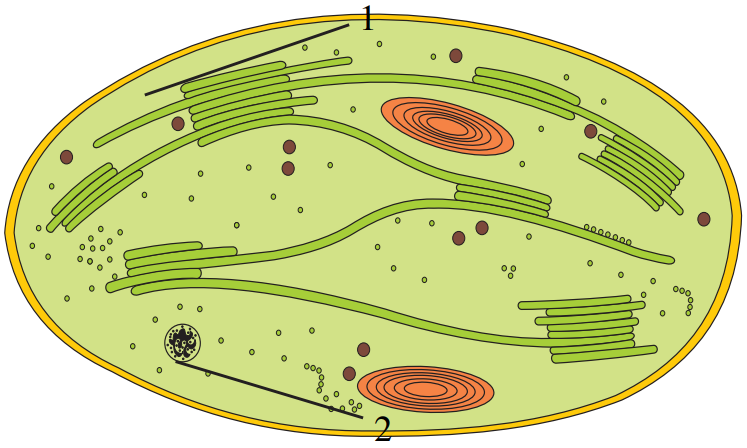
Examine the figure.

  1. Is this structure present in animal cell or plant cell?
  2. Can these be passed on to the progeny? How?
  3. Name the metabolic processes taking place in the places marked (1) and (2).
Distinguish between
i. Grey matter and White matter
ii. A stimulus and An Impulse
Match the following
 
Column I
 
Column II
a.
Cristae
i.
Flat membranous sacs in stroma.
b.
Cisternae
ii.
Infoldings in mitochondria.
c.
Thylakoids
iii.
Disc-shaped sacs in Golgi apparatus.
Draw a diagram showing coelomate, acoelomate and pseudocoelomate in transverse section. 
Explain the difference between interfascicular cambium and intrafascicular cambium.
Which parts of the plants produce gibberellins? State two functions of this hormone and mention why it was named gibberellin.
Why reproduction is necessary? Is it essential for survival? If a living organism does not reproduce, in which category it will belong, living or non-living? How is sexual reproduction different from asexual reproduction.
Write one feature of sweet pea of each of following:
  1. Flower onoman.
  2. Calyx w ollen ZET.
  3. Corolla onyo.
  4. Androecium.
  5. Gynoecium.
  6. Fruit.
Explain the importance of photosynthesis