MCQ
Density of antinodes in stationary wave is:
  • A
    Maximum
  • B
    Minimum
  • C
    Maximum change
  • Minimum change

Answer

Correct option: D.
Minimum change
(D)

Need a full question paper?

Generate a complete, print-ready paper with questions like this in minutes — across 16+ boards, with answer keys.
Start Generating Free

Similar questions

A steel ball and a rubber ball of equal weight are dropped from the same height on a firm surface then:
A spring balance is graduated on sea level. If a body is weighed with this balance at consecutively increasing heights from earth's surface, the weight indicated by the balance
$A$ particle of mass $m$ is rotating in a plane is $a$ circular path of radius $r$, its angular momentum is $L$. The centripital force acting on the particle is :
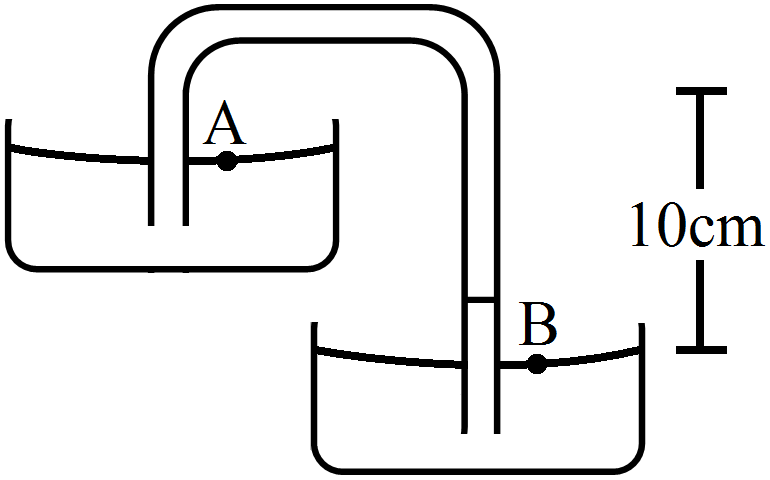
Figure shows a siphon. The liquid shown is water. The pressure difference Pa PA between the points A and B is the reading will be:
  1. 400 Nm−2
  2. 3000 Nm−2
  3. 1000 Nm−2
  4. zero.

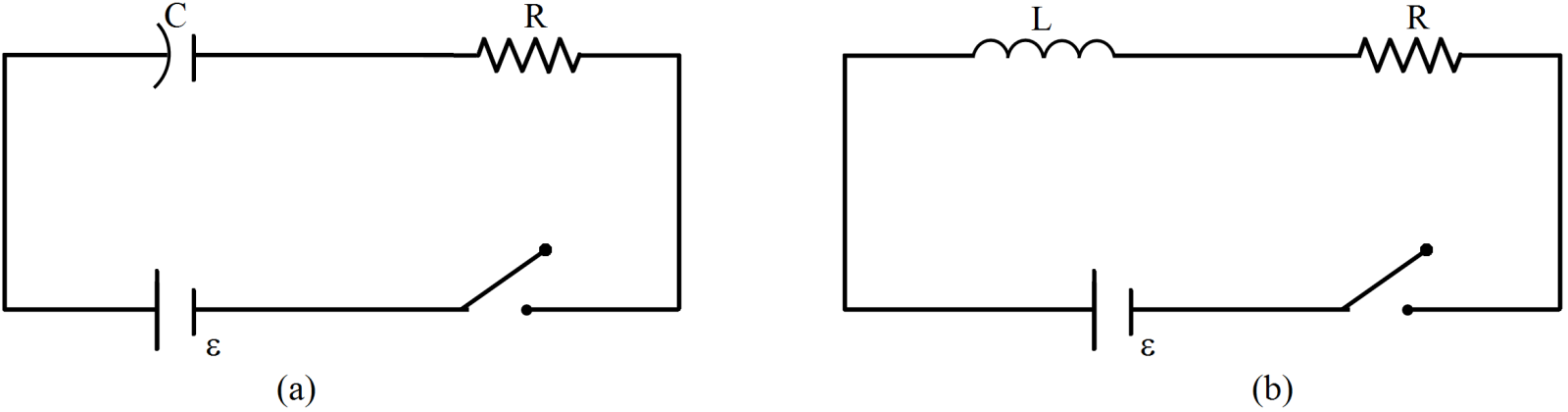
The switches in figure are closed at t = 0 and reopened after a long time at t = t0:

  1. The charge on C just after t = 0 is $\in\text{C}.$
  2. The charge on C long after t = 0 is $\in\text{C}.$
  3. The current in L just before t = tis $\frac{\in}{\text{R}}.$
  4. The current in L long after t = t0 is $\frac{\in}{\text{R}}.$
A ball hits a floor and rebounds after an inelastic collision. In this case:
  1. The momentum of the ball just after the collision is same as that just before the collision.
  2. The mechanical energy of the ball remains the same during the collision.
  3. The total momentum of the ball and the earth is conserved.
  4. The total energy of the ball and the earth remains the same.
Eight equal drops of water are falling through air with a steady speed of $10\,cm / s$. If the drops coalesce, the new velocity is $.........\,cm/s$
Consider a cycle followed by an engine:

1 to 2 is isothermal.

2 to 3 is adiabatic.

3 to 1 is adiabatic.

Such a process does not exist because:

  1. heat is completely converted to mechanical energy in such a process, which is not possible.
  2. mechanical energy is completely converted to heat in this process, which is not possible.
  3. curves representing two adiabatic processes don’t intersect.
  4. curves representing an adiabatic process and an isothermal process don’t intersect.

​​​​​

The elastic limit for a gas
A man is running at a speed of $5\, m/s$, the rain drops appear to be falling at an angle of $45^o$ from the vertical. If the rain drops are actually falling vertically downwards, then velocity of rain drops (in $m/s$) is