Question
Describe functions performed in early cities like Mathura.

Answer

Generally, some cities were considered important for a variety of reasons (or variety of functions performed in them). Let us look at the example of Mathura.
Mathura:
  1. It has been an important settlement for more than 2500 years.
  2. Farmers and herders from adjoining areas provided food for people in the city, which was located at the cross roads of two major routes of communication, from the northwest to north and east and from north to south.
  3. There were fortifications around the city and several shrines.
  4. Mathura was also a centre where some extremely fine sculpture was produced.
  5. Around 2000 years ago Mathura became the second capital of the Kushanas (remember their first capital was Purshpur or modern Peshawar in Pakistan).
  6. Mathura was also a religious centre - there were Buddhist monasteries. Jain shrines and it was an important centre for worship of Lord Krishna.
Several inscriptions on surfaces such as stone, slabs, statues, have been found in Mathura. Generally, these are short inscriptions, recording gifts made by men and women to monasteries and shrines. These were made by kings and queens, officers, merchants and crafts persons who lived in the city. For example, inscriptions from Mathura mention goldsmiths, blacksmiths, weavers, basket makers, garland makers, perfumers.
Need a full question paper?

Generate a complete, print-ready paper with questions like this in minutes — across 16+ boards, with answer keys.

Start Generating Free

Similar questions

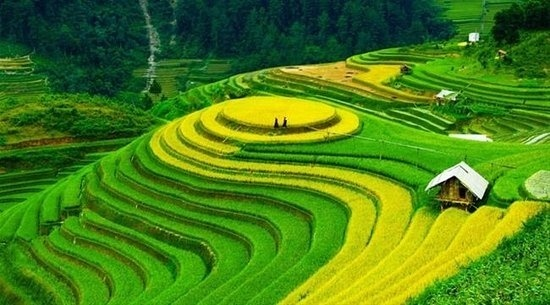
Read the following account (terrace farming in Nagaland) and answer the questions that follow it:
Terrace Farming in Nagaland:
This is a village called Chizami which is in Phek district in Nagaland. The people of this village belong to the Chakhesang community. They do ‘terrace’ cultivation.

This means that the land on a hill slope is made into flat plots and carved out in steps. The sides of each plot are raised in order to retain water. This allows water to stand in the field, which is best for rice cultivation.
The people of Chizami have their own individual fields. But, they also work collectively in each other’s fields. They form groups of six or eight and take an entire mountainside to clean the weeds on it.
Each group eats together once their work for the day is over. This goes on for several days until the work is completed.
  1. Which village is referred to in the picture above? Where is it located?
  2. Which community do the villagers of this village belong to?
  3. What type of farming do they practise?
  4. For what is this practice the best?
  5. Why do the people of Chizami work collectively?
Write important historical events related with the following’ dates:
  1. About 3000 years ago.
  2. About 2500 years ago.
  3. About 2000 years ago.
  4. Between 2000 and 1900 years ago.
Describe the wish of a daughter.
Who was Vajjis? What type of rule did they represent?
How does discrimination take place even on grounds of caste and class?
How did caste system become rigid in later Vedic age?
What happened at the dentist’s clinic?
Give an account of administrative divisions in India.
Discuss Jainism in brief.
Mention four different kinds of rulers as described by Harisena. What was Samudragupta’s policy towards them?