Question
Describe structure and functions of Golgi apparatus.

Answer

Structure of Golgi apparatus: Golgi apparatus first described by Camillo Golgi. There are three distinct components are visible in the Golgi complex. They are:
  • Flattened sacs or cisternae.
  • Clusters of tubules and vesicles.
  • Large vesicles or vacuoles.
Golgi apparatus has a convex forming face and a concave maturing face. The forming face receives vesicles from ER and maturing face produces secretory vesicles and lysosomes.
Golgi apparatus absent in bacteria, blue green algae, mature sperms and RBC of mammals and other animals.
Function:
  1. The main function of Golgi apparatus is secretory. It helps in the secretion of mucus, enzymes and hormones.
  2. It helps in the storage of secretory products.
  3. Golgi apparatus is also involved in the synthesis of cell wall, plasma membrane and lysosomes.

Need a full question paper?

Generate a complete, print-ready paper with questions like this in minutes — across 16+ boards, with answer keys.
Start Generating Free

Similar questions

Discuss the method of separating a mixture containing chalk powder, iron fillings and naphthalene.
What is pasturage and how it is related of honey production?
Explain the terms 'compression' and 'rarefactions' of a wave. What type of waves consist of compressions and rarefactions?
If $1$ gram of sulphur dioxide contains $x$ molecules, how many molecules will be present in $1$ gram of oxygen? $(S = 32u; O = 16u)$
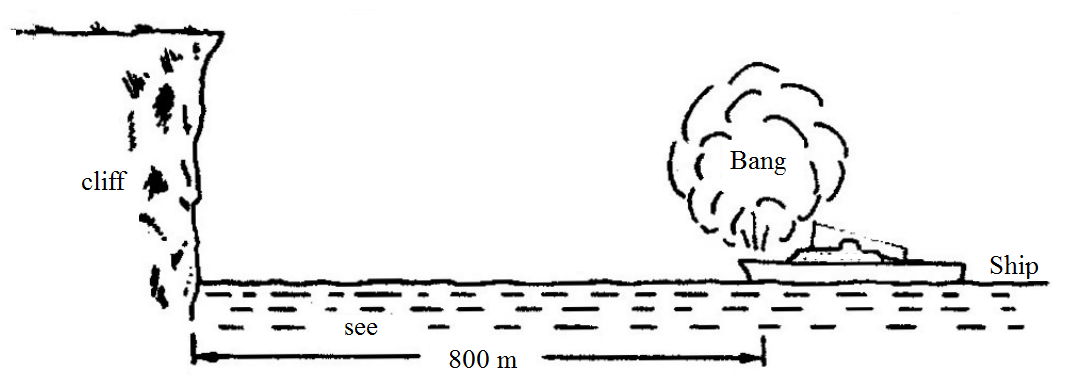
The drawing shoes a ship $800m$ from a cliff. A gun is fired on the ship. After $5$ seconds the people at the front of the ship hear the sound of the gun again.
  1. What is the name of this effect?
  2. What happens to the sound at the cliff?
  3. How far foes the sound travel in $5$ seconds?
  4. Calculate the speed of sound.
Describe the various steps involved in the separation of iodine, iron filings and salt from a mixture.
A liquid compound X of molecular mass 18u can be obtained from a number of natural sources. All the animals and plants need liquid X for their survival. When an electric current is passed through 200 grams of pure liquid X under suitable conditions, then 178 grams of gas Y and 22 grams of gas Z are produced. Gas Y is produced at the positive electrode whereas gas Z is obtained at the negative electrode. Moreover, gas Y supports combustion whereas gas Z burns itself causing explosions.
  1. Name (i) liquid X (ii) gas Y, and (iii) gas Z
  2. What is the ratio to the mass of element Z to the mass of element Y in the liquid X?
  3. Which law of chemical combination is illustrated by this example?
  4. Name two sources of liquid X.
  5. Gate an important use of Y in our life.
In an experiment, $4.90g$ of copper oxide was obtained form $3.92g$ of copper. In another experiment, $4.55g$ of copper oxide gave, on reduction, $3.64g$ of copper. Show with the help of calculations that these figures verify the law of constant proportions.
Explain how, nitrogen, oxygen and argon gases are separated form air.
How could you  convince a small child that when ou speak, it is not necessary for air to travel from your mouth to the ear of a listener?