Question
Describe the following pictures
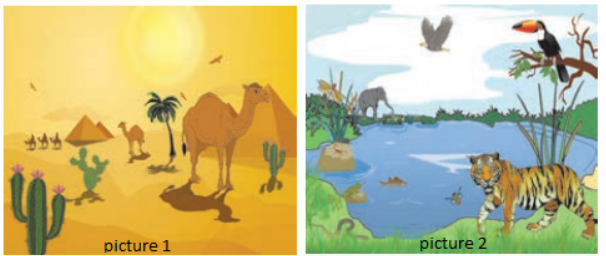
In the above picture camel is shown which is a primary consumer in the desert ecosystem. Camel is very well adapted for desert life. There is also the scarcity of water in desert and hence cactus shows xerophytic (suitable to survive in desert) adaptations.
In second picture, the forest ecosystem is shown because we can see elephant and tiger in the picture. Also, giant hornbill is sitting on the tree. This forest must be tropical evergreen forest. The rainfall is heavy in such areas and hence different types of wetlands can be seen in forests. Wetlands support variety of life. A separate aquatic ecosystem does exist here which is closely interconnected with the terrestrial ecosystems through food chains and food web.
The birds utilize the fish as their prey. The wild animals come to wetlands to quench their thirst. In this picture the plants, grass, etc. are producers, small fishes in the lake are primary consumers. They will be eaten by larger fishes which are secondary consumer in the aquatic ecosystem. The elephant is herbivorous animal and hence it is primary consumer. Snake is the secondary consumer while the birds of prey (eagle that is flying) and tiger are tertiary consumers.
Generate a complete, print-ready paper with questions like this in minutes — across 16+ boards, with answer keys.