Question
Describe the process of cocoon formation.

Answer

  1. The eggs of silkworm hatch into larvae.
  2. The larvae develop into a caterpillar.
  3. Caterpillar feeds on fresh mulberry leaves.
  4. After its growth and moulting, the silkworm secretes a silk fibre to form cocoon.
  5. The silk is a continuous filament comprising fibroin protein, secreted from salivary glands of silkworm and a gum called sericin, which cements the filaments.
  6. The silk solidifies when it contacts the air.
  7. The silkworm spins approximately one mile of filament and completely encloses itself in a cocoon in about two or three days.

Need a full question paper?

Generate a complete, print-ready paper with questions like this in minutes — across 16+ boards, with answer keys.
Start Generating Free

Similar questions

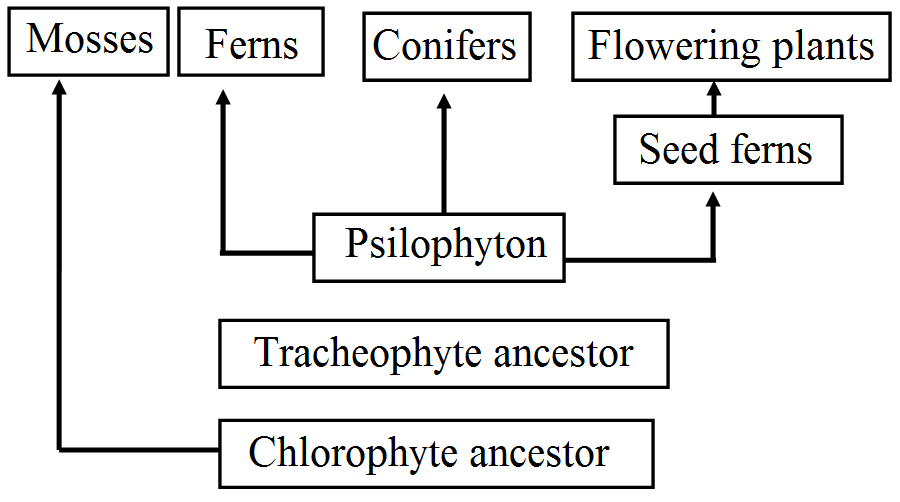
Study the schematic representation of evolutionary history of plant forms given below and mention:
  1. The plant form Ferns and Conifers are most related to.
  2. The nearest ancestors of flowering plants.
  3. The most primitive group of plants
  4. Common ancestry Psilophyton provides to.
  5. The common ancestors of Psilophyton and seed ferns.
  6. The common ancestors of mosses and tracheophytes.
  1. List the two methodologies which were involved in human genome project. Mention how they were used.
  2. Expand ‘YAC’ and mention what was it used for.
  1. State how the constant internal environment is beneficial to organisms.
  2. Explain any two alternatives by which organisms can overcome stressful external conditions.
Describe the process of amplification of "gene of interest" using PCR technique.
Flowering plants have developed many devices to discourage self-pollination and to encourage cross pollination. Explain three such devices.
Eco RI is used to cut a segment of foreign DNA and that of a vector DNA to form a recombinant DNA. Show with the help of schematic diagrams.
  1. The set of palindronic nucleotide sequence of base pairs the Eco RI will recognise in both the DNA segments. Mark the site at which Eco RI will act and cut both the segments.
  2. Sticky ends formed on both the segments where the two DNA segments will join later to form a recombinant DNA.
How do snails, seeds, bears, zooplanktons, fungi and bacteria adapt to conditions unfavourable for their survival?
Answer the following questions:
Why is tender coconut considered a healthy source of nutrition?
How are assisted reproductive technologies helpful to humans? How are ZIFT and GIFT different from intra uterine transfers? Explain.
Expand 'BAC' and 'YAC'. Explain how they were used in sequencing of human genomes.