Question
Describe the structure and functions of epithelium.

Answer

Epithelium is the simplest tissue. It is the protective tissue of the animal body in which the cells are tightly packed having no intercellular matrix. Epithelial cells lie on a delicate non-cellular basement membrane which contains a special form of matrix protein, called collagen. These tissues perform the function of excretion, secretion and absorption. Depending upon the shape and functions of the cells.
The epithelial tissue is of various types:
  1. Squamous: The cells are flat and polygonal and are arranged as tiles. These tissues occur in skin, lining of alveoli of lungs, blood vessels etc. Its function includes protection, diffusion and osmosis.
  2. Cuboidal: The cells are cube like. These occur in glands, germinal layer of ovary, kidney tubules etc. Its function is secretion and absorption.
  3. Columnar: The cells are pillar or column like resting on a thin membrane. Such tissues occur in the lining of stomach, intestine etc. Its function includes protection, absorption and secretion.
  4. Ciliated: It has cuboidal, columnar cells with fine hair like structures called cilia. It is present in the lining of respiratory tract, fallopian tube, nephron etc. Its function is protection, spreading of mucus and motion of gases and liquids by cilia.
  5. Glandular: The cells are cubical. These can be branched or unbranched. Such tissues are present in glands. Its main function is secretion.

Need a full question paper?

Generate a complete, print-ready paper with questions like this in minutes — across 16+ boards, with answer keys.
Start Generating Free

Similar questions

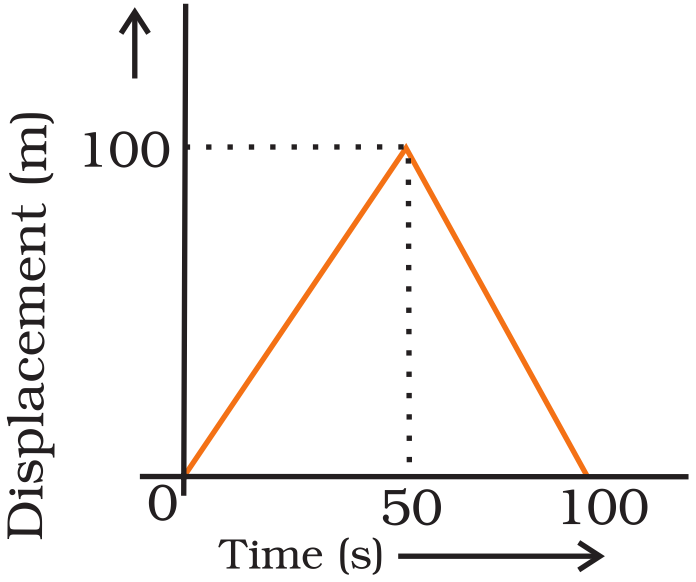
A girl walks along a straight path to drop a letter in the letterbox and comes back to her initial position. Her displacement–time graph is shown in Plot a velocity–time graph for the same.

An atom of element E contains 3 protons, 3 electrons and 4 neutrons:
  1. What is its atomic number?
  2. What is its mass number?
  3. Write the electronic configuration of the element E.
  4. State whether element E is a metal or non-metal. Why?
  5. What type of ion, cation or anion, will be formed by an atom of element E? Why?
  6. Write the symbol of the ion formed by an atom of element E.
  7. What could element X be?
Give reasons for:
Meristematic cells have a prominent nucleus and dense cytoplasm but they lack vacuole.
Write the formulae of the following compounds. Also name the elements present in them.
  1. Water.
  2. Ammonia.
  3. Methane.
  4. Sulphur dioxide.
  5. Ethanol.
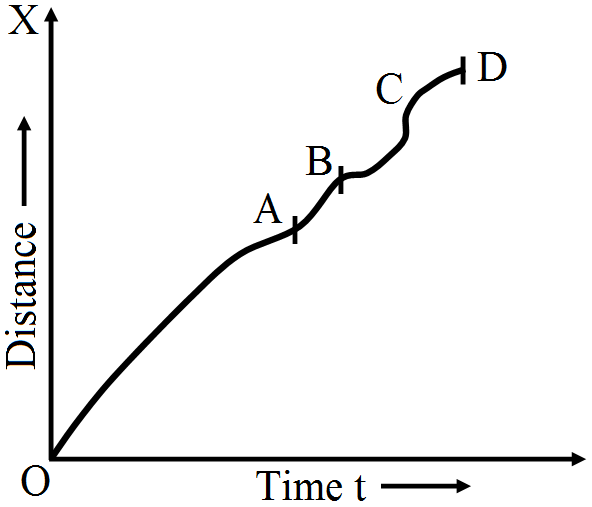
The figure shows an x-t graph of a particle moving along a straight line. What is the sign of the acceleration during the intervals OA, AB, BC, and CD?

Show by using the graphical method that:

$\text{s}=\text{ut}+\frac{1}{2}\text{at}^2$

where the symbols have their usual meanings.

Define irrigation. Why is irrigation of crops essential? Mention the harmful effects of excessive irrigation.

An electron moving with a velocity of 5 × 10⁴ m s-1 enters into a uniform electric field and acquires a uniform acceleration of 104 m s–2 in the direction of its initial motion. Calculate the time in which the electron would acquire a velocity double of its initial velocity. How much distance the electron would cover in this time?
What is a soundboard? Explain the working of a soundboard with the help of a labelled diagram.

What is epithelial tissue? Give its characteristics and functions.