Question
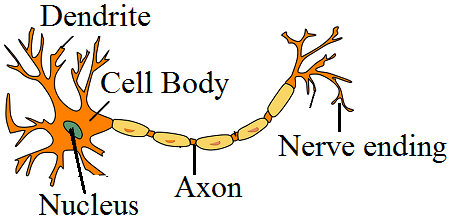
Describe the structure of a nerve cell.
Answer

The cells of the nervous tissue are called nerve cells or neurons. A neuron or nerve cell is structural and functional unit of the nervous tissue. It consists of:
  • Cell body or cyton.
  • Axon.
  • Dendrons or dentrites.

Cell body or cyton has a prominent nucleus and cytoplasm. Cell organelles like golgi bodies, mitochondria, etc are also present in the cytoplasm. From the cell body extend out two kinds of cytoplasmic extensions called dentrites and axons. The axon is covered by a fatty myelin sheath. Myelin sheath is discontinuous and broken at intervals by nodes of Ranvier.
Axons usually a long, unbranched, cylindrical process that ends in many terminal end fibres. The axon ending of one nerve cell is lossely placed on the cell body of another nerve cell. The other small branch given out by the cyton are called dendrons which branch further into numerous thin hair-like dentrites.

Need a full question paper?

Generate a complete, print-ready paper with questions like this in minutes — across 16+ boards, with answer keys.
Start Generating Free

Similar questions

How long will it take a force of $10N$ to stop a mass of $2.5\ kg$ which is moving at $20\ m/s?$
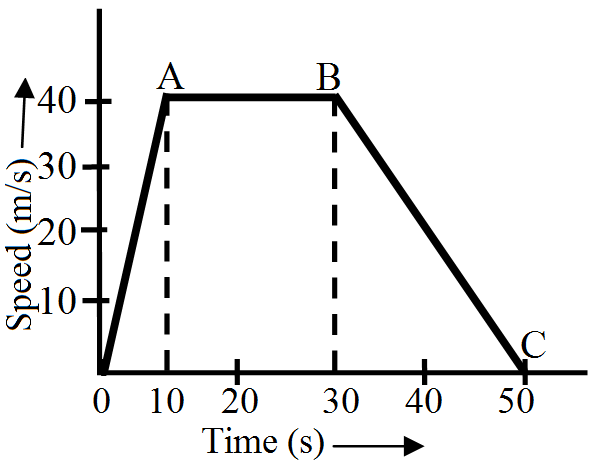
Study the speed-time graph of a car given alongside and answer the following questions:
  1. What type of motion is represented by OA?
  2. What type of motion is represented by AB?
  3. What type of motion is represented by BC?
  4. What is the acceleration of car from O to A?
  5. What is the acceleration of car from A to B?
  6. What is the retardation of car from B to C?
Draw a flow sheet diagram showing the separation of various components of a mixture containing camphor, sand and iron filings.
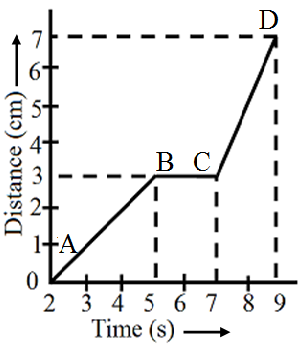
The graph given alogside shows the positions of a body at different times. Calculate the speed of the body as it moves from:
  1. A to B.
  2. B to C.
  3. C to D.
An element $X$ forms the following compounds with hydrogen, carbon and oxygen:
$H_2X, CX_2, XO_2, XO_3$
Double Matching:Match the columns I, II and III.
 
Column I
 
Column II
 
Column III
1.
Oil seeds
a.
Red Sindhi
i.
Sahiwal
2.
Intercropping
b.
Mustard
ii.
Sunflower
3.
Local breeds
c.
Vitamin A
iii.
Maize
4.
Poultry feed
d.
Soybean
iv.
Vitamin K
What is endoplasmic reticulum? Give its types and functions.
How does sound from a sound producing body travel through air to reach our ears? Illustrate your answer with the help of a labelled diagram.
Write the formulae for the following and calculate the molecular mass for each one of them.
$a.$ Caustic potash
$b.$ Baking powder
$c.$ Lime stone
$d.$ Caustic soda
$e.$ Ethanol
$f.$ Common salt
How would you prepare a saturated solution of sodium chloride in water at 25°C? What will happen if this solution is cooled to 10°C?