Asexual reproduction is common among single-celled organisms and animals with relatively simple organisation. In lower organisms like protists and monerans, the organism or the parent cell divides into two, to give rise to new individuals. Thus, in these organisms cell division is itself a mode of reproduction. Asexual reproduction in animals occurs by the following methods:
- Fission: It is the division of the parent body into two or more daughter individuals identical to the parent. It can occur by binary fission and multiple fission:
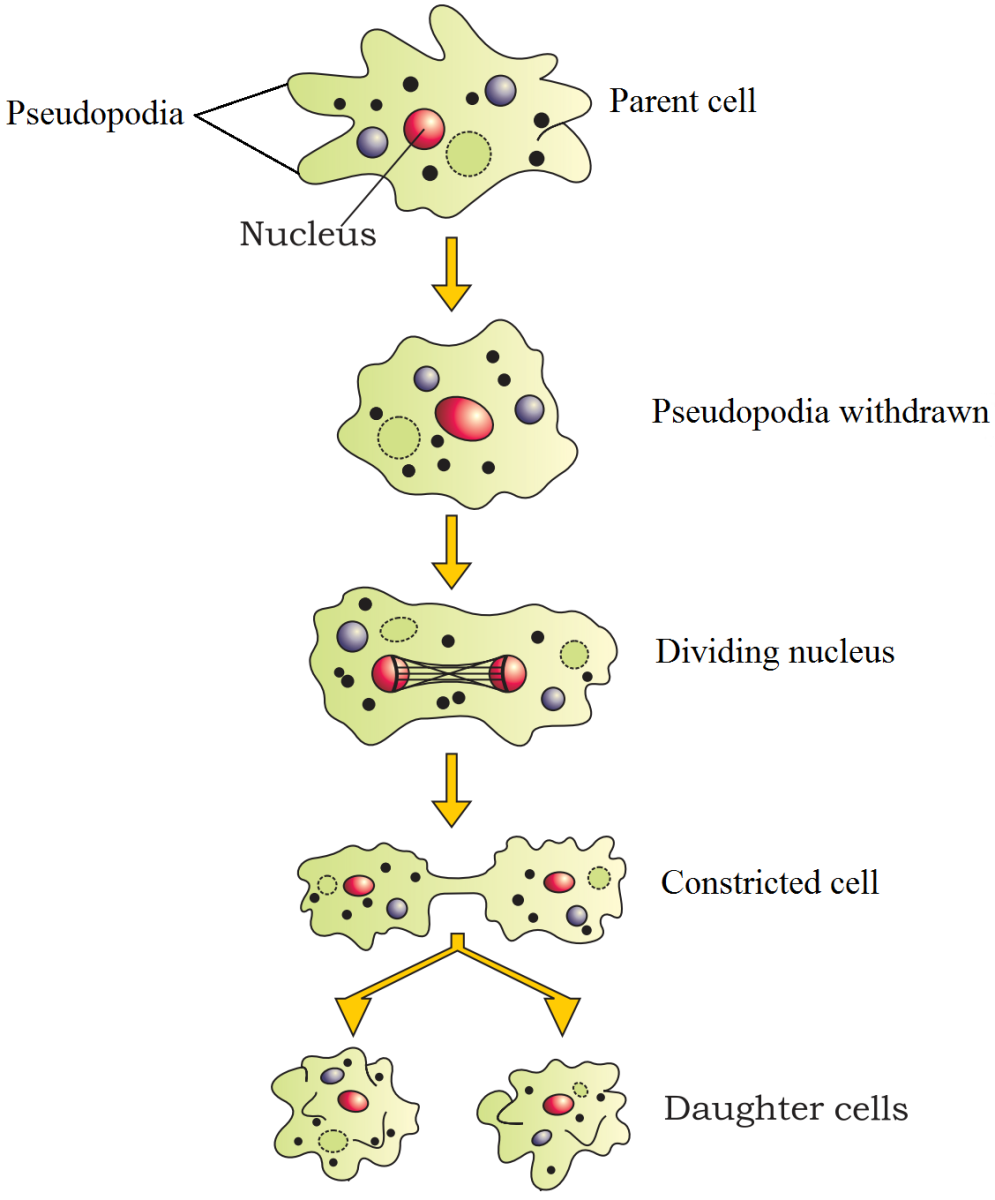
- Binary fission: It is the division of the parent cell into two small, nearly equal sized daughter individuals, each of which rapidly grows into an adult. It occurs in single-celled animals like bacteria and protozoans, e.g. Amoeba, Paramecium, etc.
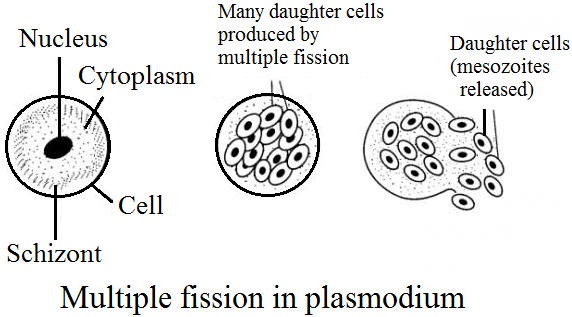
- Multiple fission: It is the division of the parent body into many small daughter individuals simultaneously, each of which grows into an adult, e.g. Plasmodium (the malarial parasite), Amoeba (during unfavourable conditions), etc.
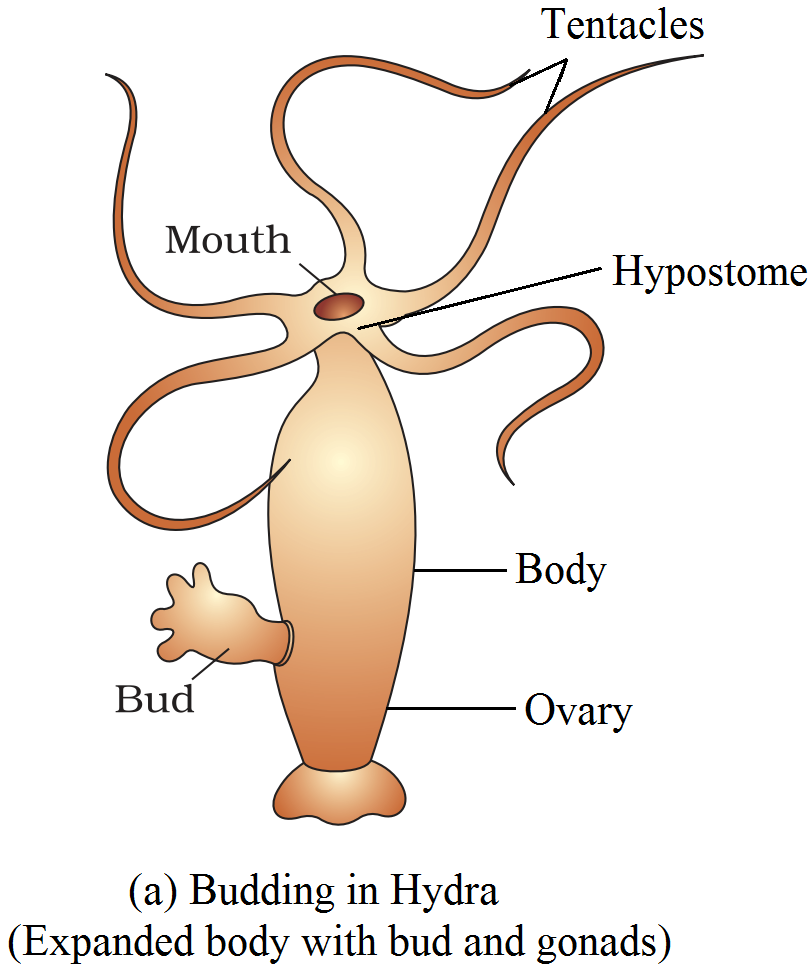
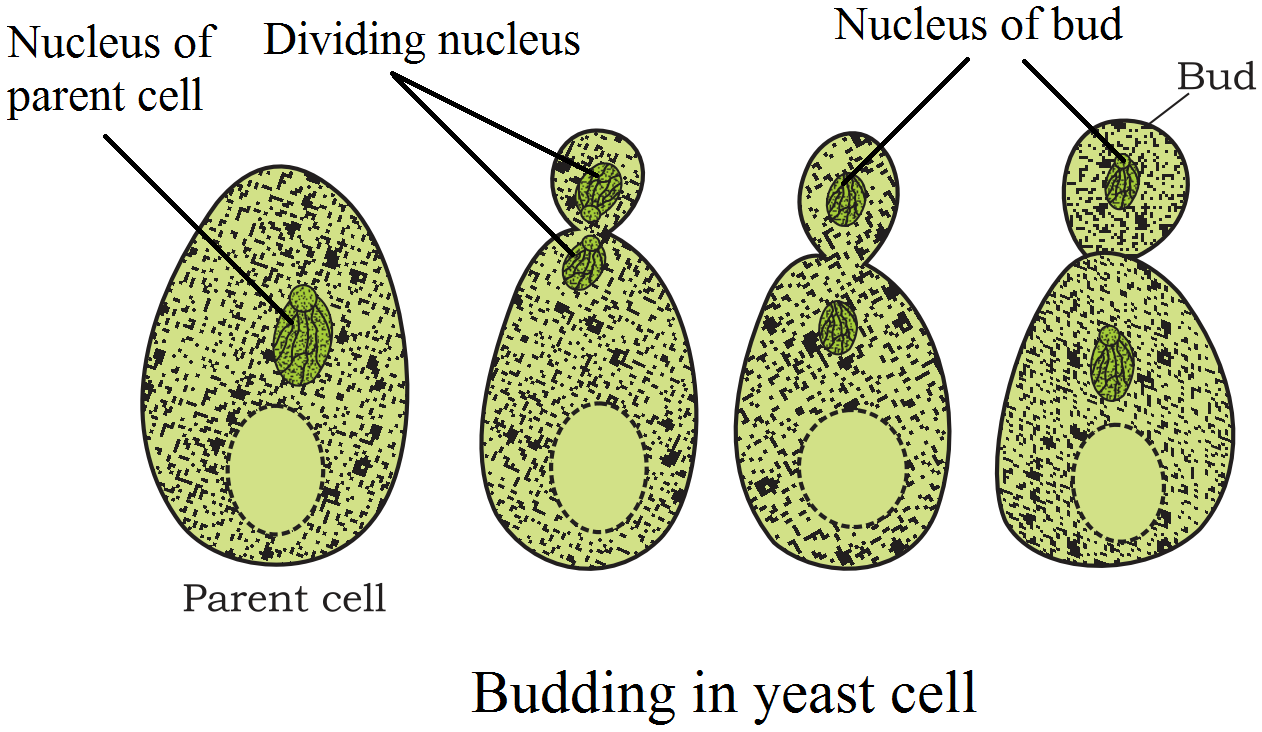
- Budding: It is a mode of asexual reproduction in which one or more unequal and small projections called buds are produced that remain attached initially to the parent cell, but eventually get separated and mature into new organisms (cells), e.g. yeast, Hydra, etc.
Depending on the place where the bud arises, budding can be of two types:
- External budding (Hydra and yeast): In Hydra, (multicellular organism) regenerative cells are used for reproduction during budding. A bud develops as an outgrowth due to the repeated cell divisions at one specific site. These buds develop into tiny individuals which on getting fully matured, detach themselves from the parent body becoming new independent individuals.
The same process occurs in yeast, where nucleus divides by the process of budding into a new bud which gets detached from parent yeast.
- Internal budding (Gemmule formation): A mass of cells enclosed within a common opaque envelop, rich in food, which germinates into a new plant, is called a gemmule.
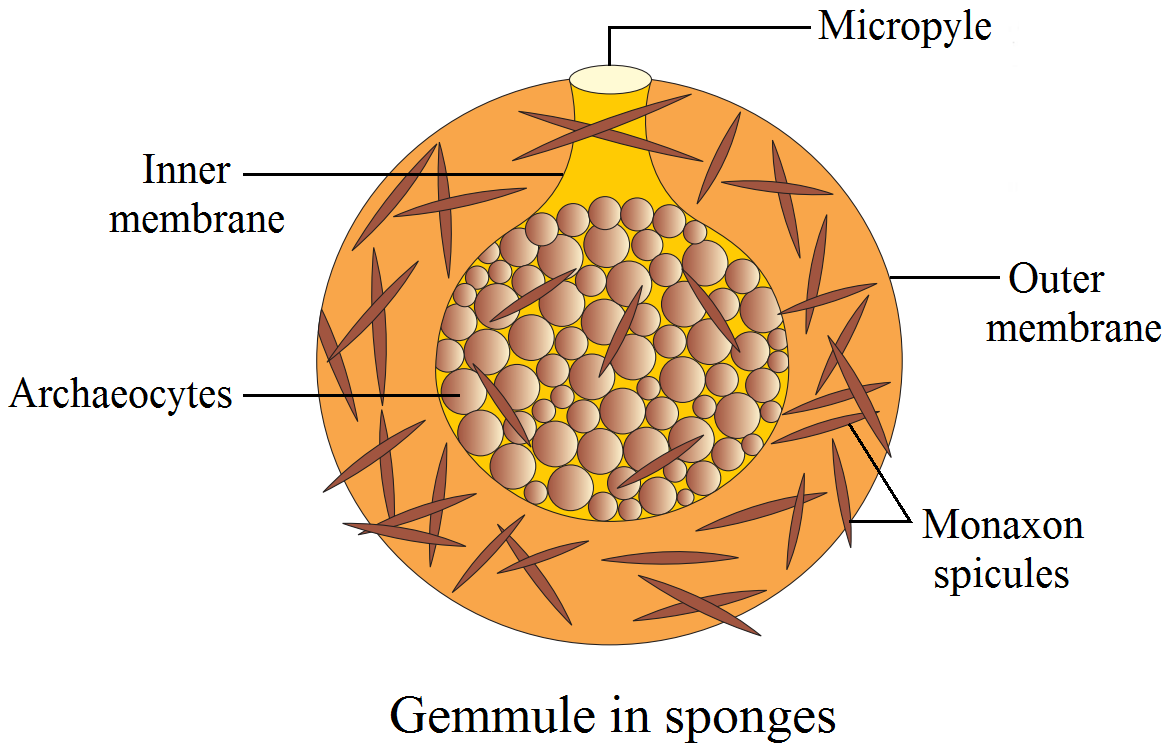
Gemmule formation is common in freshwater sponges (e.g. Spongilla) and a few marine sponges. Each gemmule has a group of cells called archaeocytes surrounded by the protective covering. During adverse environmental conditions, a mass of archaeocytes comes out via micropyle (a minute pore) that grows into a colony.
- Sporulation: Sometimes the products of multiple fission become individually surrounded by resistant coats, i.e. cyst walls before their release from parent, the process is known as sporulation and the encysted products are known as spores. It is not only the fastest method of reproduction but also helps to overcome unfavourable conditions. Sporulation is generally found in monera, protista, and Amoeba.
- Fragmentation: It is a mode of asexual reproduction in which parental body breaks into distinct pieces, each of which regenerates into an offspring. It is found in sponges, sea anemones (coelenterates) and echinoderms. It is also found in algae (e.g. Spirogyra), fungi, etc.