Question
Different animals respond to changes in their surroundings in different ways. Taking one example each, explain "some animals undergo aestivation while some others hibernation". How do fungi respond to adverse climatic conditions?

Answer

Some animals go into aestivation to avoid summer related problems (heat and dessication), eg. snails/fish.
Some animals go into hibernation to avoid winter related problem (extreme cold) eg. bear.
Fungi form thick walled spores and suspend their activities to respond to adverse climatic condition.

Need a full question paper?

Generate a complete, print-ready paper with questions like this in minutes — across 16+ boards, with answer keys.

Start Generating Free

Similar questions


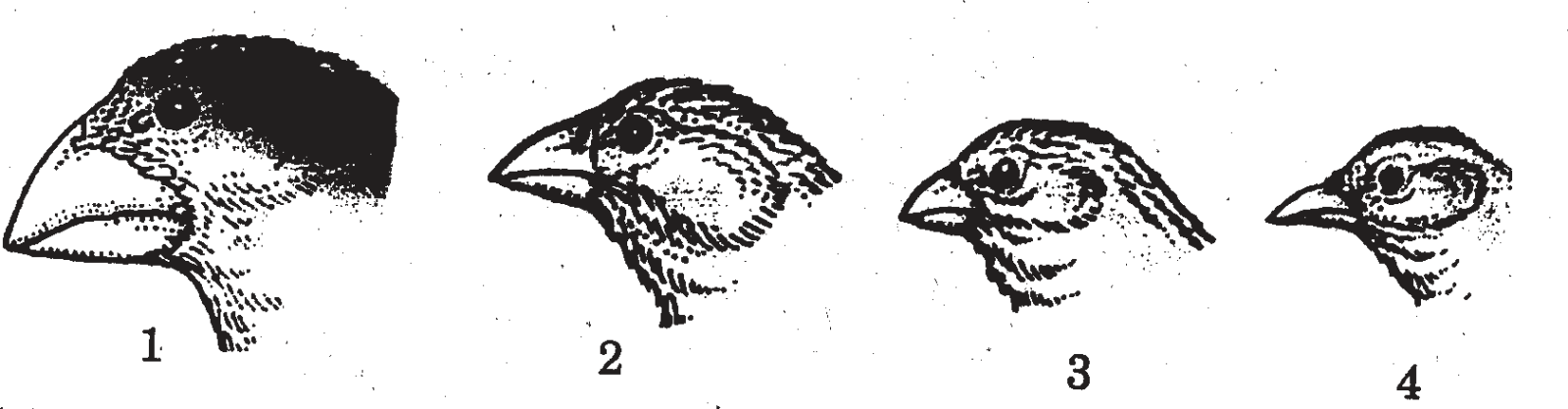
  1. Write your observations on the variations seen in the Darwin’s finches shown above.
  2. How did Darwin explain the existence of different varieties of finches on Galapagos Islands?
  1. Name the stage of Plasmodium that gains entry into the human body.
  2. Trace the stages of Plasmodium in the body of female Anopheles after its entry.
  3. Explain the cause of periodic recurrence of chill and high fever during malarial attack in humans.
Name the process of release of spermatozoa from Sertoli cells into cavity of seminiferous tubule.
When Morgan conducted dihybrid cross on Drosophila like Mendel did with pea plants, the F2 ratio deviated significantly from that of Mendel's F, ratio. Write the explanation Morgan and his group gave to the observations they obtained from their experiment.
Indiscriminate human activities such as alien species invasion, fragmentation and habitat loss have accelerated the loss of biodiversity. Justify by taking one example for each.
What is eltonian pyramid?
Write a short note on Apomixis and polyembryony.
Among the ecosystem services are control of floods and soil erosion. How is this achieved by the biotic components of the ecosystem?
Eco RI is used to cut a segment of foreign DNA and that of a vector DNA to form a recombinant DNA. Show with the help of schematic diagrams.
  1. The set of palindronic nucleotide sequence of base pairs the Eco RI will recognise in both the DNA segments. Mark the site at which Eco RI will act and cut both the segments.
  2. Sticky ends formed on both the segments where the two DNA segments will join later to form a recombinant DNA.
Differentiate between:
Genetic diversity and species diversity.