Question
Differentiate between a saturated and an unsaturated solution. How will you test whether a given solution is saturated or not?

Answer

A solution in which no more solute can be dissolved at that temperature is called a saturated solution while a solution in which more quantity of solute can be dissolved without raising its temperature is called an unsaturated solution. To test the saturation or unsaturation of a solution, more solute may be added to the solution. If that solute gets dissolved in the solution then the solution will be unsaturated. To test whether a given solution is saturated or not, add some more solute to the solution and try to dissolve it by stirring. If solute does not dissolve in the given solution, then it will be a saturated solution.
Need a full question paper?

Generate a complete, print-ready paper with questions like this in minutes — across 16+ boards, with answer keys.

Start Generating Free

Similar questions

A truck of mass $M$ is moved under a force $F.$ If the truck is then loaded with an object equal to the mass of the truck and the driving force is halved, then how does the acceleration change?
Discuss various methods for weed control.
Give an account of structure and function of xylem.
How many grams of magnesium will have the same number of atoms as $6$ grams of carbon$?$
$(Mg = 24u; C = 12u)$
Name the following compounds. Also write the symbols/ formulae of the ions present in them:
  1. $CuSO_4$
  2. $(NH_4)_2SO_4$
  3. $Na_2O$
  4. $Na_2CO_3$
  5. $CaCl_2$
Describe structure and functions of plasma membrane.
On a level road, a scooterist applies brakes to slow down from a speed of $10\ m/s$ to $5\ m/s.$ If the mass of the scooterist and the scooter be $150\ kg,$ calculate the work done by the brakes. $($Neglect air resistance and friction$)$
The graph given alogside shows the positions of a body at different times. Calculate the speed of the body as it moves from:
  1. A to B.
  2. B to C.
  3. C to D.
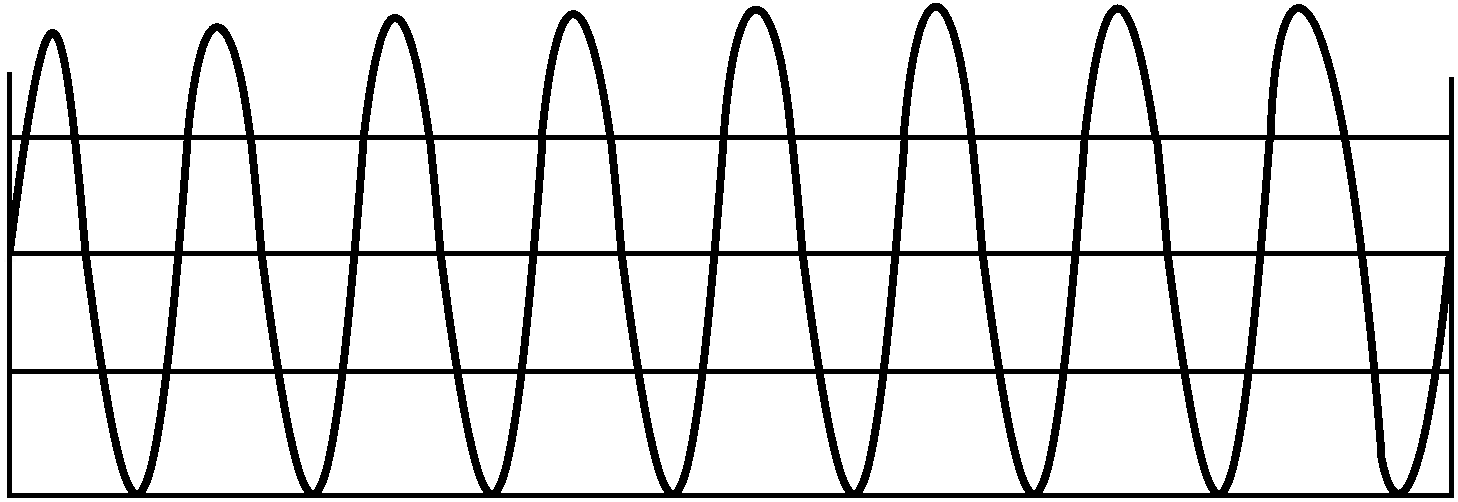
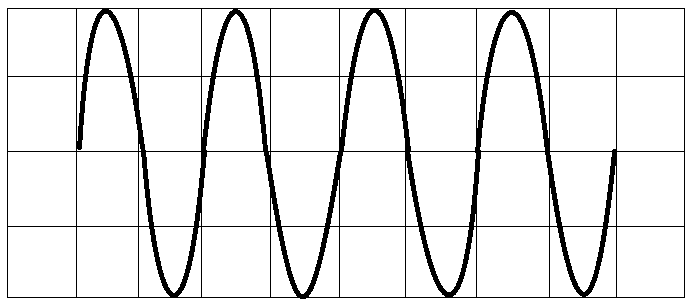
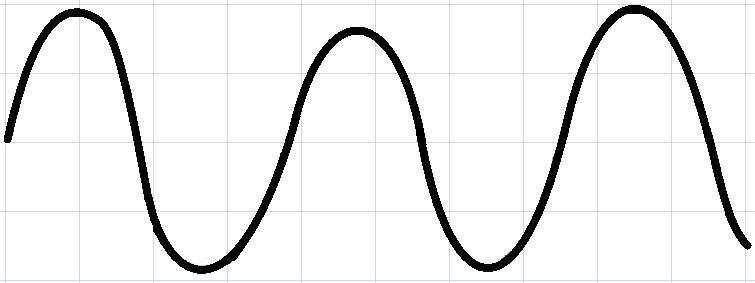
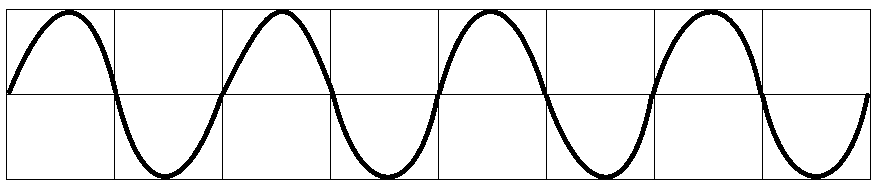
Consider the following sound waves marked A, B, C and D:
  1. Which two waves represent sounds of the same loudness but different pitch?
  1. Which two waves represent sounds of the same frequency but different loudness?
  1. State whether all these sound waves have been produced by the same vibrating body or different vibrating bodies?
  1. Which vibrating body/bodies could have generated the sound waves shown here?
The figure shows an x-t graph of a particle moving along a straight line. What is the sign of the acceleration during the intervals OA, AB, BC, and CD?