Question
Differentiate between a saturated and an unsaturated solution. How will you test whether a given solution is saturated or not?

Answer

A solution in which no more solute can be dissolved at that temperature is called a saturated solution while a solution in which more quantity of solute can be dissolved without raising its temperature is called an unsaturated solution. To test the saturation or unsaturation of a solution, more solute may be added to the solution. If that solute gets dissolved in the solution then the solution will be unsaturated. To test whether a given solution is saturated or not, add some more solute to the solution and try to dissolve it by stirring. If solute does not dissolve in the given solution, then it will be a saturated solution.
Need a full question paper?

Generate a complete, print-ready paper with questions like this in minutes — across 16+ boards, with answer keys.

Start Generating Free

Similar questions

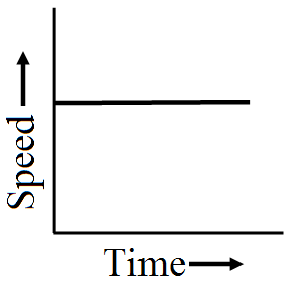
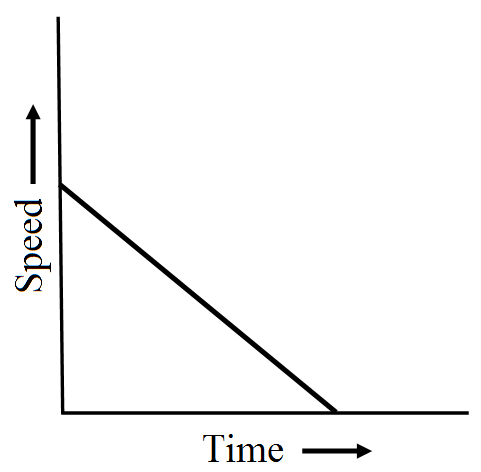
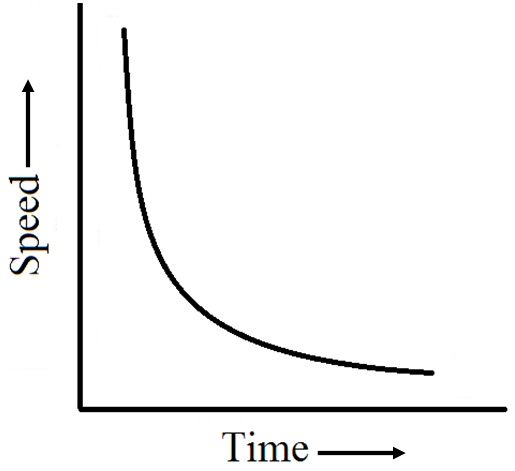
What type of motion is represented by each one of the following graphs?


There is a large group of materials P which can be divided into three groups Q, R, and S on the basis of their properties. The substances belonging to group Q can be solids, liquids or gases. The solids belonging to group Q are usually electrical insulators. Most of the substances of group R are solids which are good conductors of electricity. The substances belonging to group S are neither insulators like Q nor good conductors like R. The properties of S are intermediate between those of Q and R.
  1. What could the group of materials P be?
  2. Name the substances Q. Give two examples of such substances.
  3. Name the substances R. Write two examples of such substances.
  4. Name the substances S. Give two examples of such substances.
  5. Out of Q, R and S, which substances are malleable and ductile?
Show by means of graphical method that:
v = u + at
where the symbols have their usual meanings.
How is the power related to the speed at which a body can be lifted$?$ How many kilograms will a man working at the power of $100W,$ be able to lift at constant speed of $1ms^{-1}$ vertically$?\ (g = 10ms^{-2})$
What is the similarity between mitochondria and plastids? Give any two.
For increasing production, What is common in poultry, fisheries and bee-keeping?
Derive the unit of force using the second law of motion. A force of $5N$ produces an acceleration of $8\ m s^{–2}$ on a mass $m_1$ and an acceleration of $24\ m s^{–2}$ on a mass $m_2.$ What acceleration would the same force provide if both the masses are tied together $?$
There are three substances X, Y and Z. The substance X does not have a fixed melting point or boiling point and it still shows the individual properties of its constituents. The substance Y is a pure substance which occurs in nature as such. The substance Y has a fixed melting point and boiling point but it cannot be broken down into simpler substances by any chemical means. The substance Z is also a pure substance whose properties are entirely different from those of its constituents. The substance Z can, however, be divided by electrolysis into two substances which belong to the same class of substances as Y.
  1. What type of substance could X be? Name one substance like X.
  2. What type of substance could Y be? Name one substance like Y.
  3. What type of substance could Z be? Name one substance like Z.
  4. Whish process involves absorption or release of an appreciable amount of energy: formation of substance X or formation of substance Z?
  5. Name the three groups into which all the substances like Y are divided on the basis of their properties.
State and explain Newton’s second law of motion.
When extremely small particles X derived from the another of a flower were suspended in a liquid Y and observed through a microscope, it was found that the particles X were moving throughout the liquid Y in a very zig zag way. It was also observed that warmer the liquid Y, faster the particles X moved in its surface.
  1. What could particles X be?
  2. What do you think liquid Y is?
  3. What is the zig-zag movement of particles X?
  4. What is causing the zig-zag movement of particles X?
  5. Name the scientist who discovered this phenomenon.
  6. What does this experiment tell us about the nature of liquid Y?