Question
Differentiate between Antigen and Antibody.

Answer

Differences between Antigen and Antibody :
S.No.AntigenAntibody
1Bacteria, viruses and toxic substances entering the body is called Antigen.When an antigen enters the body, the glycoprotein ubstances secreted by the B-lymphocyte cells of the body against the antigen are called antibodies
2These cause diseases.These do not cause diseases but destroy germs.
3These combine with macrophages and generate immunity by activating T-helper cells.They directly attack the antigen, form complexes and destroy the antigen.
4Antigens enter from outside.Whereas antibodies are formed inside the body.
5These are found on the surface of the body of micro-organisms or in free state.These are found on the surface of blood plasma cells or in the tissue fluids of the body.
6They are of various types, such as bacteria, viruses, protozoa, pollen, drugs, toxins, and so on.While these are of five types : IgM, IgG, IgA, IgE, IgD

Need a full question paper?

Generate a complete, print-ready paper with questions like this in minutes — across 16+ boards, with answer keys.
Start Generating Free

Similar questions

A couple where both husband and wife are producing functional gametes, but the wife is still unable to conceive, is seeking medical aid. Describe any one method that you can suggest to this couple to become happy parents.
Transplantation to save certain patients often fails due to rejection by the patient. What is transplantation? Which type of immune response is responsible for such rejections?
Discuss the importance of testing of new plant varieties in a geographically vast country like India.
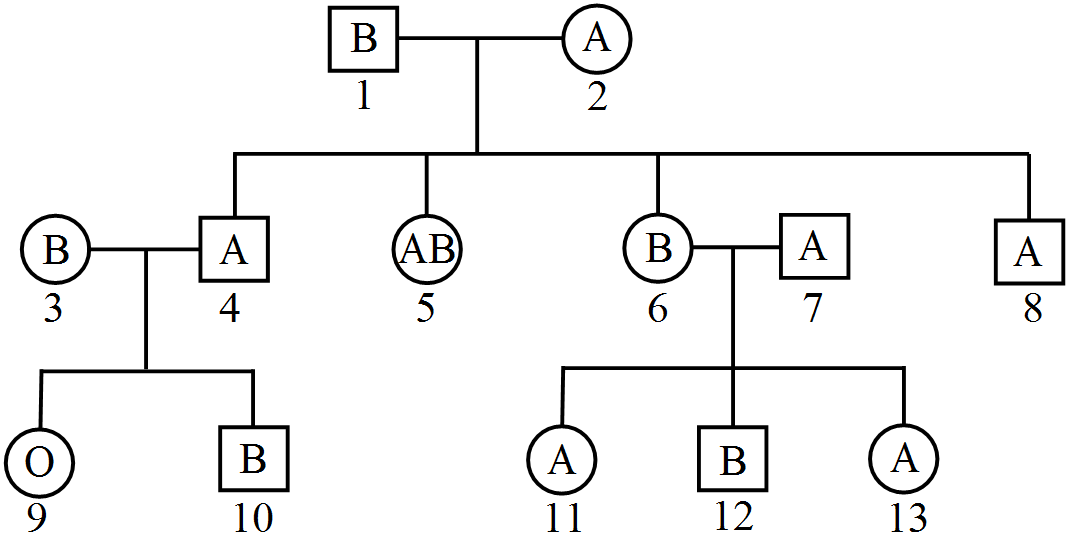
Study the pedigree chart given below, showing the inheritance pattern of blood groups in a family and answer the given questions.
  1. Give the possible genotypes of the individuals 1 and 2.
  2. Which antigen will be present on the plasma membrane of RBCs of individuals 5 and 9?
  3. Give the genotypes of the individuals 3 and 4.
What is the significance of the slope of regression in a species-area relationship?

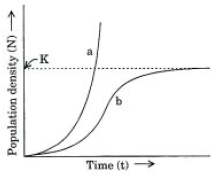
Study the population growth curves shown above.
  1. Identify curves ‘a’ and ‘b’.
  2. Mention the responsible for the curves ‘a’ and ‘b’ respectively.
  3. Give the necessary equation for the curve ‘b’.
  1. Do all pollen grains remain viable for the same length of time? Support your answer with two suitable examples.
  2. How are pollen grains stored in pollen banks? State the purpose of storing pollen grains in these banks.
Draw a labelled diagram of male reproductive system.
Explain the process of artificial hybridisation to get improved crop variety in:
  1. Plants bearing bisexual flowers.
  2. Female parent producing unisexual flowers.
Why is the frequency of red-green color blindness is many times higher in males than that in females?